











• Lisa Lerkenfeldt’s 10 nightlife companions

    Lisa Lerkenfeldt’s 10 nightlife companions

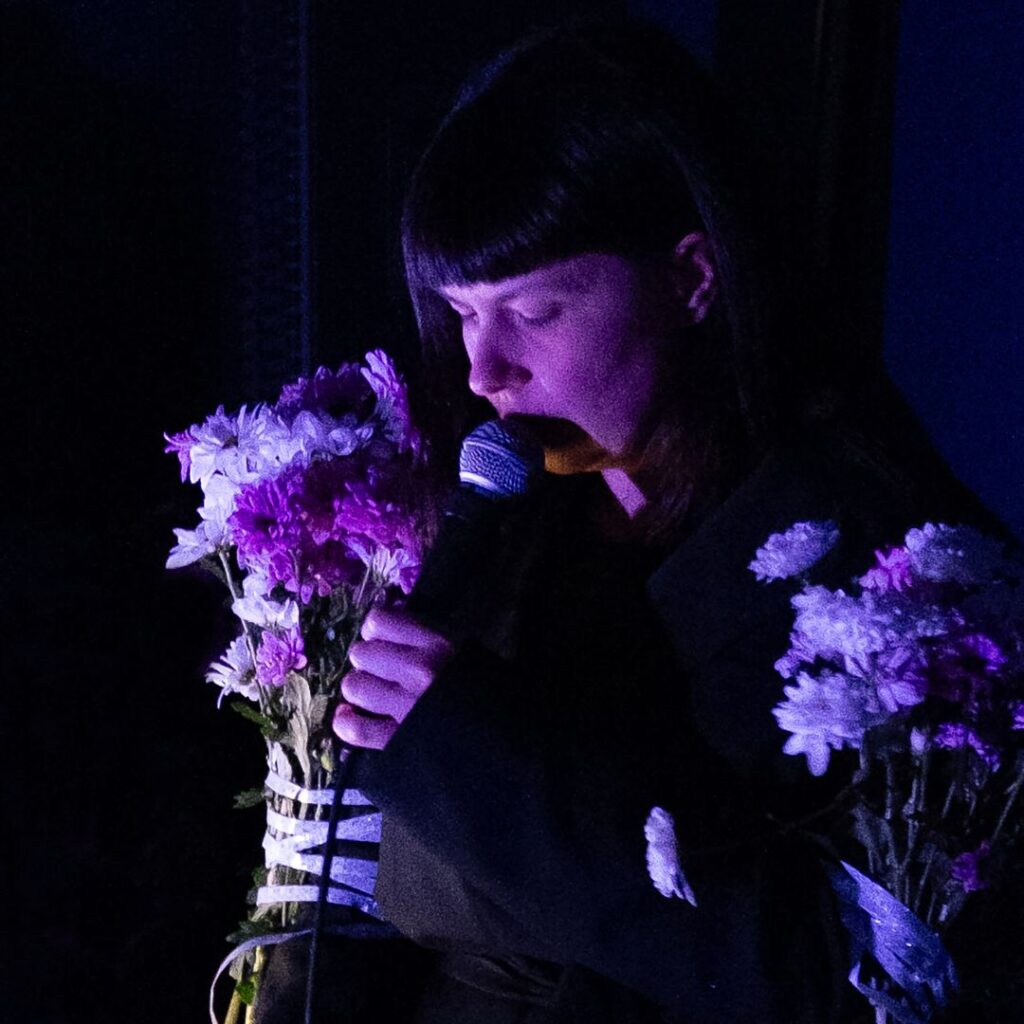
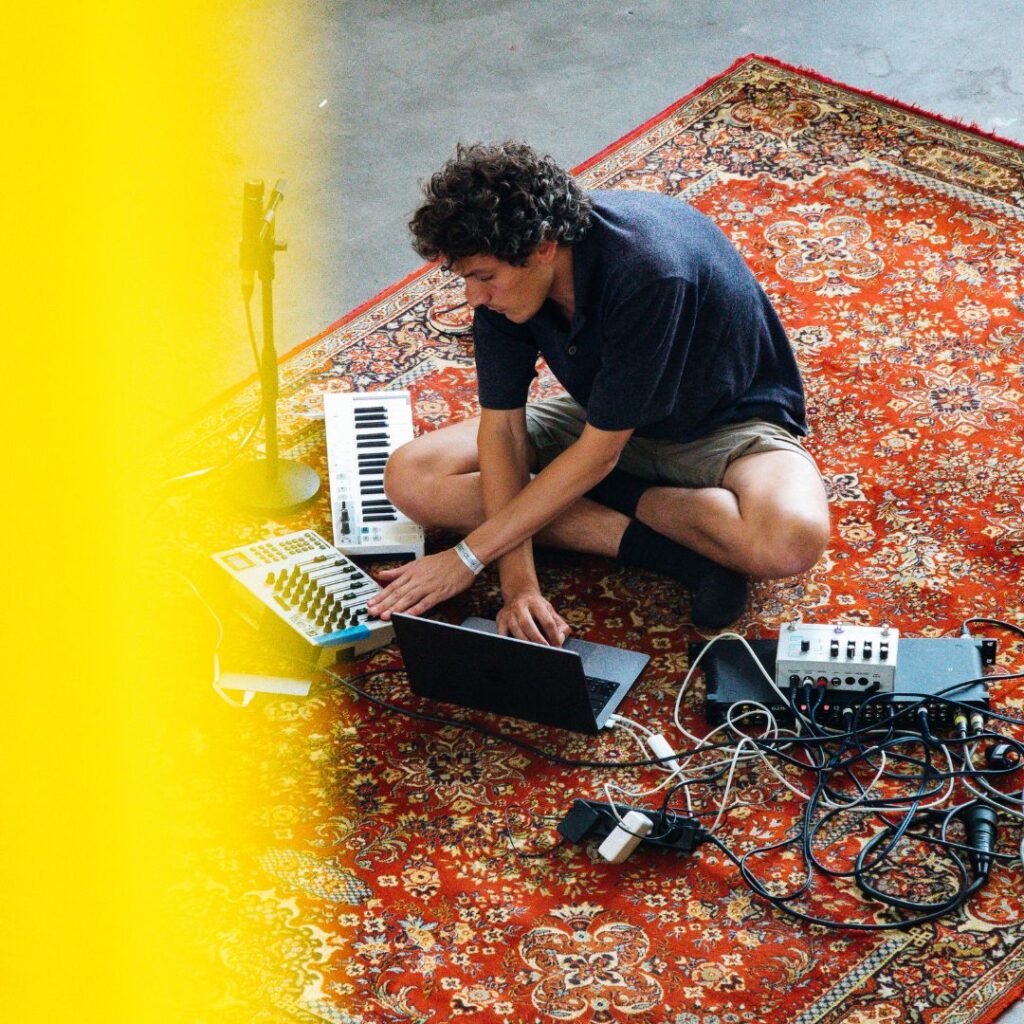
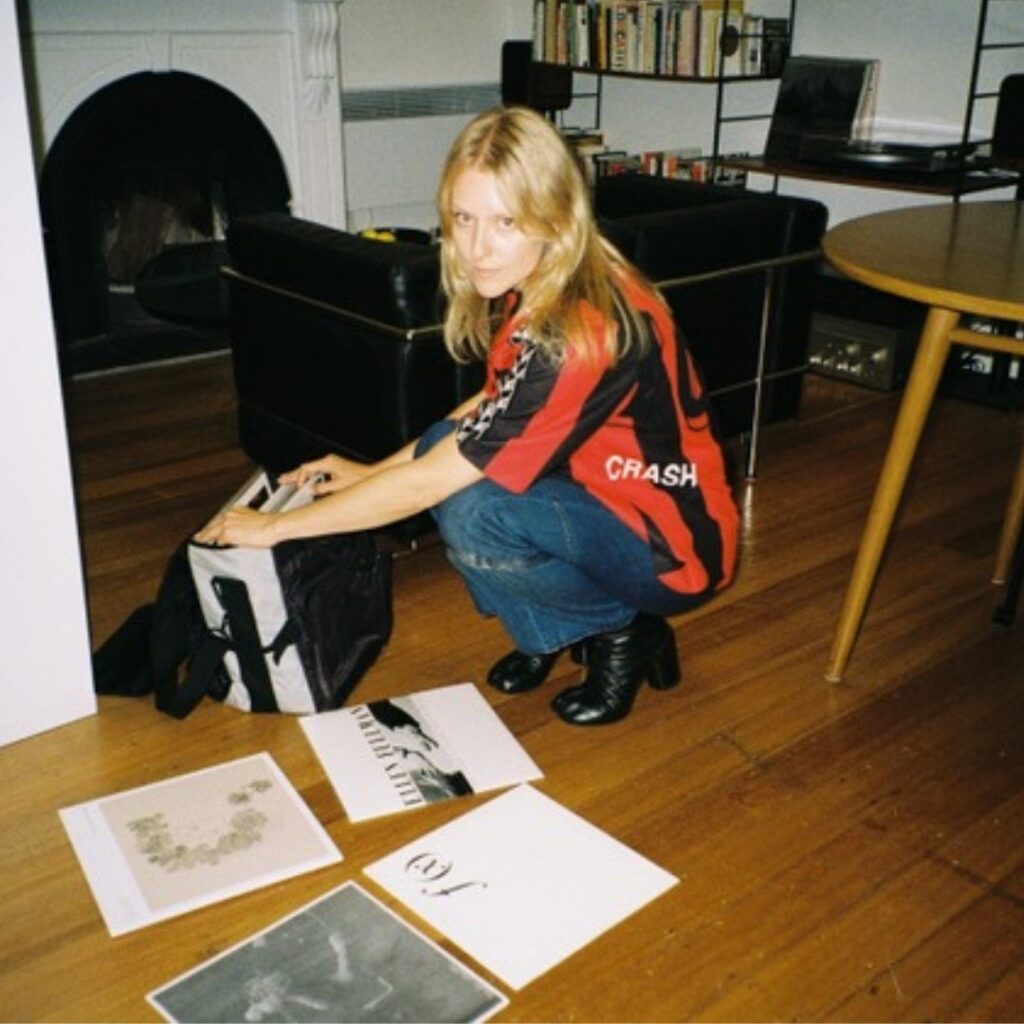
    Lisa Lerkenfeldt is an Australian composer and multidisciplinary artist working in sound and performance.


    In this mood list, she revisits the long play albums that have moved and informed her in the lead up to producing her albums CollagenA Liquor Of Daisies and A Garden Dissolves Into Black Silk. Each reveal a dedication to analogue manipulations, field work, the cinematic and long form minimal composition.


    This is what she shares: “Prior to recording Collagen, working in an archive handling objects from many centuries and locations informed my thinking about everyday object histories such as the hair comb which dates back over 5000 years. Between life as an artist, field recordist, producer and travelling by road to distant places as a museum technician, listening is one of my most foundational and connective practices. It is only through listening that we can begin to reimagine world building.”

    Lisa Lerkenfeldt
    Ryuichi Sakamoto & Alva Noto – Glass

    Arresting site-based improvisation by Ryuichi Sakamoto and Carsten Nicolai featuring digital processing of a glasshouse’s walls, designed by the modernist architect Philip Johnson. True artistry taking on architecture as instrument. 

    Èliane Radigue – Feedback Works (1969-1970)

    Archival works of slow forming beauty, total discretion and weightless instinct. Infinitesimal variations and shifts in microtonal harmonics are often felt rather than heard. The ultimate transgression. 

    Carter Tutti Void – fX

    My eternal mood. Reimagined industrial music. Notable 2015 collaboration between Chris Carter, Cosey Fanni Tutti and Nik Void. Big admirer of the subtlety, circuitry and technical prowess of Chris Carter. Highly recommended nightlife companion. 

    Gabriel Salomon – Movement Building Vol. 1

    Music for contemporary dance or perhaps lovers. This 34-minute piece questions bodily limits with surges of ecstasy and control on guitar, strings and percussion. Long tone, minimal and free. Originally composed for ‘Re-marks on Source Material’, a dance choreographed by Daisy Karen Thompson. 

    Ellen Fullman – The Long String Instrument

    With no desire to play a traditional instrument, Ellen Fullman made her own, drawing on a background in sculpture and performance art. She talks about The Long String Instrument project as her own personal music school through which she developed her interest in tuning systems and just intonation. It’s played with finger tips coated in rosin. I resonate with this spirit of alternate means to new ends. Sounds like rusty air. 

    Felicia Atkinson – A Readymade Ceremony

    This album is like an intimate phone call between friends. Unlike anything I had ever heard but always desired. A post-digital reflection on the poetics of the everyday. Bringing grace to what is already made. My first introduction to autonomous sensory meridian response. Highlight: L’Oeil.

    Alva Noto – Xerrox Vol. 1

    Tonic for media saturation. Incredible on trains and in transit. Carsten Nicolai’s full length studio album blurs reality over 14 tracks of data manipulation. Employing a sample transformer (developed with artist Christoph Brünggel), this work defamiliarises collected everyday audio by processing it into subliminal static, organic arcs and moments of orchestral warmth. The first album in the five-piece Xerrox Series. Highlight: Haliod Xerrox Copy 1. 

    Merzbow – Dolphin Sonar

    Powerful work about interspecies communication and the problem of human domination. Full length protest album against the annual brutal slaughtering of thousands of dolphins in Taiji, Wakayama Prefecture Japan. Artwork by Jenny Akita, Masami’s life partner. Recommended at a low volume on Sunday afternoon or for trauma processing in general. It is impossible to do anything else to this record. A critical source of inspiration.

    Divide and Dissolve – Abomination

    Spellbinding experimental duo based in Naarm/Melbourne. Eight tracks for indigenous sovereignty, black and indigenous liberation, water, earth and land. Intended to dismantle and destroy the white supremacist colonial framework. Best served with friends. Highlight: Reversal.

    Time Machines (Coil) – Time Machines

    Inspired by the long form ceremonial music of Tibet and other religions, this four track draws titles from the chemical compounds of hallucinogenics. Aspiring to create temporal slips in time and space, Drew McDowall, John Balance and Peter Christopherson draw this out with delicate shifts and mutations. 

    continue reading

  • bringing characters to life with Park Pardon
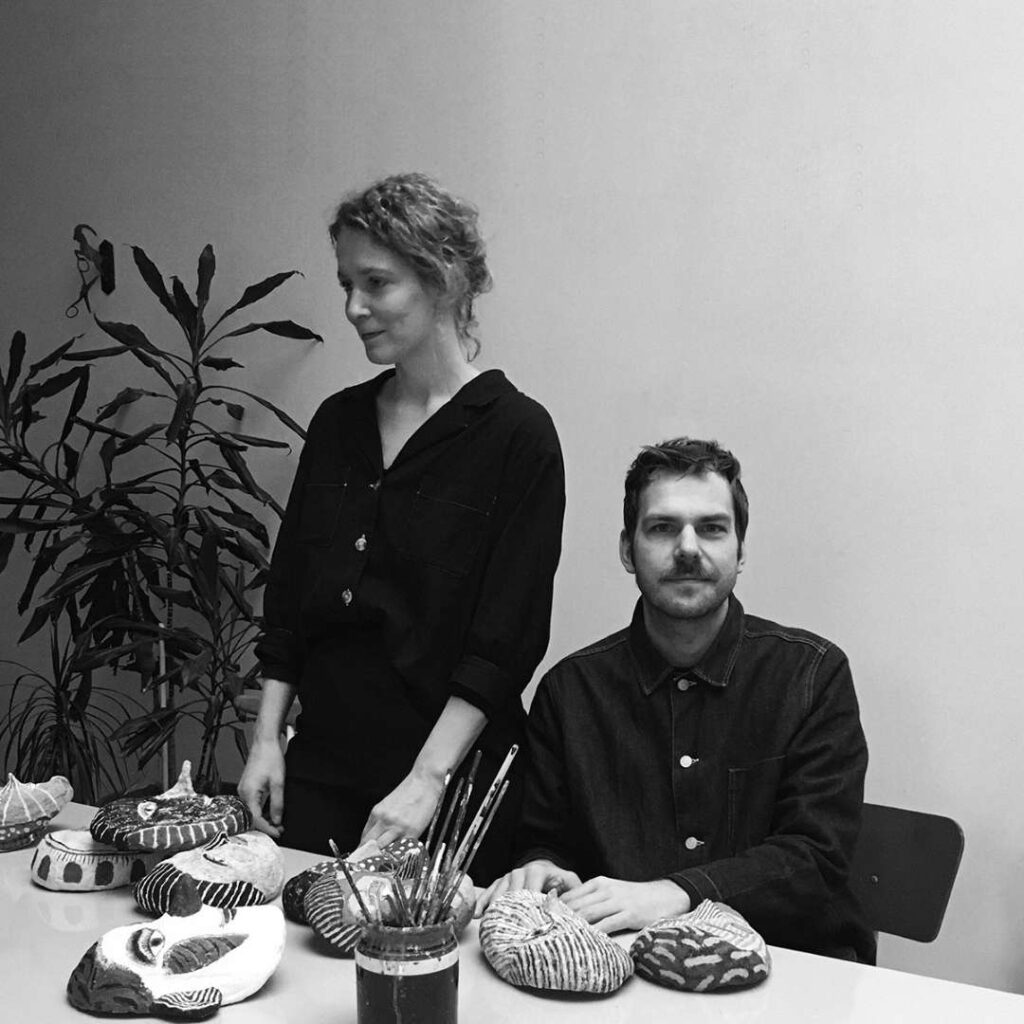
    bringing characters to life with park pardon

    Park Pardon is the whimsical world and creative playground of Bloeme van Bon and Geran Knol. Born out of their shared fascination for bringing characters to life, it is a collaborative project that brings their individual styles together to form a new narrative across drawing, publication and sculpture.


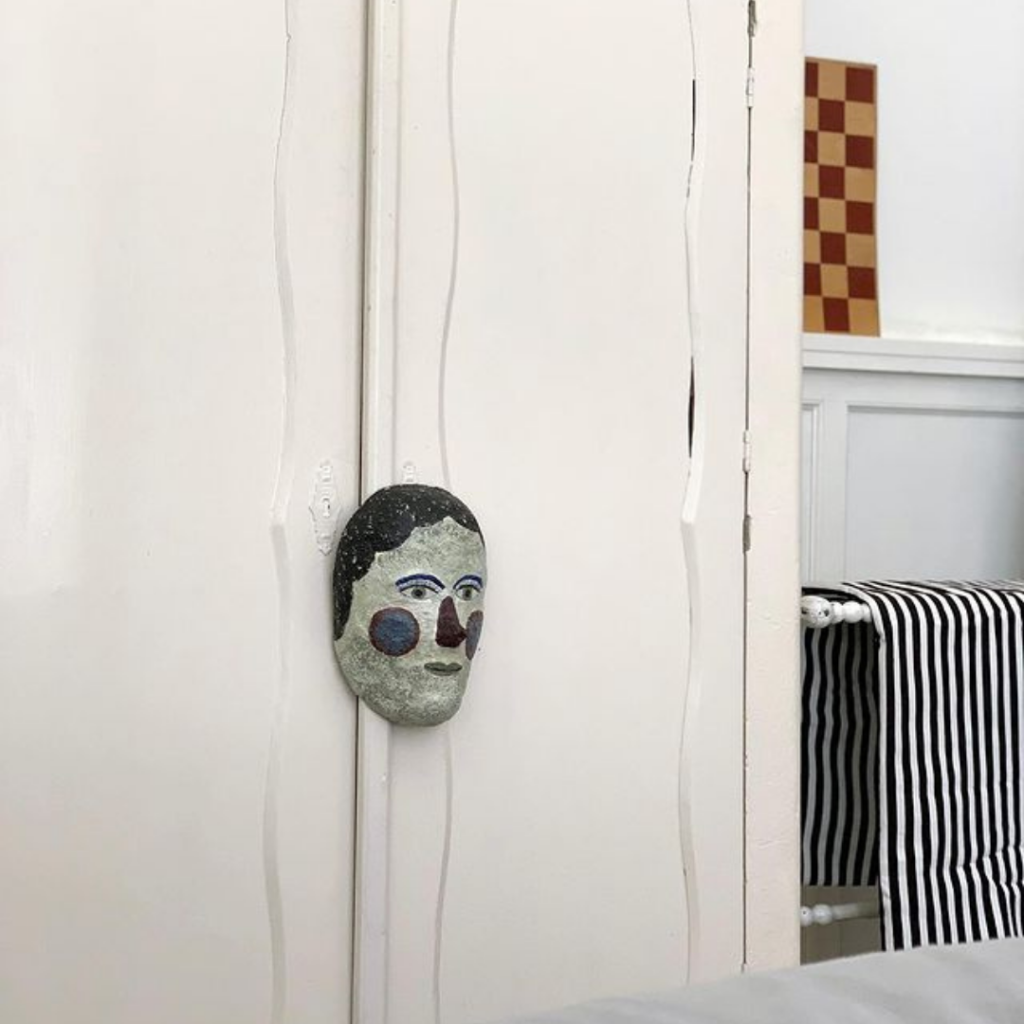
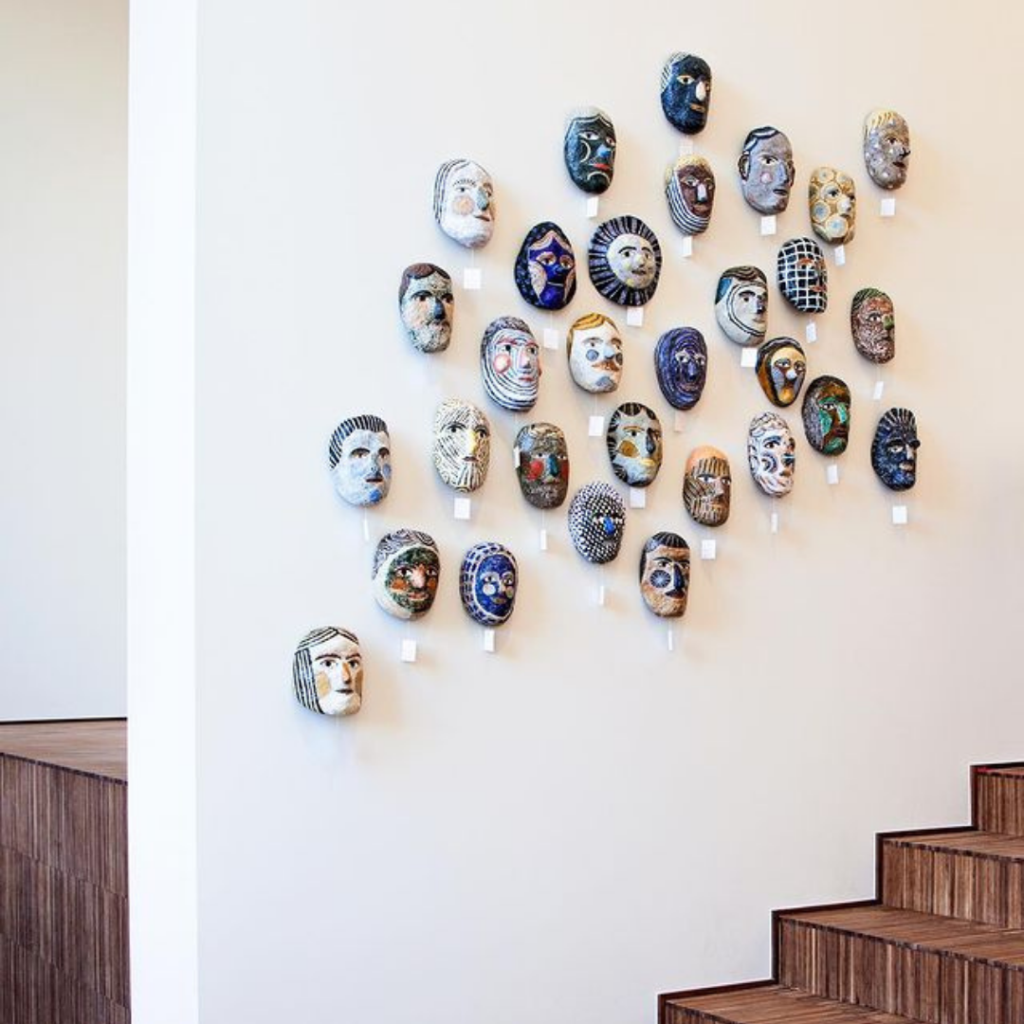
    Since their first project together in 2012, the duo has already made a 52-page riso-printed book, an installation titled ‘The Considered Cabinet of Deliberate Thoughts’, and more than 200 handmade one-of-a-kind papier-mâché masks. Working across different mediums that tend to fall between sculpture art and functional design, their prolific output in the last years is very telling of their inspiring drive.


    Drawn to their vibrant and moody world, we teamed up with Park Pardon for a limited-edition series of 8 handmade papier-mâché masks inspired by the 8 moods we have in store. Titled ‘Stemmingswisselen’ which means ‘mood swings’ in Dutch, we feel it perfectly encapsulates the abstract expressions of their characters and the fleeting nature of our moods.

    How did Park Pardon come about?


    Bloeme: The idea kind of all started when we were both studying in Zwolle. Geran and I shared the same fascination for characters and sculptures, so Park Pardon grew out of that.


    Geran: We both met in art school in the Netherlands back in 2010 and we decided to work together as Park Pardon for our graduation project. As we studied illustration, our original idea was initially to build a publishing platform for zines, but we ended up making life-sized papier-mâché figures that brought our drawings to life. Then, we both moved to Antwerp in 2013 for a master’s degree and we graduated again as Park Pardon. We did an internship at Afreux, a screen-printing atelier, where we made a book that became almost like a starting point for our master’s project. We made a big cabinet where we linked our drawings to sculptures.


    Bloeme: Even though a lot has changed throughout the years, Park Pardon also changed with it.

    O&ampPark Pardon | Geran Knol | Bloeme van Bon

    What inspired you to start creating masks?


    Geran: The masks have always been there in our work, but just in a different way.


    Bloeme: The first one we ever made was a commission for Wilder, the flower shop.

    And why papier-mâché?


    Bloeme: We’ve already been using papier-mâché for more than 10 years. Back then, it was just the easiest and also the cheapest way to create sculptures.


    Geran: It was actually kind of looked down upon at that time, but we just embraced it. It’s a really easy material to work with and it’s lightweight as well. We also experimented with clay and other materials for our master’s project.

    How do you approach the creation of the masks? How do you bring your characters to life?


    Geran: We always start off with a Styrofoam mold, which forms the base of the mask. We make around 10 of them at the same time, so they all kind of look the same in the beginning. Sometimes, we give them bigger cheeks or give them some ears, but we never sketch it out and it just kind of forms organically.


    Bloeme: They only really come to life when we start painting. Mostly, one of us starts with the base of the painting. it can be quite abstract to start with and that’s when the other person takes over. Sometimes we work together in the same room at the same time. But usually, we just transport the masks back and forth all the time, as we live just around the corner of each other.


    Geran: Bloeme may start on a mask and then I erase some parts by going over it.


    Bloeme: And then I’m like, ‘No, that was the good part.’


    Geran: After two or three rounds of passing the mask around, it’s ready. We then smoothen the edges a bit and attach the metal hook and suede rope at the back, so you can hang it on the wall. And finally, we varnish it.

    Cool that you really make all the masks together.


    Geran: An outsider might not really see that two different people made it, but I can really tell if something is made by Bloeme or myself. For the book we’ve made, even if it was already six years ago, I can still tell with every page which drawings I have done, and which ones are made by Bloeme. Between the both of us, Bloeme has a painterly hand, while I’m stricter with the lines.

    O&S | Mood Talk | Park Pardon

    Do you ever find yourself falling in patterns or is it easy to always come up with a new character?


    Bloeme: There are so many faces you can make. Everybody has a different face, so it’s really easy for us to just keep on making new ones.


    Geran: By now, we probably made over 200 masks, so we kind of start seeing similarities. But even if you just change the colors, it comes out very differently.

    Wow, that’s a lot of masks. Have the masks changed a lot since you first started making them?


    Geran: If you look at the archive on our website, you can tell which ones are older by the size of it. The smaller the mask, the older it is.


    Bloeme: Two weeks ago, we actually got back a mask we made for Wilder and we were just laughing at how small and clumsy it is. I do sometimes miss the naivety of it, though. The clumsiness of it can also be very charming too.

    Out of all the masks you make, do you have favorites?


    Geran: We do have some favorites. But if we really like them, we mostly just make their brothers and sisters.


    Bloeme: We never kept a mask we’ve made. We really like the idea that the masks are in someone else’s home. And we will still always have the pictures and the memory.


    Do you ever feel the need to explore other mediums in order to express the characters?


    Geran: We’d like to add a functional element to the masks. We are totally not product designers, so that gives us a fun challenge to think about. That’s why it was a really nice next step to work together with you guys because we’ve already been thinking about it for a while now and our project together is really the first functional application of the masks.


    Bloeme: We also have a lot of ideas and fantasies about making the characters move and come to life even more. It would be nice if we could integrate a music clip to it or add some sort of animation to really take it to the next level.


    Geran: We also recently did a larger mask for an antique store in Antwerp using a big table lamp as a mold, so it would be nice to make them larger too.


    Bloeme: In general, we really want to approach the masks as a product. We don’t consider it as art, so we also made the decision not to exhibit our masks as we would with our paintings.

    O&S | Mood Talk | Park Pardon

    Speaking of music, what role does it play in your art or life?


    Bloeme: Unlike Geran, I don’t make music, but music plays a big role in my life. I have a lot of records and I listen to them a lot. I also have a side project called ‘Ludittes’, which I’m doing together with a friend of mine and our next release is going to be a cassette. We are not making the music ourselves, but we’re really developing the music together. That sounds a bit weird maybe, but for every release we do, we make just one vinyl copy each time. I also then make some sort of an art object from it.


    Geran: I always think I have three personalities: my own art, Park Pardon and the music I make with Oval Angle.  Sometimes I really wish everything was kind of one big piece of work, but I also like having these different personalities too.

    And how do you combine Park Pardon with your individual practices?


    Bloeme: The nice thing about working together on Park Pardon is that it’s a mix of both Geran’s work and my work. Geran does things I would never do and the other way around. We always have a lot of fun doing it, as we’re also best friends too, but it’s also been a struggle for us to find enough time and space to combine it with our own individual projects. That’s been a really big challenge for us in the past. Even today, we are still looking at how we can make enough time and space in our minds for it.


    Geran: Park Pardon is also an on-and-off project for us and it has happened in the past that we just stop doing it for a while to focus on our individual work. We’ve both been really focused on Park Pardon the last two years, but it could very well be that we take a break and restart again after a few months or years.

    Park Pardon | Geran Knol | Bloeme van Bon

    Do you approach your own work differently as you do with Park Pardon?


    Bloeme: With my own work, I really need a few days to get into the mindset of creating. I can always work on Park Pardon, even if I don’t feel creative.


    Geran: That’s true. There’s always something to do with Park Pardon, as we do everything ourselves, from maintaining the website to the packing of the masks. Park Pardon is also for me a really nice way to let go of my personal tendencies for perfection. As there are two people involved in the collaboration, there is more freedom in it. I can let go of certain things. For myself, I would never use bright colors for example, but there is no restriction with Park Pardon.


    Bloeme: It’s a playground for us where we can do anything. It’s our practice ground to experiment and try new things.

    How do you see Park Pardon evolving in the next few years?


    Bloeme: It just evolves naturally and organically. We’re not really planners and we don’t really have a plan as to what’s next, but I still wish in the future to do something more with the masks to bring them even more to life.


    Geran: I would also really like to make animations for children that adults can also enjoy. But whatever happens, I see Park Pardon as a project that we will do next to all the other things that we do both together and separately.

    continue reading

  • elevating the everyday with Alex Chan of the Shophouse

    elevating the everyday with Alex Chan of THE SHOPHOUSE

    THE SHOPHOUSE in Hong Kong is not your typical gallery. It’s a blank canvas. A meeting point. A melting pot. A vibrant hub that celebrates the prolific and exciting overlap between art, culture and the mundanities of everyday life. 


    Since its inception in May 2020, THE SHOPHOUSE already showcased a diverse range of artists and creatives from different corners and disciplines in its five-story building. From an archival display of Bulgarian designer Kiko Kostadinov’s workwear to a collection of teacups by acclaimed British ceramist Steve Harrison, THE SHOPHOUSE colors everyday happenings for locals in the quaint neighborhood of Tai Hang with their varied exhibitions and curated experiences.


    Intrigued by their unconventional approach, we spoke with THE SHOPHOUSE’s founder Alex Chan to learn more about his inspirations and visions for the space. We couldn’t be more excited about teaming up with THE SHOPHOUSE for a series of playlists inspired by their upcoming exhibitions and a cherry-picked selection of records on display in their mezzanine study. 

    It’s courageous and exciting to start THE SHOPHOUSE at the height of the pandemic. Tell us more about what you want to realize with it.


    THE SHOPHOUSE is dedicated to offering an integrated lifestyle experience by reconsidering basic necessities of everyday life. It is an evolving space attuned by our collaborations with local makers and creative insiders, bringing elements together to repurpose a pre-WWII building into a five-story curated hub for social, cultural and special happenings.

    THE SHOPHOUSE HONG KONG

    We really love how you intertwine different disciplines with THE SHOPHOUSE. What is the mindset behind this? 


    We position ourselves neither as a gallery nor a curated shop. What we are doing is offering a much more diverse experience for our visitors. People have a much broader set of interests nowadays. Someone into classical music can also be into anime, for example. As every exhibition is a different vibe, you will always find something of your interest. 


    That’s the most exciting part about THE SHOPHOUSE project for us. Because we don’t box ourselves to a certain style or ecosystem, we are able to explore different aesthetics and connect with so many different talents regularly. 

    How do you approach the curation of your exhibits? What guides or informs the themes or artists you select? 


    The curation is very organic. Sometimes it starts with a random topic we were just discussing, or new artists that we discovered which eventually develop into a broad theme. What’s most important for us is authenticity and variety.

    Tell us more about the local art & culture scene in Hong Kong.


    A lot of people consider Hong Kong as a ‘cultural desert’, which I sadly agreed with to a certain extent. Having said that, I think a lot of people in Hong Kong do not realize that a big part of their everyday routines are considered as art or culture abroad. By offering a taste of functional aesthetics, we hope to inspire people to be aware of the art in their daily lives.

    THTHE SHOPHOUSE HONG KONGE SHOPHOUSE HONG KONG

    What is the inspiration behind THE SHOPHOUSE?


    The biggest inspiration behind THE SHOPHOUSE is the team. Coming from different cultures and backgrounds, we all have a wide range of interests: from fashion and art to music and subculture. We couldn’t really find a space that fits us perfectly, so we built our own. 

    We’re very happy to work together. What role does sound or music play for you in the story of THE SHOPHOUSE?


    THE SHOPHOUSE is located in a restored 1930s building, which is not a common gallery venue in Hong Kong. The sound plays an important role in setting up our tone the moment visitors come in, acting as the perfect bridge from the busy Hong Kong neighborhood to our curated space. 

    What are you most looking forward to in 2021 and beyond? 


    Since we opened in May 2020, we have been focusing on the local market. In 2021, we are eager to expand our connections abroad and potentially have pop-ups overseas. 

    Lyra Pramuk | Fountain | Bedroom Community | Vinyl

    continue reading

  • 10 albums for flowing in the glow by Mark “Frosty” McNeill
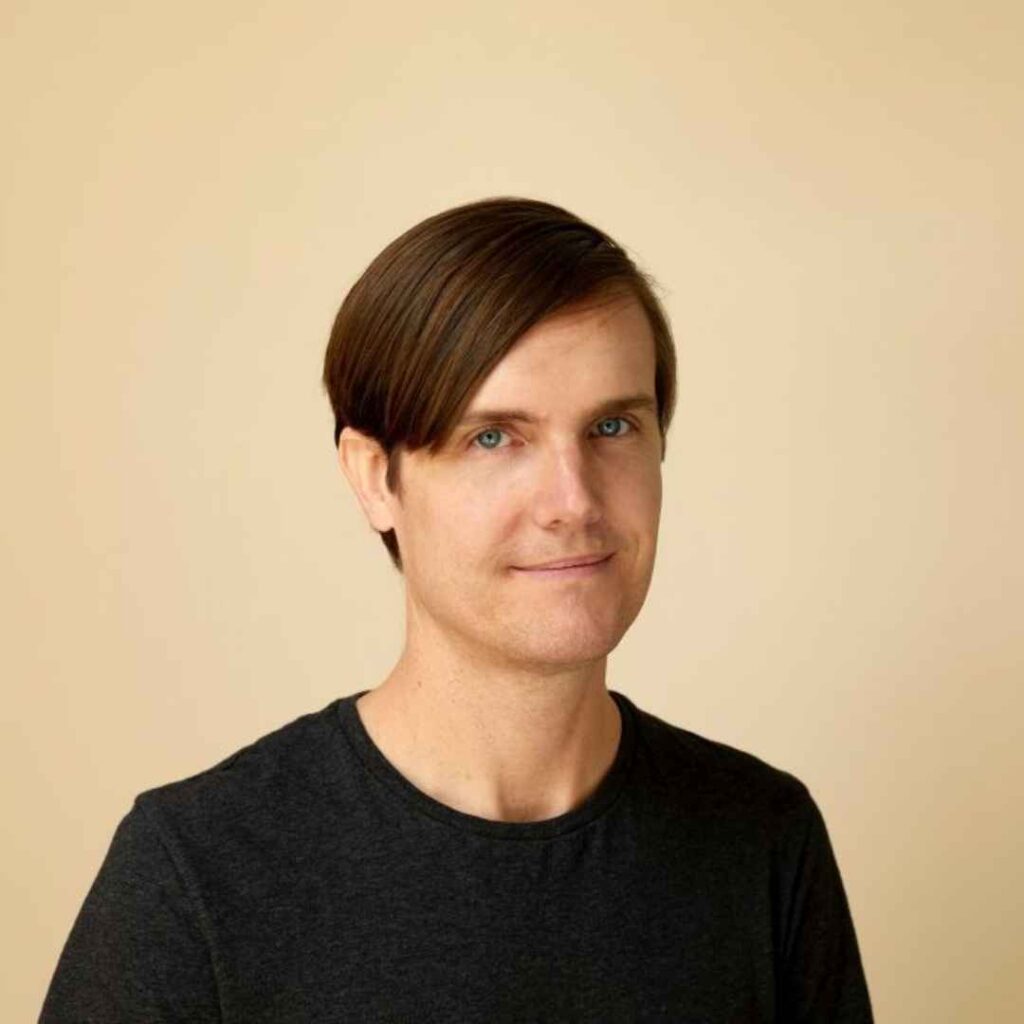
    10 albums for flowing in the glow by Mark “Frosty” McNeill

    Mark “Frosty” McNeill is a DJ, radio producer, lecturer, sonic curator, and filmmaker based in Los Angeles. At the heart of his sonic explorations is a resounding passion for sharing transcendent experiences with one another. Fostering this sense of connection is a guiding principle he shares with the community-driven online radio platform, dublab, which he co-founded in 1999.


    Curious what mood and albums would speak to him, we asked Frosty to contribute to our mood list series. What he shares with us is a true glimpse of what his sonic explorations tend to be: grounded as they are otherworldly, connecting as they are personal.


    He shares: “Creative beings project their art into the spheres with hopes of hearing a ringing in return. They honor the miracle of existence while poking at distant edges to see how far we can expand. I’m entranced by sonic visionaries who honor our human condition while aspiring to transcend it. Nature often steers this course of inspiration—rooting us in earthbound energy while giving us glimmers of an interconnected existence that’s more than meets the ear. This sort of exploration doesn’t have to be overtly mystic or spiritual. It can often come in the form of pop tunes energized by a natural essence or humble folk songs illuminated at the edges. Here are some albums on this wavelength that ring my bell.”

    Frosty
    Hailu Mergia – Hailu Mergia & his Classical Instrument

    This sounds like feeling the sun after a torrential storm. Warmly constructed from minimal tones, Mergia’s power is in his loping pace. He rushes nowhere fast because this is the best place to be and as the drum machine idles alongside his purring organ all is well in the world once again.

    Linda Perhacs – Parallelograms

    This is an album of deep complexity but in such a purely organic form that it’s like breath flowing to and from your body. Misty forests and sandy beaches are elevated through synesthetic experiences sparked by an awe of the cosmos. Perhaps honeyed voice might as well be the lullaby that sweetly sung all of our cells into being.

    Toumani Diabaté with Ballaké Sissoko – New Ancient Strings

    This must be the sound that the earth makes when it smiles at the sky. Red clay beaming its radiance upward saying, “We’ve been together all these years and just beginning to fall deeper in love.”

    Nelson Angelo e Joyce

    These songs shimmer like a tree of golden leaves swaying in a solar breeze. It gently beckons souls upward to rest under its radiant limbs—an embracing healing force that although rooted in specific language is universal in dulcet tone.

    The Life Force Trio – Living Room

    This is the waiting room music for our momentary pause in the journey to the great beyond, because what’s the rush in reaching a destination when every pulsation of the now is so sublime? This sound offering’s rhythmic mysticism mirrors the optimism of our fellow voyagers and fills the atmosphere with a miraculous glow.

    Massive Attack v Mad Professor – No Protection

    This is a tractor beam. Mad Professor’s reworking of Massive Attack’s elemental material expands into the infinite. Riding on these echoes is like being sucked into a black hole that opens into a spectrum of brilliant radiance. A most gracious welcome to the other side of the universe. 

    Bennie Maupin – The Jewel in the Lotus

    Maupin must have seen something in a dream that opened this portal. He glimpsed the key and sketched its form, providing a chord for us to grasp and pull ourselves gently to the light. He guides us with such serene security that our destination is assured even with eyes tightly closed.

    Henri Texier – Amir

    When the questions are this soothing, who needs answers? We hold mystery in our palms, reflecting on the facets as Texier slants every note so slowly towards sublime unknowing that we lose ourselves in the bliss of just being. Anxiety is a cloud that blew away long ago and we are free to be more at ease with the joy of the inquiry.

    Antena – Camino del Sol

    The atmosphere is so perfect that it’s hard to tell where your skin ends and the air begins. You’re feeling totally in step with yourself as the sunset hovers, layering all in liquid gold. That last glass of wine has kicked in nicely and you’re riding the waves into infinity with this resonance floating you forth. The rock of the hammock, the kiss of the saltwater, the soft brush of skin. 

    Javier Bergia – Eclipse

    The moon charted its course to the heart of the sun, deeply intent on merging light and darkness to let us all know that duality reigns supreme. Bergia was there every step of the way, guitar in hand keeping a journal of this occurrence because the sky full of stars is for all of us.

    continue reading

  • 7 albums for domestic hibernation by Jamison Isaak

    7 albums for domestic hibernation by Jamison Isaak

    Since 2010, Jamison Isaak has been creating music under a multitude of different aliases. Whether it’s the ambient-leaning synth pop sounds of Teen Daze, sun-drenched dance tracks of Pacific Coliseum, or the quiet and meditative folk songs as Two Bicycles, Jamison never fails to set the mood with his melodic and atmospheric tracks.


    In this mood list, Jamison gravitates towards a sentiment that hits close to home. He shares: “We’ve all been spending lots of time at home in the last months. I was already in a pretty deep domestic hibernation when the pandemic hit in March last year. My son was born just six months before everything shut down. This is a collection of some of the records we’ve been playing around the house over the last months.”

    Teen Daze
    Pat Metheny – Watercolors

    I’ve been in this ‘jazz phase’ for the last three or four years now, and this was a huge record for me when I first started digging into the ECM catalog. When I was young, I was exposed to very little jazz music, so it’s taken me quite a while to start discovering albums and artists that are considered to be staples. Anyways, this album is just so melodic and beautiful. It’s a great jumping off point for someone just starting to dip their toes into jazz music.

    Bill Evans – You Must Believe In Spring

    Another great gateway record for anyone new to the world of jazz music. This is one of the most serene records perfect for quiet mornings, afternoons or evenings. Like Metheny, there’s a lyricism to Bill Evans’ playing that makes it so easy to return to his records, again and again.

    Sam Wilkes – Wilkes

    In the first few weeks of my son being born, we listened to this song a lot. There’s something really beautiful about singing the repeated phrase “I love you, I’ll always love you, won’t stop” to a sleeping baby. What can I say, I’m a softy like that.

    Herbie Hancock – Mr. Hands

    I got really deep into Herbie’s discography the last months, and while it was really tough to pick just one record, this one (and this track specifically) seemed to stand out to me. It’s got the smoothness, the funkiness, and the incredible piano chops that define Herbie’s whole catalog. We try and keep a pretty mellow energy throughout the house, but it’s always nice to put on a record like this and get some deep grooves going.

    John Carroll Kirby – My Garden

    It’s almost embarrassing how much I’ve listened to this record in 2020. Though it has been a very heavy year that comes with lots of pain, this album really has been a bright light. Melodic, bright, playful, colourful. When I take my son out for walks to the park, we almost always listen to this record as our soundtrack.

    Ahmad Jamal Trio – The Awakening

    Since I first heard Herbie’s version of Dolphin Dance, I’ve been searching out other versions of the song (Grover Washington Jr’s version is also really beautiful), and this one is one of my favorites. Lots of depth and some incredible playing across this whole record. A perfect record for a sunny afternoon.

    Albrecht La’brooy – Healesville

    One of the most beautiful ambient records I’ve heard in a long time. This is the kind of record you can put on repeat and just leave playing through the house all day. Incredibly transportive and lush with really restrained and tasteful playing, as well.

    discover jamison’s recommendations in store

    continue reading

  • expressing one’s self through lines and symbols with Beatrice Gasca Queirazza
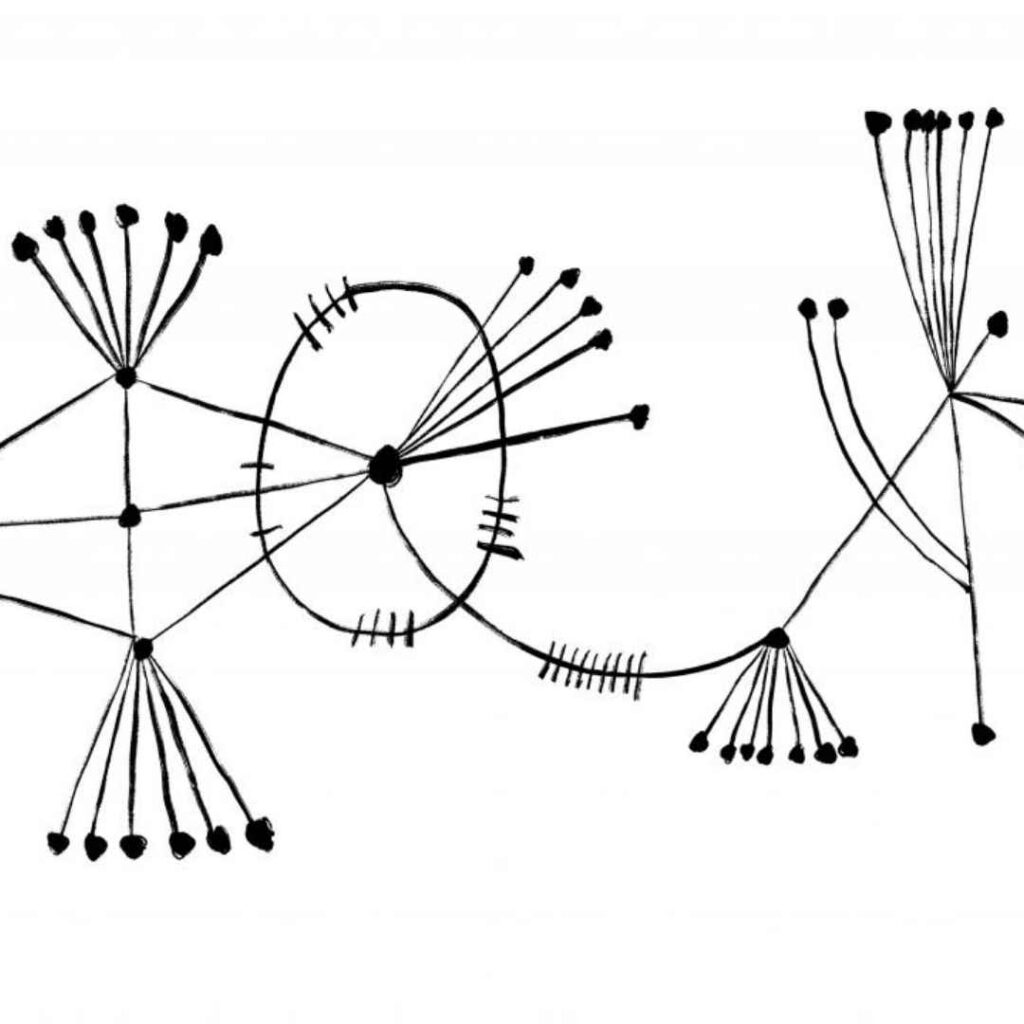
    expressing one’s self through lines and symbols with Beatrice Gasca Queirazza

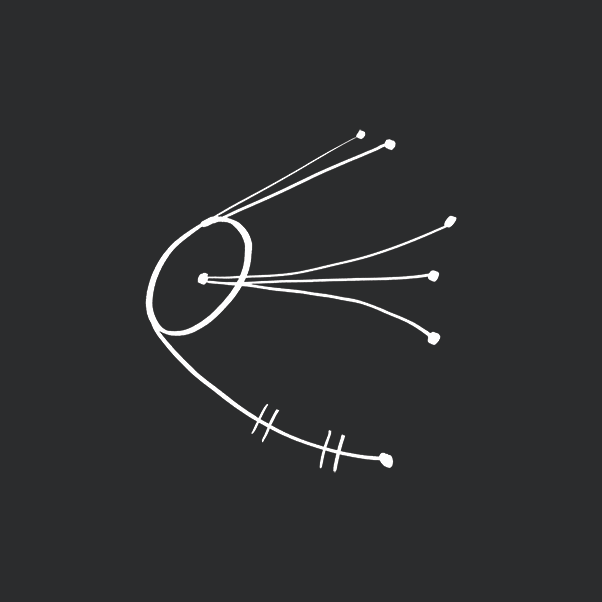
    Inspired by how personal and intimate moods can be, we’re starting a mood board series where we ask creatives from different disciplines to interpret our eight moods in store in their own ways. Whether minimal or quirky, monochrome or multihued, sky’s the limit. There are simply no rules, just interpretations.


    Kickstarting the series is Beatrice Gasca Queirazza, an illustrator and graphic designer based in Turin. From an early age, she describes things that excite her with figures and lines. She shares: “symbols and music don’t need words” and we couldn’t agree more.

    Beatrice Gasca Queirazza

    discover bea’s interpretations

    Lost in Dreams

    When you are lost in your dreams, you are vulnerable, but you are also fully yourself. This is why the round symbol pushes us back in a reverse direction. It’s an invitation to explore what lies within and understand ourselves more deeply.

    Lost in Dreams

    When you are lost in your dreams, you are vulnerable, but you are also fully yourself. This is why the round symbol pushes us back in a reverse direction. It’s an invitation to explore what lies within and understand ourselves more deeply.

    Calm & Collected

    The lines of this symbol take me back to a safe place. They expand both in the air and in the ground. Just like rivers, they spread out to create new streams and new directions.

    Calm & Collected

    The lines of this symbol take me back to a safe place. They expand both in the air and in the ground. Just like rivers, they spread out to create new streams and new directions.

    Floating on Clouds

    The grace of this symbol defines its movements. It has a direction that shapes itself through the new. Its characteristics relate to the sense of the personal soul. Magical!

    Floating on Clouds

    The grace of this symbol defines its movements. It has a direction that shapes itself through the new. Its characteristics relate to the sense of the personal soul. Magical!

    Emotional Rollercoaster

    This symbol is fluid, constantly moving and cannot stand still. It understands its own emotions and often changes in different directions in an instant. It is rising both downwards and upwards. Never static and always in flux.

    Emotional Rollercoaster

    This symbol is fluid, constantly moving and cannot stand still. It understands its own emotions and often changes in different directions in an instant. It is rising both downwards and upwards. Never static and always in flux.

    Taking it Easy

    This symbol looks backwards every now and then, but is not discouraged. It has a great peace of mind. It keeps everything it finds in front of it and carries it with intuition. It moves very fast like a firefly in the night and like a tadpole in the water.

    Taking it Easy

    This symbol looks backwards every now and then, but is not discouraged. It has a great peace of mind. It keeps everything it finds in front of it and carries it with intuition. It moves very fast like a firefly in the night and like a tadpole in the water.

    A Sense of Melancholy

    This one moves in just one direction but does so with great depth. It’s very closed because it has several layers. Like a grating, it pushes us to see beyond or even below our ribs. It exposes itself but with protection.

    A Sense of Melancholy

    This one moves in just one direction but does so with great depth. It’s very closed because it has several layers. Like a grating, it pushes us to see beyond or even below our ribs. It exposes itself but with protection.

    Ready for Action

    A symbol that is both strong and heavy. It is preparing to leave and has a lot of energy in it. That’s why it has a viewfinder. A point where it can arrive and explore itself fully. It has a lot of energy and it never gets tired, even as it supports all the others.

    Ready for Action

    A symbol that is both strong and heavy. It is preparing to leave and has a lot of energy in it. That’s why it has a viewfinder. A point where it can arrive and explore itself fully. It has a lot of energy and it never gets tired, even as it supports all the others.

    Having a Blast

    This symbol jumps around a lot, but also expands in its own space laterally. It joyfully drives every movement and it changes directions very easily. It has several dots that represent the laughter it holds inside. It is a symbol of joy and it invites a continuous celebration.

    Having a Blast

    This symbol jumps around a lot, but also expands in its own space laterally. It joyfully drives every movement and it changes directions very easily. It has several dots that represent the laughter it holds inside. It is a symbol of joy and it invites a continuous celebration.

    continue reading

  • 10 albums for a mild & placid evening by Daniel Jahn
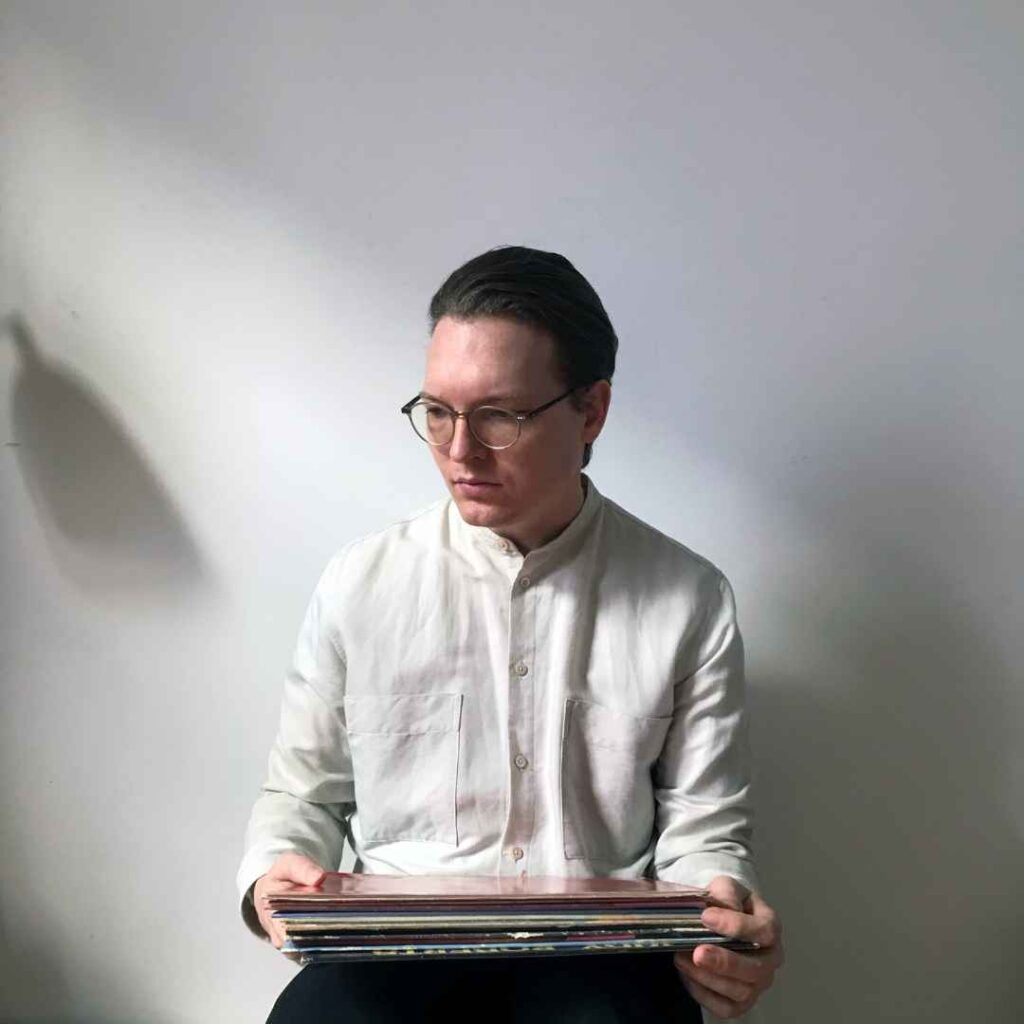
    10 albums for a mild & placid evening by Daniel Jahn

    For our next mood list, we’ve invited one of our earliest supporters Daniel Jahn from the Hamburg-based label Bureau B. Founded in 2005, the label has amassed an extensive catalogue of reissues and new productions, with the spectrum ranging from pop to avant-garde. Aside from curating for Bureau B, Daniel is also a member of the unhappybirthday band. The trio revels in a deep sense of melancholy in their arsenal of dreamy, melodic yet ultimately upbeat and uplifting songs.


    Always intrigued by Daniel’s picks in store, we were curious what mood speaks the most to him.


    “One of my favourite moods could be described as mild & placid. Coming home after a stressful week at work or trying to find some escape from the daily tensions and struggles (especially in these weird times), lying down at the cosiest place in the apartment, putting on a couple of records and slowly drifting away. The moment when you are arriving in a dreamlike state, somewhere between half-awake and half-asleep and you get carried away completely by the magic of the music.”, shares Daniel.


    Below are some of Daniel’s favourite albums to play on a mild and placid evening.

    Daniel Jahn
    Lampront’s Group – A Week In San Francisco (1984)

    An almost invisible Italian library record, which actually sounds only a little like Italy, but – just as the title suggests – like a rainy day somewhere at a port in San Francisco. Sultry, longing and overwhelmingly beautiful.

    Norberto Lobo – Muxama (2016)

    Norberto Lobo from Lisbon has mastered an almost otherworldly way of playing his guitar. The interaction of his fingerpicking technique and the right intuition for effects and manipulation result in a very strange, unique music that will carry you far out to the edges of your mind.

    Massive Attack – Protection (1994)

    One of the first records I bought myself in the only record shop in my small hometown. The songs on it have been with me for a long time, so that today I always feel a strange nostalgia when I play the record. Nevertheless, I never get tired of it.

    Baal & Mortimer – Deixis (2020)

    One day I received an email with a recommendation: Baal & Mortimer from Düsseldorf. I liked the mysterious name and luckily, the music had the same seductive effect. A few months later, I had the chance to release Alex’ (Baal & Mortimer’s) debut album – a record like a secret that has not revealed itself to me to this day. Fortunately!

    Jan Jelinek – Loop-Finding-Jazz-Records (2001)

    This record is also an early love of mine which playfulness and melancholic undertone still impresses me deeply. The early 2000s always seemed to me like an unaesthetically time, but this album proves the opposite.

    Cass. & Gianni Brezzo – Masala Kiss (2019)

    I remember my friend Basso giving me this record on a rainy Friday. When I came home that evening and put the record on, I was immediately drawn into it. There is a sensitivity in it that gets me every time I listen to these fantastic jams.

    Björn J:Son Lindh – Atlantis (1983)

    Björn J: Son Lindh’s underwater journey never gets old. This LP takes you to wide beaches, washed by the waves of the ocean. Even if you are actually only lying in bed at home.

    Jandek – On The Way (1988)

    I think a brick is cracking, I think a window’s broken… I am a huge fan of this enigmatic artist. From his extensive work, this record is one of my favourites. Filled with a brittle, unruly beauty that will probably always remain unexplainable to me.

    The Milk Factory – Aula (2020)

    The cover photo of this album promises a kind of sparse beauty. You are roaming through your neighbourhood and return home filled with an inexplicable feeling of security. A promise that the music certainly fulfils, supplied with such complexity and fondness that you just can’t resist.

    Steve Jolliffe – Journeys Out Of The Body (1983)

    This album is a very special experience. Without cheesy esoteric ballast, the music actually invites you to go on a journey, leaving the body behind and discover the depths of your own dreams. What a trip!

    discover daniel’s recommendations in store

    continue reading

  • taking snapshots of time with Celia Hollander
    taking snapshots of time with Celia Hollander
    Celia Hollander is a Los Angeles based artist and composer working with audio, scores, performance, installation and text. In her most recent record, she works with an assemblage of field recordings to intuitively form temporal experiences. She drenches them, layers them, reverses them, and mostly seems to have fun manipulating them to no end.


    Intrigued by her fascination for space and time and also her ongoing list of questions, we set out to have a chat with her to have a glimpse into her unique approach to music making.

    How have you kept yourself busy these days? 


    I’ve been spending more time outdoors. I’m an avid hiker and I love going to the mountains and backpacking, so I’ve been taking the opportunity to get out. 


    I’ve also been making a lot of music. Although for at least the first month of quarantine, I didn’t make any music. In the last three years, I’ve been working on so many things non-stop that it was actually really nice to not make any music at first. I drew a lot then, but drawing is musical for me too, because the whole point of drawing is to listen to music. 

    Are you working on any new releases or just making music that resonates?


    Before we get into that, can you first tell me a little bit more about what you guys do?


    We started an online record store during the lockdown with a focus on moods, instead of genres.


    That’s really interesting, especially right now with so many people accessing music by mood through things like Spotify playlists. I think it opens up a lot of possibilities for music to be understood, categorized, and then accessed differently. 


    It’s also a very-post Internet approach, because what is “genre” really these days? There’s no defining “genre” of our generation. It’s a mix of everything, so we need to approach this hierarchy of categorization differently. 

    Celia Hollander

    Now that you’ve mentioned Spotify, how do you approach your relationship with digital music culture?


    I used to have a physical collection of tapes, records, and CDs. When I went to college, my parents also moved. I packed up everything to either go with my parents or along with me to undergrad. At that point, I decided to stop collecting physical music objects. 


    That was a long time ago and now I have hard drives of music. I saved all of my music and downloaded MP3s since high school. I’m more of a digital music collector and in many ways that’s physical too. It takes up space on the computer and it also has a physical footprint. 


    I’m also very much a digital audio producer, so I do feel a strong love for digital music as a medium. Both in consuming it and producing it and where those two overlap. 

    How did you start making your own music? 


    I started playing music as a kid. I was very lucky to have piano lessons when I was younger. I first started playing classical piano and then I joined the jazz band when I was in middle school. I started recording my own music on a digital four track when I was 15.


    When I started recording, a new world completely opened up and I really understood it as a medium that was something that I could fully create. For me, producing audio, even if it’s simple, has as much artistic expression as the notes themselves.


    I also ended up studying architecture in undergrad and right after that I was working for visual artists as a studio assistant combining architectural and sculptural work. As an antidote, music became more of a creative outlet. I was spending eight hours a day creating visual art so there was just no way that I would come home and start making a sculpture. That’s when music started to become more and more of a creative focus. The more I explored and got into it, I understood how music also encapsulates all of these other mediums.


    Music is spatial. It is temporal. It is social. It is performance. It is fixed media. Not to mention, there’s all the avenues for collaboration with visual artists, film makers or animators. There are so many ways that it is inextricably connected to other forms of media.

    If you pursue music full-time, aren’t you worried that you’ll need another sort of creative outlet? 


    I think that already happens naturally. A lot of times if I’m mixing something and listening to the same thing over and over, I’m drawing as a way to listen to it without focusing too hard with my full attention. It’s a way to listen in an oblique way, and an example of how these interests naturally balance out. 


    In the beginning of quarantine, when I didn’t and couldn’t make music, I started writing, which I also really love. Texts have always found their way into my performances. The ways that I work on visual art or envision music will overlap or inform each other. 

    Celia Hollander

    You’re very drawn to digital music. Do you also incorporate other instruments from jazz and classical music into your work?


    Yeah, definitely. On ‘Recent Futures’, each track is focused on an acoustic instrument. The tracks include recordings of myself recording objects in a steel drum, improvising on a koto or even knocking on wood. 


    I don’t actually have a lot of musical equipment. I don’t collect synths or anything like that, but I have tons of weird small percussive instruments and I would like to have more acoustic instruments. 


    Ultimately, my process really begins once things start to get edited or arranged. Mostly, I start by generating as much as I can and then I carve away or distill it, until there’s some sort of crystallization. 

    Does it stem from experimentation mostly or where does the trigger come from? 


    I guess it depends on what it’s for. The music I make for myself is ‘non-programmatic,’ as in it’s not for anything, whereas music that is within a collaboration or for a score is ‘programmatic,’ it has a purpose or is expected to function in a certain way.


    When I make music for myself, it’s often very intuitive. As I’m really interested in temporal perception, I try to grasp and express those different experiences, like time accelerating, or opening up into linearity. It’s an effort to make structures or spaces to create snapshots of time. 


    When I’m making music for a score or a collaboration, it’s approached with more of a clear intention and is usually very mood based. Like this should be ‘exciting’ or ‘very intense’ or ‘very sad,’ so often that does start from an overall vision of functionality.

    When you make that kind of music, do you have to be in that mood to be able to generate that music? 


    Something I think about a lot is the idea of balance. Even if I don’t set out to make music through an emotional tone, I see that often my opposite is externalized to find balance.


    A lot of the most pleasant or most beautiful music – if I can say so myself – that I’ve made was often made in times of hardship or anguish. On the flip side, when things in my life are very stable, positive, or maybe even boring, the music I make might be more overstimulating or high energy.


    The way I make music has as much to do with listening as with playing an instrument. So often, I find that if I’m making music intuitively, I’ll be making music that moves towards what I need or want at the moment. Whether it’s my external environment or my internal emotional landscape, I find that music plays a role in trying to temper and balance – both in the way I make and consume music. 


    Music will always be emotional. It’s not a neutral medium. No matter what, the way you hear it and the way it affects you will always make it an emotional medium. There are so many subtle shades of emotion that it creates, so it’s impossible to escape. 

    Celia Hollander

    Does architecture still seep in through your music practice?


    When I studied architecture, my main interests were the temporal aspects of the space and the ways that people use a space over time affects the space itself. I think those aspects of temporality and social activation remain key interests of mine in the musical sphere.


    You were also doing quite a lot of shows before the lockdown. Do you have a preference in terms of a concert set up?


    Text-based videos have been an important aspect of my performances. I’ll write these texts that are a series of slides, usually based on dreams that I’ve had. A lot of times they’re pretty mundane, but because they’re dreams, there’s something a little bit off about them. The videos loop, so they don’t start or end. I’ll project that and then do a mixture between having some sort of structure planned out for the set with a lot of room for improvisation. I also like to include an electroacoustic element to bring in the visual aspect of sound making and live processing to life.


    My hope is that as I play these shifting musical emotions, it casts a different light on the text. For example, the text might say something simple like “I walked into a room.” Maybe in the beginning of the set, that sounds very neutral and positive. But then at the end of the set, I might be playing something very intense so when it loops around again, it could feel completely different in light of different music.

    Celia Hollander

    Have you actually been doing digital concerts or livestreams? 


    I’ve done a few and it’s pretty surreal. A performance without the social aspect is really different, obviously. In concerts there’s this type of dynamic social spontaneity. There’s a spatial-temporal musical experience where everyone is in the same environment together. There’s more common ground and that creates room for other things to emerge. When everyone’s isolated, like when everyone’s listening through their own speakers in different places, a lot is limited. 

    To end, we really like your ongoing list of questions and it would be nice to ask your thoughts on one of them. So here it goes: “what does the Internet sound like?”


    You know, I write these questions since I don’t have answers myself! But I love this. This is a real test of how much I’ve been thinking about them.


    So, Timothy Morton once wrote about ‘hyperobjects.’ Ideas that are so big, they’re impossible to define. An example he uses is global warming. It’s just beyond an individual’s capacity – we’re not equipped to be able to really understand the scale of it both in space and time. The enormity of micro variables that have created such an immense movement is impossible to pin down. 


    The Internet is similar, or at least it makes sense to think of it in that way, because it’s just such a massive, teeming collective entity. To try to distill it as a sound or in a sound is a big question.

    listen to celia holland’s music

    continue reading

  • proudly waving the genre-free flag with Matthewdavid
    proudly waving the genre-free flag with Matthewdavid
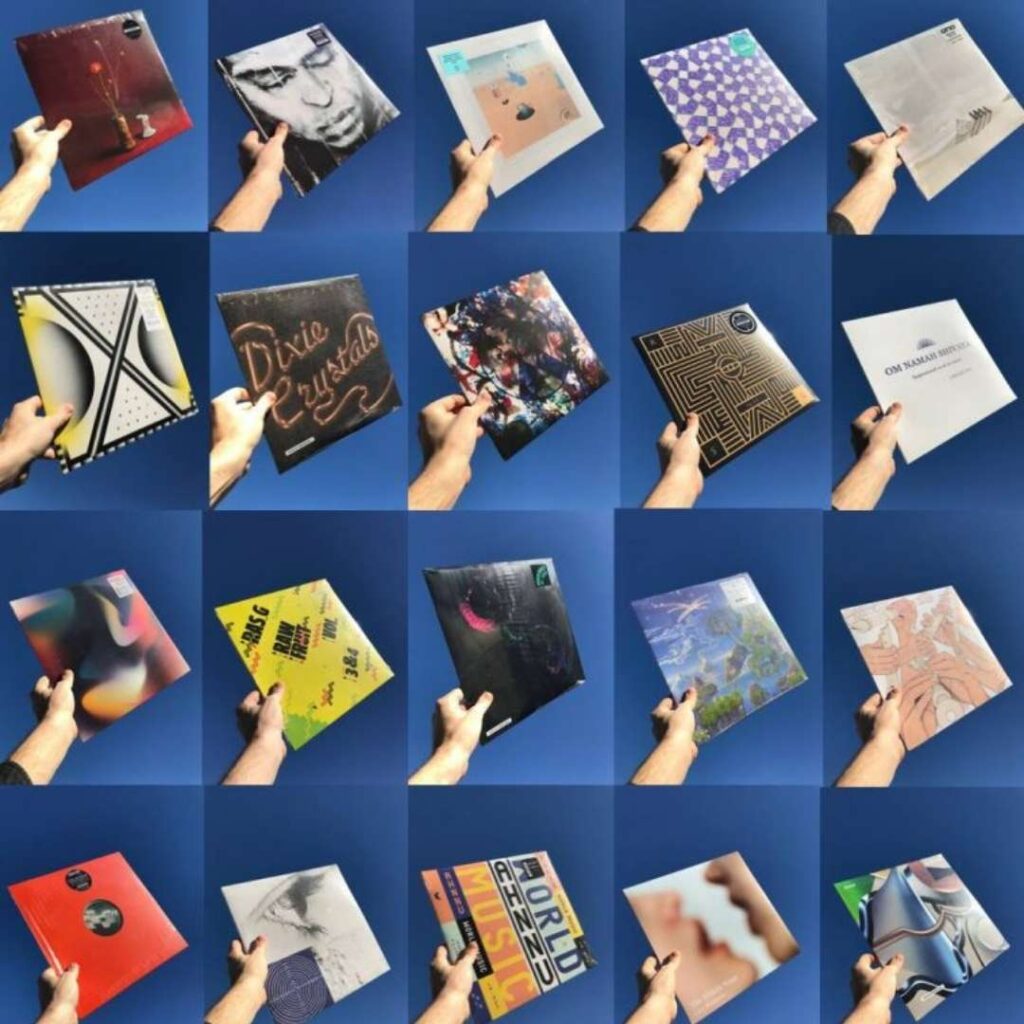
    We’re big fans of Leaving Records around here. Not only do we love the diversity of their releases and the richness of their sound, we also greatly love how they’re waving the genre-free flag high and proud. 


    Inspired by the quirky and magical universe they’ve created and continue to shape, we couldn’t be happier to have a chat with Leaving founder Matthew David McQueen to learn more about the strong LA music community, the magic of sample-based music, and the joys and rigors of running a genre-free label.

    When we think about Leaving Records, the all-genre Venn diagram comes to mind. Is this an important part of the label?


    Yes, totally. I strongly stand by the all-genre philosophy. Not just only in music, but also in so many other parts of life. I feel like it’s a big idea that the world just needs right now. I mean, it all gets down to the core inclusive nature of humanity and us working together.


    Lately though, I’ve been thinking a lot about that concept and how much I preach about it. Somehow I feel like my ego is getting a bit in the way of the message. I had someone reply to me on Instagram that I was not being sensitive to genre-specific labels that only purely release techno or what have you. Especially with live music being out of the picture right now, these record labels are having quite a hard time. It definitely made me rethink how I see things. I mean, if you are really into one genre and you are really passionate about it, that’s OK too. 

    Has this all-genre philosophy been there since Leaving started in 2008 or has it evolved over time?


    Yeah, it’s been there from the start, except I didn’t really know it at the time.


    Together with my partner Jesselisa Moretti, we started the label because we were in so many different music scenes in Los Angeles and we were pretty much collaborating with a lot of musicians and creatives. We were kind of inspired by experimental music labels releasing all sorts of stuff on cassettes. Not only from the States, but all over the world. 


    I remember I was really into Finnish freak folk experimental stuff when I started the label. The work of Ras G was also very inspiring to me. That dude was collaging all kinds of weird shit, all while at the same time making really hard-hitting hip hop beats too. It blew my mind. 


    Hip hop’s always been very non-genre to me. You’re basically sampling from wherever and however. It’s where the genre-free philosophy comes from musically.

    Matthewdavid | Leaving Records

    Aside from being headstrong about its genre-free philosophy, Leaving also has LA written all over it. Does Leaving influence the sound of LA, or does LA influence the sound of Leaving?


    I’d say both, but it’s definitely more LA as a city influencing the sound of Leaving. It’s just this beautiful symbiosis. The idea of community is really important here. Live music is really a crucial part of establishing and maintaining a community. With that out of the picture, it has been really hard lately. I don’t get the same joy and satisfaction out of doing online events as I do bringing people together in real life.

    Leaving started out as a tape label, but now you also ventured into vinyl. Do you have a preference?


    I love tapes. I will always love tapes. Everything about tapes is rad and it’s awesome to make. I have a lot of fun with them. It’s very hands-on, personal and accessible, especially from a production and manufacturing standpoint. I also love the sound and I love to experiment with the sound as well, from a music making stand point.


    Vinyl is just different. It allows you to share the music to a much larger audience, so it’s a totally different ball game.


    Funnily though, people are still scratching their heads a lot when we do tapes. “You put music on tape, what is this?” But yeah, I will probably always keep making tapes on my label. I have a very special place for tapes in my heart. 

    A big part of the appeal of the releases is also the cover art. We’re curious. How involved are you as a label with how your releases should look like or is it mostly an extension of the artist’s vision? 


    At the very beginning, we were just kind of working based off a template. The art and visual director, who was my partner and co-founder at the time, directed each release within that framework. We would take the artist’s cover art idea and integrate this within the template.


    When my partner left the picture, I carried on with that way of working with our artists. Sometimes the artist just leaves the artwork all to our hands, but other times, they have a very solid visual idea or concept of how they would like their music represented. It’s mostly finding a way to blend it all together and integrate that within our aesthetic. In the end, it’s all about working with the artist and allowing the expression to flow.

    How about the music itself? Do you take an active role in shaping the sound together with the artists?


    There’s quite a bit of involvement sonically, though it’s mostly engineering. I mean, it’s the artist’s work. It’s not my work. I’m not going to say, “I don’t want this one, I don’t want that one.” I am going to take on a project based on the whole work basically.


    I do share my feedback about certain things, but it’s always coming from a loving and encouraging place. It does get cool sometimes. As I’m an audio engineer and producer, I can work with an artist to kind of craft or present their sound sonically. Sometimes I feel that a song is really beautiful, but it’s sounding a little flat, or maybe the vocals aren’t as good as they could be. Then I ask, “how would you feel about it if I were to mix or maybe remix some of this stuff? Like maybe I can provide a very experimental mastering treatment, so it sounds more lo-fi?” 


    Being able to add to the whole sort of sonic tapestry of Leaving is something I can really enjoy and appreciate. 

    Matthewdavid | Leaving Records

    How would you describe Leaving’s sonic tapestry to, say, anybody who hasn’t heard any of your releases before?


    Well, often the sound is described as lo-fi, but I don’t think that low fidelity is necessarily the right word. It’s just experimental or maybe it’s not conventional. Maybe textural is a better way to talk about it. I like texture and I love experimenting with sound. 

    Maybe that’s what we perceive as the distinct LA sound and what makes your releases very recognizably Leaving.


    Sure. Totally. I don’t always hear that all the time, so it’s nice for you to say that. Like, oh you’re right, there’s the magic sauce. The LA sound that people talk about. I think Leaving has definitely carved out quite a nice bit in the LA overall sound makeup. That’s something I pride myself on. I feel honored honestly. But again, like we talked about earlier, it’s the city informing me and the diversity in culture here. All the music scenes I participate in also inform me too as a curator. It’s just that beautiful give and receive, back and forth symbiotic relationship with the cultural fabric of the city.

    Do you mostly find the artists or do the artists find you?


    I think because of my position in this music industry or, how I prefer to call it, community, I am able to interact with and discover a lot of incredible music and art. I know a lot of awesome musicians, who know about a lot of awesome music happening in the city, so I am always discovering so much new music through the community.


    At Leaving, we also do quite a lot of events and shows in the park and it’s not always the artists on our roster performing. Organizing these events takes a lot of work, but there’s this incredible gratification and purpose of that work when it’s happening in front of your nose, especially when there are people coming from all different corners of the city and all different cultures and all walks of life. It’s like an incredible reward that you can’t get anywhere else. That’s what keeps the discovery and the searching alive. It’s a community. I am really missing that a lot. Hopefully one day again we can organize them again.

    Matthewdavid | Leaving Records

    You also make you our own music as Matthewdavid. How much of Leaving seeps into your own work?


    I definitely proudly wear the New Age tag on my sleeve and I like this kind of concept of experimental New Age. But the thing is that New Age in itself is already experimental. It’s just kind of become an umbrella term for experimenting with therapy and in this context, music. I like to own that, and also being influenced by, not only by all the artists and musicians I’m in collaboration with, but also the sound of Leaving. That’s in me too. I make that too.


    I still like to make beats and would like to make some more. I actually just hooked up my turntables again, so I can start scratching. I come from hip hop and scratch DJing too, so I’m trying to get back into that.


    It’s just that now and lately, I carved a lane in this weird experimental New Age-y psychedelic ambient space. I don’t really like calling it ambient, but it is and that’s fine. I like getting a little bit more crazy with the genre tag. I like it to be very multi-faceted and weird. It’s just what I’m drawn to making and experimenting with.

    How did that all start for you?


    I love to sample from privately-issued new age music on cassette. It’s often the only place where you can find some of this weird, obscure American music from the 80s, 90s and sometimes from the 70s. There is still a lot of discovering and unearthing work to be done in this genre that people are now just starting to take seriously.


    I remember doing community service at a thrift shop and all of these cassettes were just coming in. At that time, I was collecting hip hop tapes and sampling in a more traditional way, mostly looking for drum breaks. Sooner or later, I started sampling from New Age tapes because I wanted to extract the useful, functional, therapeutic, relaxing, environmental purpose of this music. 


    New Age music in America is really fascinating to me. It has the same embedded philosophies as punk in terms of its DIY approach, but the music is more psychedelic and experimental. A lot of the time, it’s also just very relaxing and pleasant to listen to.


    Next to American New Age music, I also feel that people are starting to find out more about Japanese New Age and environmental music because that shit was happening and has been happening. Their minimalistic, detailed approach to Japanese art is so very fine-tuned and precise and beautiful and intentional, and that’s really coming across. 


    Collecting privately-issued New Age music on cassette has opened me up to embracing and accepting music that I didn’t validate before or that I didn’t take seriously in the past. Music that I thought was cheesy and had no place now suddenly has new life and meaning to it. And this is interesting to me as a sample-based artist. Sampling music is recontextualizing the source. It’s a deep and fascinating and very personal concept. It’s really seeing the multi-dimensionality of a source and identifying the universe within everything.

    Matthewdavid | Leaving Records

    When we look at the artists you collaborate with, they also often use music as a way to express their spiritual journey. Is that something you actively look for in the artists you work with?


    I think it is kind of all intertwined. I’m attracted to things that just click. I think all of that stuff needs to be bundled up and going at the same time and that’s what establishes the connection. I’m attracted to stuff that’s just sort of unfolding and fluidly churning and making up this complex, beautiful organism, because that’s me. 


    Everyone has their own sets of beliefs. I wouldn’t say that all the Leaving Records artists are as spiritual as me, because I consider myself as a spiritual person, but that’s not a deal breaker. I have a spiritual connection with music, and all the music I release on Leaving, I have a spiritual connection to. Someone like Carlos Niño obviously represents his spirituality very loudly and it’s very obvious in the music too to me. But not every artist needs to be that way to me for me to have a spiritual connection to that music.


    You know, Carlos is a mentor to me. I’ve known Carlos for so long. He knew me before really anyone did in the city. And he’s given me so many gifts over the years. It’s an honor to be able to release his music finally. I never thought I’d be releasing a record with Madlib and Iasos on the same record. I love it. Carlos is an incredible facilitator. He’s introduced me to people that no one else could, like these luminary elderly figures such as Laraaji and Ariel Kalma. 

    Such an interesting conversation. Thank you for sharing. 


    I love talking about stuff. Thank you for listening to me, go on and on about it. I’m obviously very passionate about this and it’s a very deep part of my soul. And I love connecting with others that share that passion and interests.

    discover our favorites from leaving

    continue reading

  • take off your cool: herb sundays with Ghostly

    take off your cool: herb sundays with Ghostly

    “Transcending its record label roots to sell an ethos,” says The New York Times, Ghostly International has grown from a boutique label known for its experimental-pop and techno acumen into an internationally-recognized multicultural platform representing some of the world’s best visual artists, designers, technologists, and musicians.
     

    Since its early days, Ghostly prides itself on having a genre-less sound that is free of any inhibition and categorization from artists such as Matthew Dear, Kllo, Galcher Lustwerk, Khotin, and Objects & Sounds fave, Mary Lattimore. An approach that not only distinctively defines the label’s releases, but also seeps into their other artistic pursuits.
     

    At Objects & Sounds, we’re also big fans of Ghostly’s fun collaborations with iconic brands and characters such as Miffy, Astro Boy, Eastpak and Vans. Ogling at the Ghostly Moodboard on Instagram is a guilty pleasure of ours too! Curious what they’re up to, we asked Ghostly founder Sam Valenti IV to share with us a mood list.
     

    Inspired by his ongoing #HerbSundays playlist featuring music he’s collected under the simple intention of deep enjoyment — “dedicated to post-ironic listening habits for deep enjoyment. Complete albums enjoyed without fear of reproach or judgment, often obvious or in plain sight.” — Sam shares with us a sampler that is undeniably a reflection of Ghostly’s genre-less philosophy. Enjoy!

    O&S - Mood LIst - Ghostly International
    Herbie Hancock – Little One

    Where the series gets its name from (and also just being a herb in general). Outstanding moodscape and just realized he was only 24, what an amazing career.

    Arthur Russell – “Instrumentals” Volume 1 (Part 2)

    We’re big Arthur fans around here and love this oft-overlooked collection. Also 2 minutes is the perfect length for a song, no?

    Dorothy Ashby – The Windmills Of Your Mind

    We work with the great Mary Lattimore and have always felt the harp was such a modern instrument in the hand of the masters. Dorothy’s sound always hits, both meditative and groovy.

    Leo Takami – Unknown

    Unseen Worlds is a great label and have done great work bridging the past and the present. Apparently this was an unsolicited demo which makes it even more astounding. Love the twists and turns.

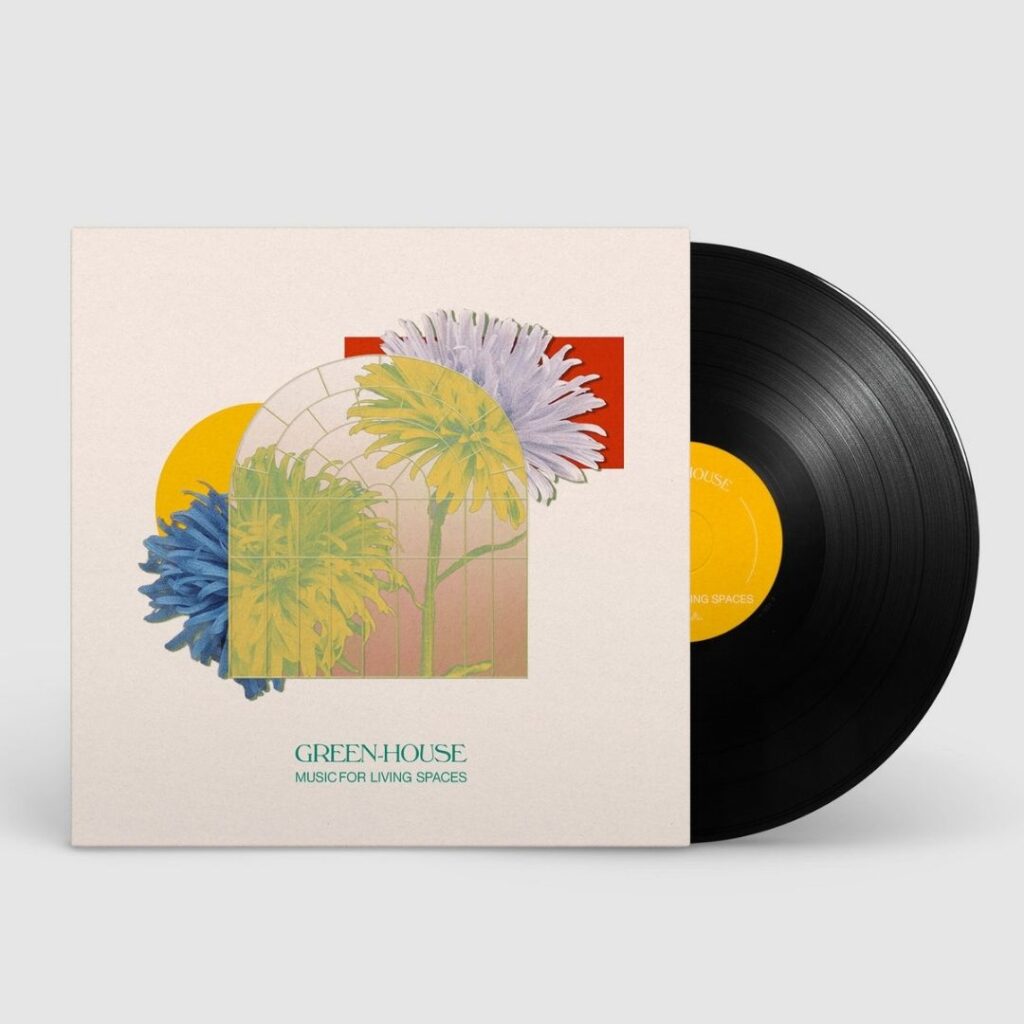
    Kaitlyn Aurelia Smith – Remembering (Green-House Remix)

    LA’s sublime Green-House remixes Kaitlyn on our label. Love the hissing/brimming energy these two voices create together.

    Brijean – Moody

    Our newest signing who make that sort of music you can’t quite put your finger on, but not worth thinking too hard about. They are musicians and the kids of musicians who make great music.

    Duval Timothy – Older Than We Used To Be

    The breakout star of 2020 has a sound all his own, while still feeling timeless. This song like others from his Brown Loop record are so spare but so evocative.

    Helios – One And The Same

    We still feel pretty honored to work with Helios who has been a mainstay in our lives for some time now. This new album reflects the domestic life, that slant of light, that nothing/everything moment.

    discover ghostly

    continue reading