
















Tending the ordinary with Federico Durand
Over the past twenty years, Argentinian composer Federico Durand has refined a sound that feels like a collection of handwritten notes, faded photographs, and keepsakes from his childhood. For him, music is simply a part of life, a practice of tending to small things with care, much like a gardener working the same patch of land day after day.
Across a prolific body of solo and collaborative work, what stands out is the attention he gives to small things: fleeting gestures, passing light, or familiar sounds. His compositions carry the warmth of objects kept close for years, attuned to the beauty in details others might overlook.
Throughout our conversation, Federico often returned to simplicity, not as limitation but as a way of working. You can hear it in his music: it moves slowly and patiently, without forcing things into place. Rather than seeking the extraordinary, he finds wonder in the ordinary, letting small moments take root like seeds and bloom over time.
You’ve been making and releasing music for many years, often working with a deliberately small palette of instruments. You once described an early album, La siesta del ciprés, as “a search for simplicity as craft.” How has that idea evolved, and does it still feel true to the way you work today?
Music is one of the most beautiful things that exists. When I was a boy, I made music with glass cups and pans, hitting them with pencils or small branches. My aunt Mirta had a Hitachi recorder with which I started making collages on cassettes. Little sounds that I was collecting in the house and in my grandmother’s garden. I think my way of working hasn’t changed that much since then. It is quite rustic, artisanal. Already as a teenager, and later during the second half of the 90s, I made music with a 4-channel recorder, objects, pedals, and a Minimoog synthesizer.
Long before releasing my first album La siesta del ciprés through the Japanese label SPEKK, I made many small editions on cassette and CD-R that I gave to my friends, with photocopied covers, in editions of 10 or even just 1 copy. Recently, during a move from my old house, I found a box full of cassettes with recordings from that time and from the early 2000s.
My first synthesizer was a Crumar, a very beautiful Italian string instrument from the late 70s. I now have a Fostex X-18 and many cassette recorders. I like to make simple music, strongly rooted in repetition. It’s something I’m deeply passionate about. Through repetition, one connects with something essential, something simple and, at the same time, complex. It opens up a cyclical, non-linear sense of time. A temporality totally different from that of today’s society, which runs forward at full speed, as if it were an arrow, and thinks of life as a spreadsheet. On the contrary, musical repetition opens the door to a quiet delight, similar to that of the seasons, the cycles and colors of a garden, and the circular world of dreams: the place where we live when we are asleep. Children’s music and íkaros, the songs used in magical rituals by South American Indigenous communities, have repetition and elaborate simplicity in common.
Do you usually begin with an idea, a feeling, or a sound?
A little bit of everything. I have no preconceptions. I accept whatever comes up, whatever I find. When an idea appears, or a sound reveals something to me, I follow it. Almost everything begins with improvisation. Making music, for me, is a moment of complete freedom.
What’s become important to you in making music over the years?
Every day, I want to be closer to music. I’ve learned that music can happen at any time. Music appears whenever the enjoyment of sound appears. In my small workspace at home, I always have an instrument ready to play.
I make more and more music without thinking about recording it, simply for the pleasure of making it. And although I often miss pieces of music I could have recorded, there is something beautiful about fully enjoying the moment.
I’ve also learned to carry a portable recorder with me, a Zoom H1, because it’s very small and you never know what wonders might happen while walking through city neighborhoods or traveling in the mountains.
And what do you still feel the need to express?
Just as a gardener takes care of his garden, I make music.
Your work also feels deeply rooted in place. How do your surroundings find their way into your music?
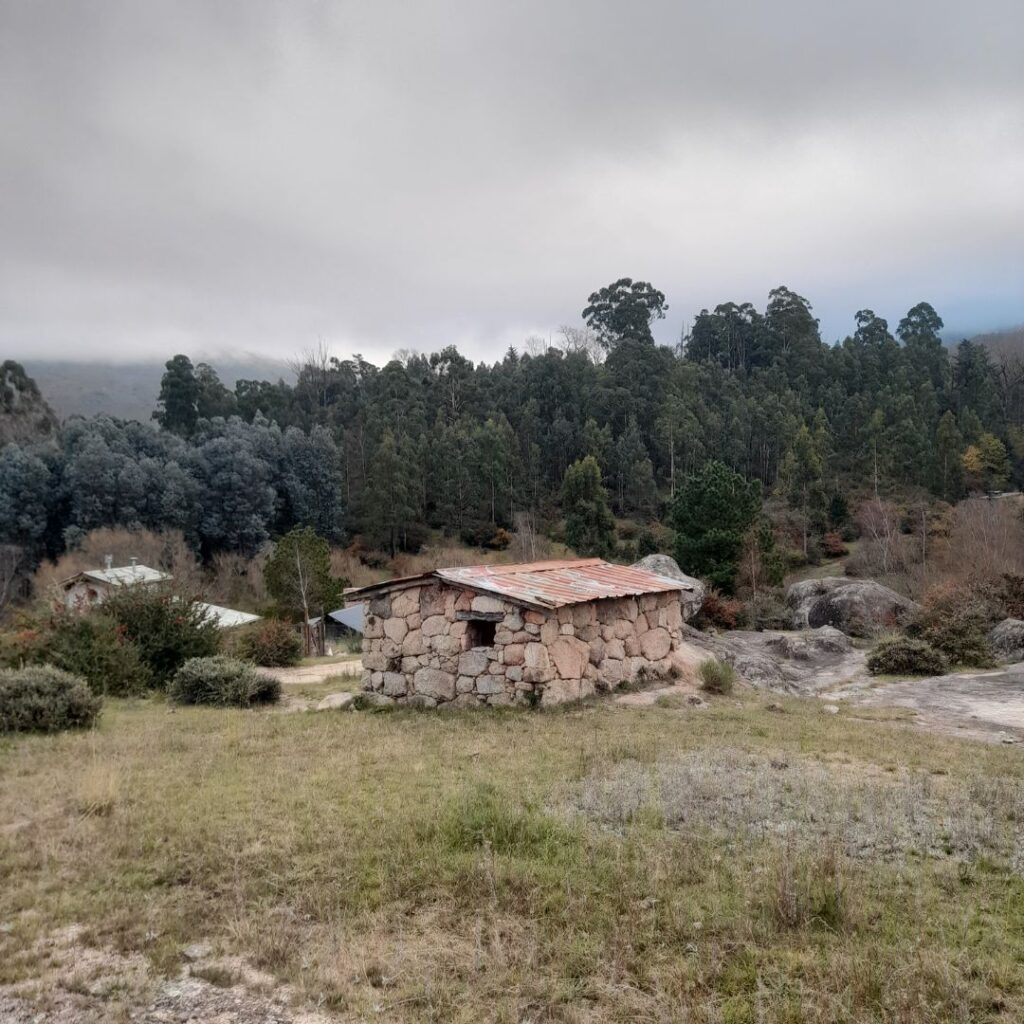
I really like gardens. When I was a child, I thought beauty was fully revealed in the open spaces of nature, in solitude, like someone contemplating a valley from a mountain. Then I understood that nature has a human face. That same landscape I described before becomes even better when you see a small house with smoke coming out of a chimney. You can imagine someone inside cooking, knitting, making bread. One is never alone. It is better to share with others.
The French gardener Gilles Clément named the residual spaces of the city and suburbs the “third landscape”: vacant lots, the gardens of abandoned houses, small flowers growing in the cracks of a wall. That kind of nature feels beautiful to me. A small, almost invisible nature that reveals itself every day.
When do you feel the urge to record something?
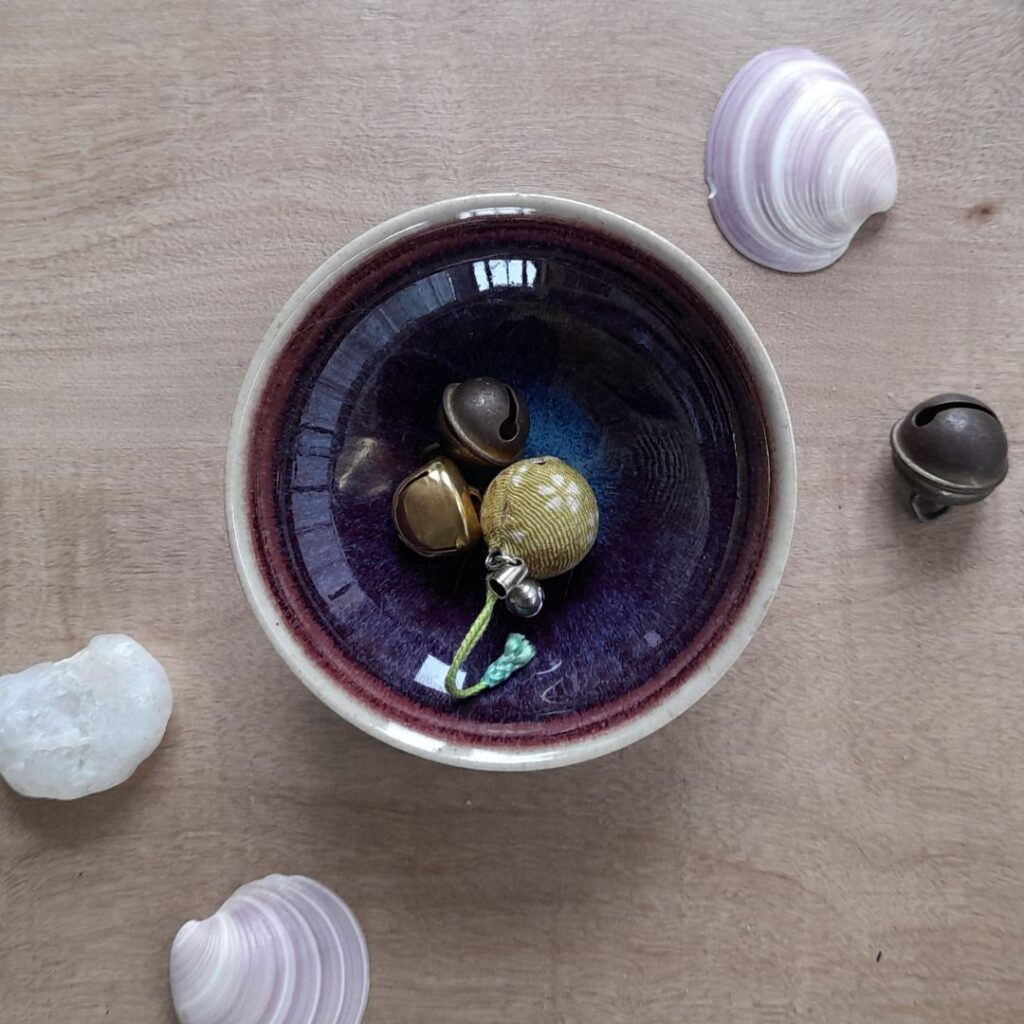
It can happen at any time because I almost always have my small digital recorder with me. I also usually carry small objects in my coat pockets to make music, like pebbles or pieces of metal.
Are there sounds or instruments you keep returning to?
A Sony TCM-200DV cassette recorder. I’ve lost count of how many I’ve had. It’s the best portable recorder ever made: inexpensive, with pitch controls, a built-in microphone, and a pause function. It’s a wonderful instrument for live concerts.
Memory and childhood are often present in your music. Why do you return to them so often?
Much of the art I love most has something of childhood in it. Just as oral narratives possess that cyclical temporality I mentioned earlier, childhood is a reservoir of essential resources.
One beautiful example is the Teeme Muusikat record series, released in Estonia in the late 1970s and mid-1980s during the Soviet period. Many composers, such as René Eespere and Raimo Kangro, created choral music and pieces for Orff instruments with children, using metallophones, flutes, drums, and xylophones. It’s music I always return to, and I have almost the entire collection on 7-inch singles.
There’s also the singer and teacher Nicola, who recorded an album in the Occitan language. I also think of Deb Wilenski’s experiments for Cambridge Curiosity and Imagination, in which she let children get lost in a forest, recording fantastical stories and ephemeral mythologies that they recounted when they returned to school.
I don’t know if it’s really about going back. Perhaps it’s about preserving a dreamlike, essential world of great freedom and imagination.
Are there particular sounds you associate with childhood?
In Argentina, and probably in other parts of Latin America as well, there’s a profession called El Afilador, the knife sharpener. It’s a man on a bicycle who moves through city neighborhoods sharpening kitchen knives. To let people know he’s arriving, he plays a flute, similar to a pan flute. It’s a melody that comes and goes. Each knife sharpener, despite the limitations of the instrument, has his own style. Sadly, there are fewer and fewer knife sharpeners these days.
The sound of the knife sharpener’s flute takes me back to my childhood in Muñiz, where my grandparents’ house was.
I have a 30-second recording of a knife sharpener that I made a few years ago on my phone, one morning while opening my family’s old bookstore, where I worked.
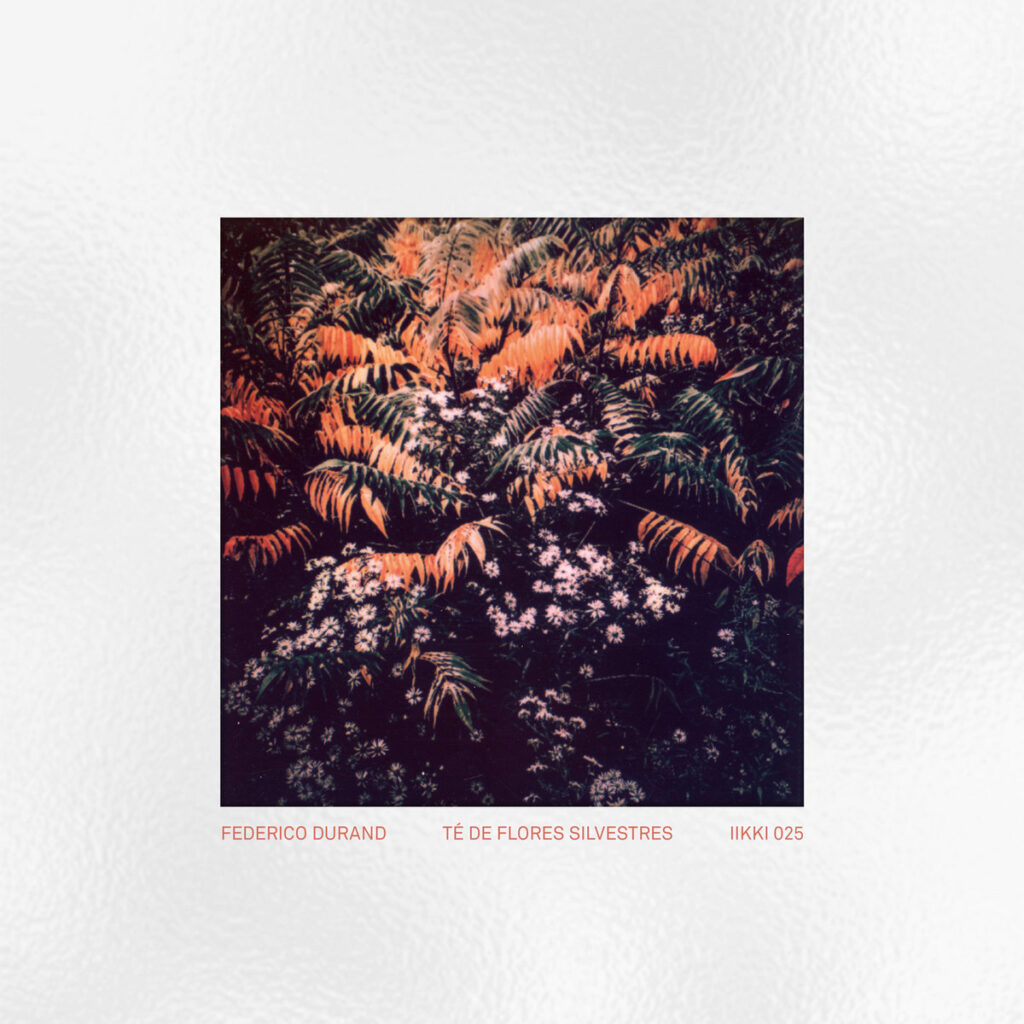
La Manzana Mágica will be your fourth release on 12k. What is it about the label, and about working with Taylor Deupree, that feels special to you?
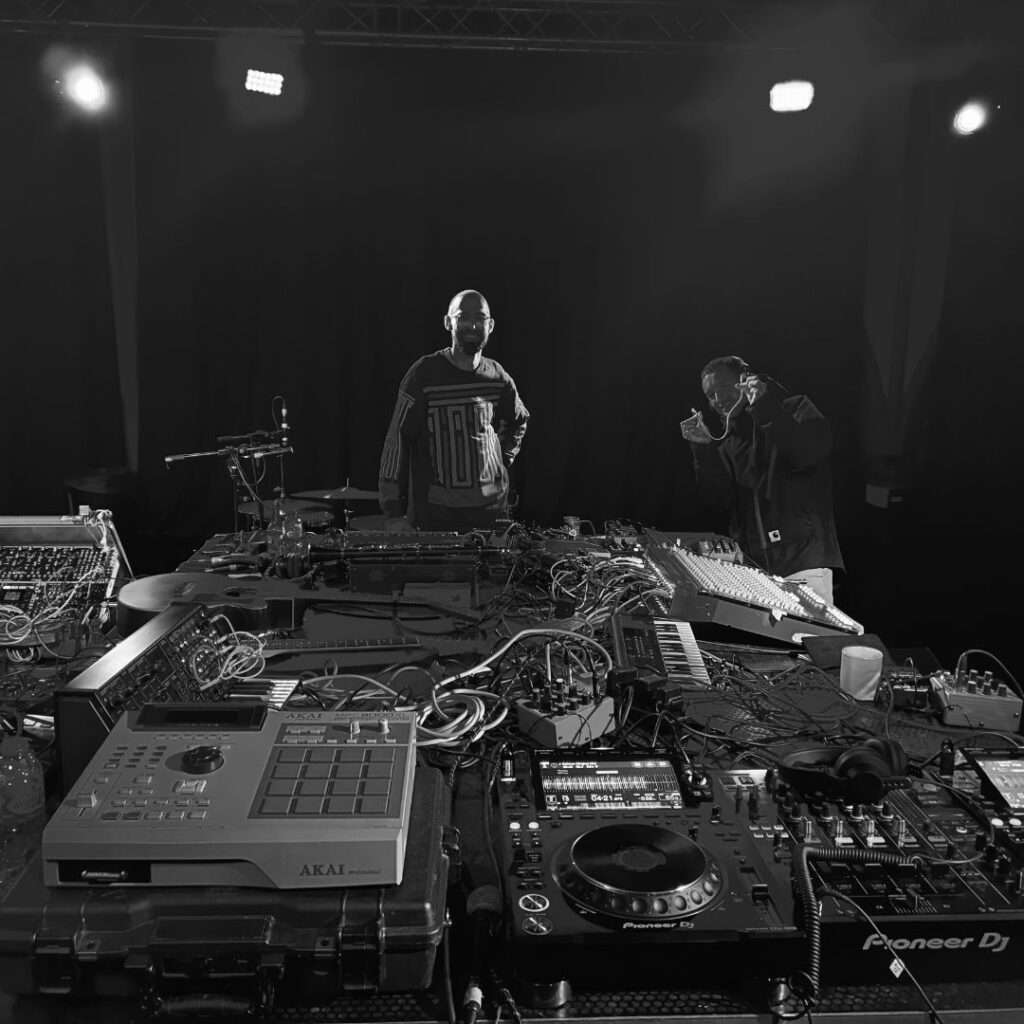
12k is a label where I feel welcome. That is closely tied to Taylor, who is my friend and musical partner. Together, we have a duo called This Valley of Old Mountains, which has released one album so far. He has also mastered many of my albums, and I feel he understands my music and sound very well. I’ve been enjoying Taylor’s music for a long time, and his records are often played at home.
We met in person in Japan in 2014, when we toured together with Stephan Mathieu, Corey Fuller, Tomoyoshi Date, and many other Japanese friends. We traveled to many parts of the country, played music, recorded, and shared many experiences. It was a very important trip for me.
I think 12k is one of the most interesting labels around. Many of its albums are among my favorites. Over the years, the label has continuously evolved and developed a distinct sound. Although it has its own aesthetic, I feel each artist on the label has a unique voice that contributes to the overall beauty of the catalog. That comes from Taylor Deupree’s vision and curatorial work, his deeply personal way of understanding and experiencing music.
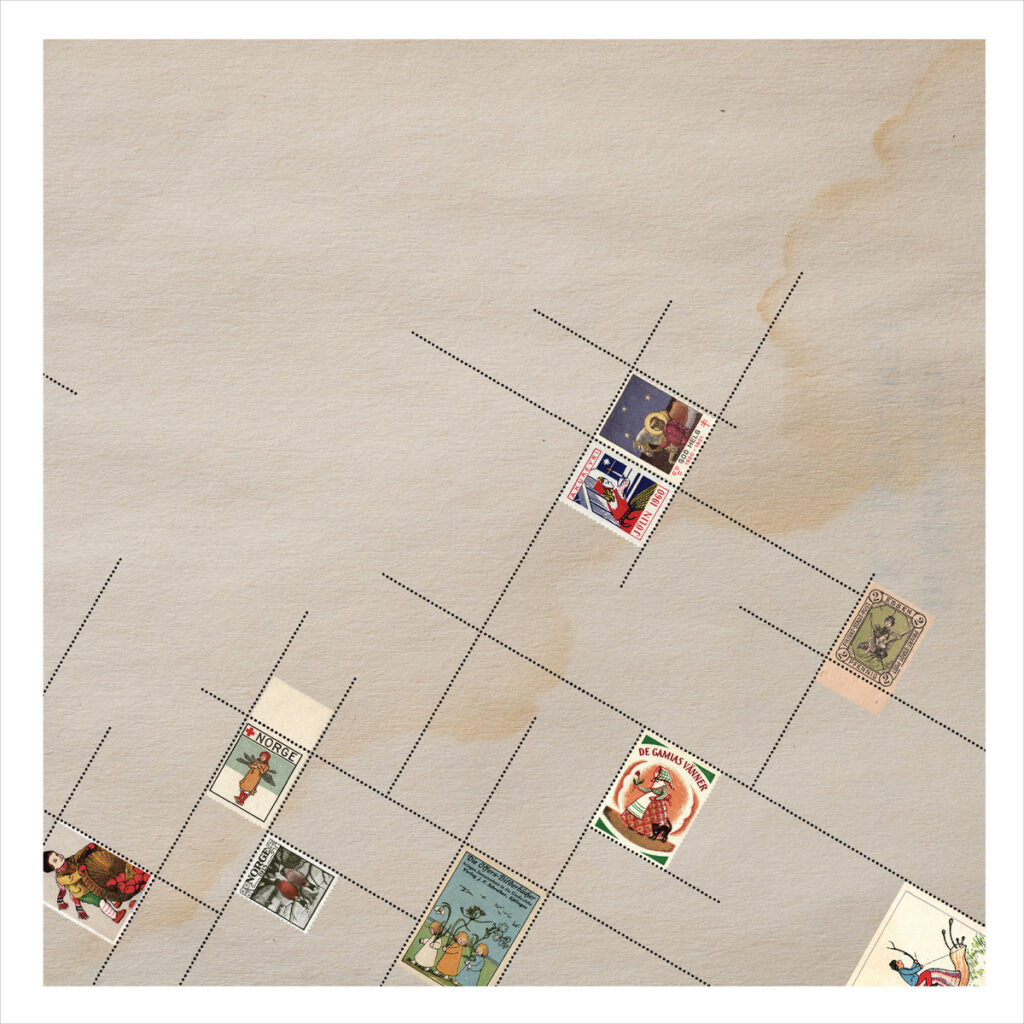
The album was inspired by your collection of Cinderella stamps. What are they, and how did they become a starting point for the project?
Like many people my age, I was also a philatelist as a child. As a boy, I collected postage stamps from all over the world. I remember very well a beautiful Korean stamp with the image of a bear.
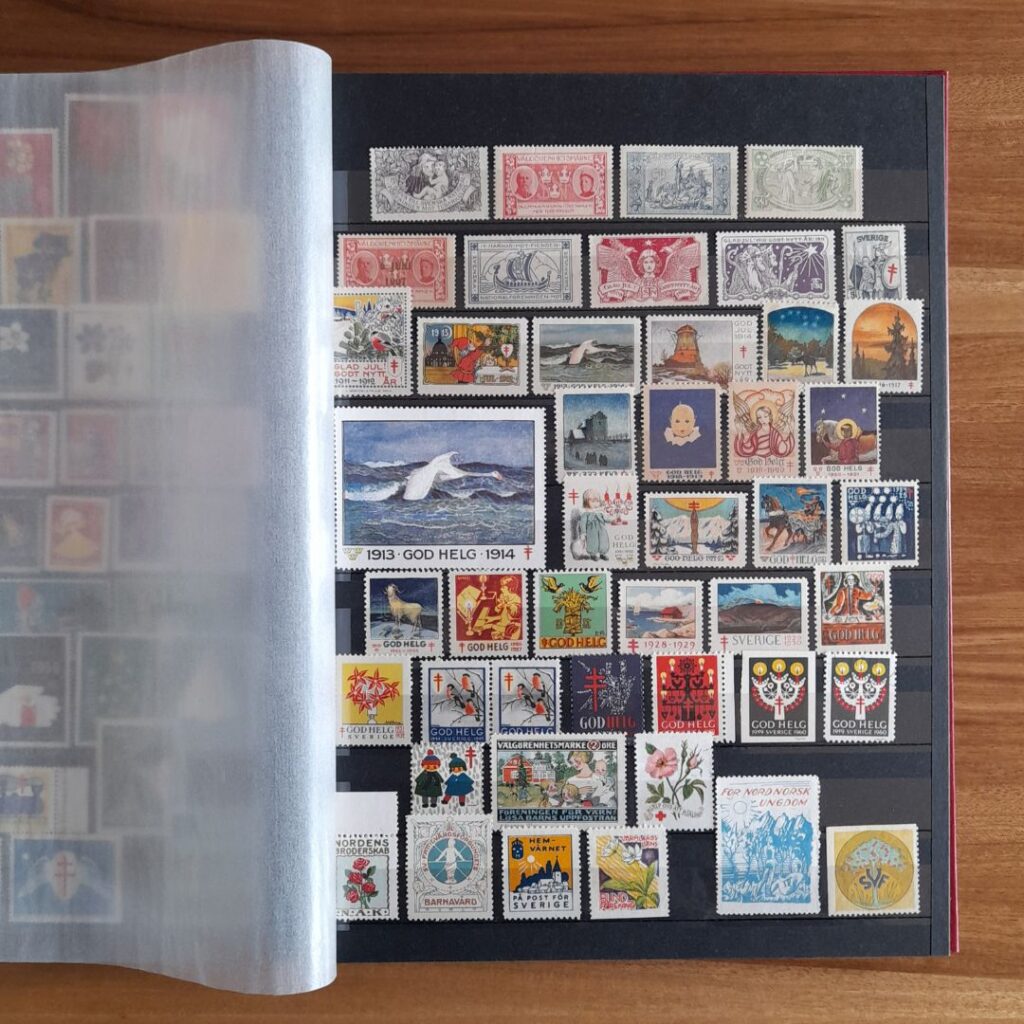
Years later, as an adult, I discovered Cinderella stamps. Unlike postage stamps, which were affixed to letters and postcards to pay for postage, these stamps served a different purpose. They were usually printed by small charities, hospitals, communities, and towns to raise funds during Christmas, sometimes to fight tuberculosis or support an orphanage, things like that. They were also used to advertise books and fairs. The variety is endless. They were very popular in the late 19th and 20th centuries.
The ones I like most are often connected to oral stories and folk traditions. As I mentioned earlier, I’m drawn to a cyclical, older, circular sense of time. It seems to me that the Cinderellas originate from that slower, smaller temporality. The era of waiting, of patience. Serious philatelists called these pieces “Cinderella,” often somewhat disdainfully, referring to the heroine of the fairy tale, the unwelcome guest. That makes me love them even more.
The designs possess incredible imagination and freedom. Although some Cinderella stamps were created by important illustrators and artists, such as Heinrich Vogeler and Lotte Reiniger, many were made by anonymous illustrators, and the sociocultural context from which they emerged remains unknown. This lack of information, far from being a deficiency, is a great stimulus for my imagination. Over time, I’ve built a beautiful collection. I have my favorite Cinderellas. I even composed musical pieces for some of them, imagining what they would sound like. I think La Manzana Mágica is an impressionistic album.
I read that the album came together over more than seven years. Is that a typical timeline for your work? How did the record take shape over that time?
Everything happened in a natural way. Slowly.
Your interest in memorabilia connects not only to La Manzana Mágica, but also to Pudú, your cassette label releasing small editions as souvenirs of concert tours. What draws you to preserving objects like these?
I like LPs, CDs, and cassettes. There are many books in my library too. With my partner, Lucía, who is an illustrator of children’s books, we often talk about the joy of being surrounded by beautiful cultural objects. Not in a solemn sense. They are like good friends.
There is a beautiful book by Sōetsu Yanagi called The Beauty of Everyday Things that speaks about the importance of that kind of closeness for each of us. It can be an old ceramic piece, a teacup that belonged to our grandparents, a book, or a cassette. In this era of rapid disposal, of the dematerialization of desire, and of planned obsolescence, it feels a little revolutionary to think that some objects can be used for generations. Objects whose meaning, not only utilitarian but also historical and emotional, transcends several generations.
Collecting is often associated with accumulation, while your music can feel very sparse and minimal. How do you reconcile those two sides?
I don’t like accumulating unnecessary things, because it can become a heavy burden in everyday life. However, over the years, I’ve gathered a lovely collection of objects, some of them musical instruments that I use in my work, which enrich my life.
Like many of us, I like to be surrounded in daily life by useful and evocative objects. Often they are very simple, perhaps inexpensive pieces, but they hold wonderful stories. That’s why, in my albums, I like there to be few instruments, few elements, but carefully chosen.