











• finding clarity in ambiguity with romy buquet

    finding clarity in ambiguity with romy buquet

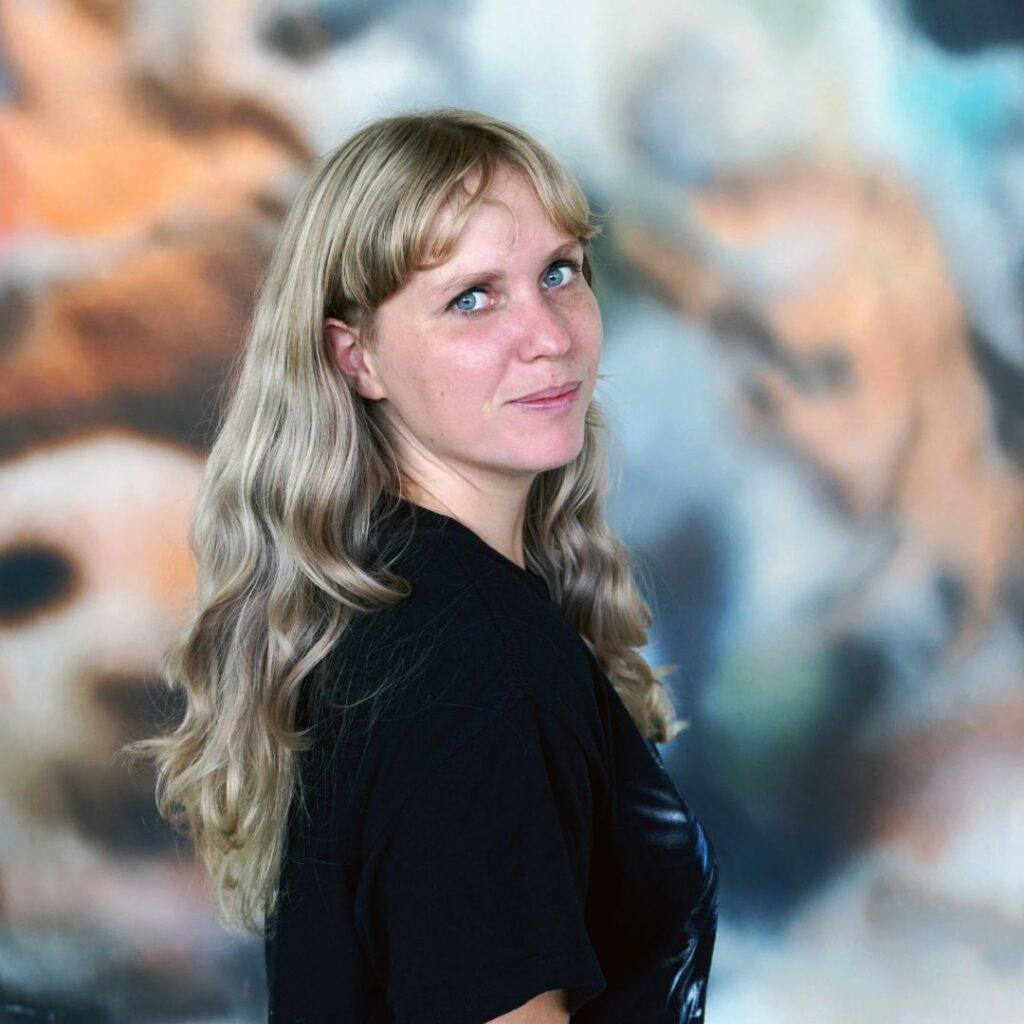
    Romy Buquet is a painter based in Ghent who also works with sculptures, installations, drawings, and collages to create paradise-like landscapes that reference the human body.


    Almost all of Romy’s works arise from the tension between matter and illusion, between what is made and what seems to appear without intervention. Her use of fluorescent paint and lacquer coating gives her pieces a bold and distinct personality, but the figures she depicts are often blurry, almost ghostly. Everything and everyone is ambiguous and in the making.


    Perhaps this duality is a mirror of her personality. As a visual all-rounder of our team, Romy is expressive but grounded, imaginative but pragmatic. Joining us on board, she dug through her archive and picked eight works that best represent our moods in store.

    O&S | Mood Board | Romy Buquet

    discover romy’s interpretations

    Taking it Easy

    The composition of this painting makes your eyes wander around, just like how I imagine the swans to move around the body of water. The edges of my paintings are of great importance, especially to this one, where it’s the center of the painting. The line captures your eyes and holds them for a moment. This leaves space for introspection.

    Taking it Easy

    The composition of this painting makes your eyes wander around, just like how I imagine the swans to move around the body of water. The edges of my paintings are of great importance, especially to this one, where it’s the center of the painting. The line captures your eyes and holds them for a moment. This leaves space for introspection.

    Floating on Clouds

    When I am on a boat, I always get carried away by the shadow play of the sailors. I think we must never forget that even our own shadows have no defined shape. Just like our history, it changes all the time.

    Floating on Clouds

    When I am on a boat, I always get carried away by the shadow play of the sailors. I think we must never forget that even our own shadows have no defined shape. Just like our history, it changes all the time.

    Lost in Dreams

    We’re walking into the jungle of Colombia for three days now. I sit next to you on a rock, all wet from taking a swim. Suddenly a gigantic leaf is falling all the way from the tops of the trees and then it finally meets the water. We’re both silent for a few minutes. I ask you if you’ve seen it. Of course you did. That leaf is still falling through my work, and I am waiting for the right moment to ask you whether you’ve seen it.

    Lost in Dreams

    We’re walking into the jungle of Colombia for three days now. I sit next to you on a rock, all wet from taking a swim. Suddenly a gigantic leaf is falling all the way from the tops of the trees and then it finally meets the water. We’re both silent for a few minutes. I ask you if you’ve seen it. Of course you did. That leaf is still falling through my work, and I am waiting for the right moment to ask you whether you’ve seen it.

    Ready for Action

    Cutouts and stencils enter, mark, and leave my paintings in a very spontaneous way. They show the painting as a result of certain actions and they clearly indicate the steps that have been taken throughout the process. As a cutout repeats itself, it changes meaning. Just as a cloud can also be a pool of water, everyone and everything is ambiguous and in a stage of becoming.

    Ready for Action

    Cutouts and stencils enter, mark, and leave my paintings in a very spontaneous way. They show the painting as a result of certain actions and they clearly indicate the steps that have been taken throughout the process. As a cutout repeats itself, it changes meaning. Just as a cloud can also be a pool of water, everyone and everything is ambiguous and in a stage of becoming.

    Emotional Rollercoaster

    I dedicate this painting to my twin sister. We go all the way back in the womb. All the magical things that have happened there I have never really forgotten. My body still remembers it, like a dream. So how do I escape the dream and enter reality? I sometimes cut into my paintings. As I cut into my painting, I cut my way through my dream reality, until a new one appears.

    Emotional Rollercoaster

    I dedicate this painting to my twin sister. We go all the way back in the womb. All the magical things that have happened there I have never really forgotten. My body still remembers it, like a dream. So how do I escape the dream and enter reality? I sometimes cut into my paintings. As I cut into my painting, I cut my way through my dream reality, until a new one appears.

    Calm and Collected

    I often refer to bathers in my painting. The water in which they swim is the same wetness of my paint. I like to work with this wet material. It’s so different from all the dry material we’re surrounded with on a daily basis. In paradise, there is also always the water. Life descends from this water.

    Calm and Collected

    I often refer to bathers in my painting. The water in which they swim is the same wetness of my paint. I like to work with this wet material. It’s so different from all the dry material we’re surrounded with on a daily basis. In paradise, there is also always the water. Life descends from this water.

    A Sense of Melancholy

    Is the paradise made by human hands a construct or is it an almost immaterial image that was not created by human hands? The archaic figures in combination with the spray paint make my work a little ghostly. Something that appears and disappears throughout history.

    A Sense of Melancholy

    Is the paradise made by human hands a construct or is it an almost immaterial image that was not created by human hands? The archaic figures in combination with the spray paint make my work a little ghostly. Something that appears and disappears throughout history.

    Having a Blast

    My paintings are sometimes nothing more than stains, spots, and smudges. Somewhat like the Vera Icon or the Shroud of Turin. Their arrangements result in an image of a utopian world. Following the darkest blacks in this painting feels like you’re running in the field by yourself.

    Having a Blast

    My paintings are sometimes nothing more than stains, spots, and smudges. Somewhat like the Vera Icon or the Shroud of Turin. Their arrangements result in an image of a utopian world. Following the darkest blacks in this painting feels like you’re running in the field by yourself.

    continue reading

  • Martyna Basta’s 9 album picks for when words fail to express

    Martyna basta’s 9 album picks for when words fail to express

    Martyna Basta is a musician, photographer, and journalist based in Kraków, Poland.


    Trained as a classical guitarist for more than a decade, she recently traded her well-loved instrument for a synthesizer, moving towards a more tactile and experiential approach to creating music. Today, she works mainly with field recordings, classical instruments, voice, and electronic manipulation to capture sensible moments in sound.


    We’re delighted to share that Martyna will be joining us as a creative writer, complementing our journal and newsletters with her sincere words and intuitive connection with sound. For her first contribution, she gifts us with 9 albums to listen to when words fail to express.

    O&S_Mood List_Martyna Basta
    Maxwell Sterling – Turn of Phrase

    I remember listening to this album for the very first time whilst I was riding a tram, thinking that there can’t be a better piece of music than this. It made everything around me so vivid and simply beautiful. With headphones in my ears, I was staring out the window in awe with a wild smile on my face like a lucky fool.

    Cucina Povera – Dalmarnock tapes

    I put this cassette on my little SONY TCM-939 player every time I come back home lately, then I light a candle, which slowly illuminates the room as it gets darker and darker. Everything is just ready to be.

    Nate Scheible – Fairfax

    It won’t be a lie if I say that With Any Kind Of Luck makes me cry every single time I give it a listen. Feels overwhelming to think that what we’re hearing  is someone’s audible diary that Scheible found in a thrift store, delicately taking care of it and giving it a second life. It’s such a touching record. It doesn’t just accompany the background of everyday life; it puts it in front of the whole picture. Maybe that’s why I dose myself in listening to it so much? 

    Cocteau Twins – Victorialand

    Once I was going through a really dark April and May, even though these months are rather supposed to be lucky with spring coming and everything starting to bloom. So I was listening to Throughout The Dark Months Of April And May like crazy. Every time I think about this album, I recall it as something which somehow saved me.

    Kali Malone – Living Torch

    I gave this album a listen a few days after its release, when I was on a train coming back to Kraków from a two-week long vacation at the seaside. I couldn’t listen to any music while I was there. The waves, the squeaking seagulls, and the silence of woods seemed to be enough. Living Torch was the very first piece that I listened to after this long break. It felt almost like an ecstasy. Made me glad to be back.

    Maria w Horn – Kontrapoetik

    This album accompanied me once when I was walking around an empty park at dawn. I sat on a bench and started to stare at trees. It felt truly intimate to gaze at each other, then Inverts came on and it seemed like they started screaming.

    Roberto Musci – Tower of Silence

    I couldn’t count how many times I put Lullabies… Mother Sings… Father Plays… on repeat. But I know for sure there’s going to be another one.

    HTRK – Venus In Leo

    The main thing that makes me feel happy when summer is gone is that I can finally get back to listening to those few records that are impossible to listen to when the sun is over your head. Luckily, with every day now, the sun sets earlier and earlier, so there is more and more time in the day to listen to HTRK.

    Einstürzende Neubauten – Silence Is Sexy

    Since the day we listened to this album together, we have been together.

    continue reading

  • bringing worlds together with Matt Werth

    bringing worlds together with Matt Werth

    For nearly 20 years, RVNG. Intl. has simultaneously – and successfully – managed to both push the musical envelope and maintain a sturdy foundation. It’s quite difficult to come up with a few words that give justice to the vast spectrum of sounds found in the label’s catalogue across past and recent years – a reality that further exemplifies the sincere support of artistic expression and expansion the label fosters. 


    One of the central advocates behind this steadfast mentality of inclusion and respect for the artists’ craft is co-founder of RVNG, Matt Werth. We caught up with Matt to learn more about RVNG and the philosophies that continue to propel the label forward. 

    What were some of your favorite detours in the history of RVNG?


    Turning into a label was a very early detour. Together with my friend Dave, we started RVNG doing events and party promotions. I enjoyed the social and logistical aspects of planning events, but I didn’t love the hours it took. It was just kind of exhausting. 


    We started releasing mixtapes essentially as business cards for the company. Sharing about DJ’s that we loved, whom we thought represented the musical sensibility of RVNG. Once we started doing that, I realized this is actually what I really like to do, more than those late nights. I came from a background of running a record label in high school as an ambitious teenager, supporting the punk rock community in Arkansas, where I grew up. I much prefer contact with artists and developing projects in that capacity. So I think very early on there was that detour.


    Also, musically RVNG was very dance and electronic-oriented in the early days. And that certainly reflects my taste now, but reflected my taste much more then, and eventually we kind of evolved. 

    Speaking about musical sensibility, how would you describe RVNG’s?


    There’s really no pattern to what we support. I love moving from one genre or one type of music to the next, from release to release. So, you know, in that cosmic way, I think my sensibility leans into just stimulating artists into following their pure vision.


    We also tend to support artists that are still in their development stage. You know, when they’re still kind of like in that DIY point of their career. That’s always very interesting to me, to be at the ground floor with an artist and to help in realizing their vision.

    Even with the archival projects, you seem to be going back to that DIY stage.


    Oh yeah, very much so. For us, the archival work that we do, it wouldn’t be as rewarding or challenging if we were just picking the best tracks of the artists’ musical careers or just going for the albums that are very well-known. It’s more rewarding to support those artists that didn’t have a large platform back then, and provide maybe a little bit of a bigger, wider platform now.

    O&S | Mood Talk | RVNG Intl. | Freedom to Spend | Matt Werth

    Is it a challenge to convince artists to dig into their pasts? I can imagine some artists are in a totally different headspace now or even stopped making music all together.


    Yeah, sometimes it’s challenging for sure. Imagine receiving an email out of the blue about music you made 30 or 40 years ago. It can be a little jarring for some artists, especially those that have not kept up with their practice or have not continued releasing music. But yeah, there are usually three types of replies from the artists.

    The first one is resistance. Maybe there is some trauma attached to that time of their life or they’re just not interested in exploring it again.

    The second type is like, “OK, yes, but why? Why are you interested and what do you want to do with this?” It takes some effort to establish a comfort level with them. 

    The third type is just like, “Yeah, OK, that sounds good.” Even if they haven’t thought about it, they’re like, “OK, I have nothing to lose. Let’s do it. You have my blessing.”

    Next to the archival work, you also bridge the gap between different generations of artists with FRKWYS. Do you mostly propose the collaborations, or do the artists approach you?


    Most of the collaborations I’ve kind of dreamed up. It’s helpful just to have a central point that inspires the discussions between the artists.


    Although there have been a couple instances where it’s artist-initiated. Tashi Wada really wanted to make an album with his father, Yoshi Wada, and it just felt so natural to release it under the FRKWYS series because we already had a relationship with Tashi.


    For me, fostering that intergenerational exchange is so important. It’s incredibly valuable to listen to older generations and to learn from older generations.  I think the importance of it transcends our series and really applies to our culture in general.


    I also kind of think the FRKWYS series favors the older generation a little bit more. Similar to the archival projects, it introduces those artists in the current context. And you know in that process, I think the exchange becomes mutual.

    You’ve released so much over the years. What are some of your most memorable releases in the catalogue?
     

    Oh gosh. I think there are different milestones that maybe mark those detours that we talked about earlier. Dramatic shifts that signal kind of stylistic changes, or new ambition levels being reached.


    Like early on, there was our collaboration between Sun Araw and M. Geddes Gengras, and The Congos. We all went to Jamaica to make a record with this legendary vocal reggae group. For us that was just kind of like going into a very unknown situation and really, being put to the flame. It was just so rewarding to really try something outside of our comfort zone.


    That conceptually established the international part of the label name. Several of the collaborations after that happened in different countries, whether it was Portugal or Japan or Australia. It just inspired a more global view on inclusion, so I think that release was a big mile marker for us.


    Obviously, there are also both creative and critical successes that feel like milestones for the label, whether that’s Julia Holter’s record, or Holly Herndon’s record, or Visible Cloaks.


    What I like about that is that each one sounds different, and each record found its audience. I know that some of the releases probably confounded the existing RVNG audience, but they brought in a new audience too. That just kind of aligns with our nonlinear approach to releasing music.

    O&S Mood Talk | RVNG Intl. | FRKWYS

    You mentioned an interesting word: inclusion. How important is that for you in terms of releasing music or kickstarting collaborations?


    Fully. It’s the most important aspect. Even before having this conversation, I already knew I’m going to talk about inclusivity because it is such an important concept.


    Inclusivity takes so many different forms with the label. The way that we structure our deals are kind of like partnerships, in that we provide resources, but also facilitate the artists to create music that we will eventually be able to share. But then we also hope that the artists can amplify that and also feel confident in supporting the work, knowing that they are a part of this bigger kind of platform.


    It’s reflected in the music that we release, and the diversity that we try to maintain with the label. But then you know, there’s also the infrastructure of the label, which is small, but is set up to be very open. We are a very small team and most of the other few employees have been here for years. I’d like to think that is because everyone’s voice is heard and that there is room to grow and to follow your interests and passions, all without having to be prescribed to anything. I don’t want anyone to feel that RVNG is their identity. That’s not important to me. I want people to have their own identity and pursuits. Most people on the team have their side hustles, which is awesome. I love it and I think that brings a lot to what we do.

    Having released so much over the years, what does it take for music to still surprise you?


    The bigger challenge for me is the process of listening to all this music that comes through. I just want to listen to everything, like I truly want to listen to every single demo that is sent, and give it the time it truly deserves and not just skim through it.


    I think that’s where those surprises exist, like deeper into track four on the A side. You know you might hear something that’s just like a spark. What will that spark ignite if not now – down the line?


    My biggest regret is always just not having time to really give everything the listen it deserves. It’s also such an intimate process. Knowing that these artists are sending their work, like their life’s work, and that’s what they’re passionate about. You want to give them that service and acknowledgement, but it’s hard to have that individual experience with everyone.

    O&S Mood Talk | RVNG Intl. | Catalog

    Do you make music yourself?


    I come from a music-making background from high school through college. When people ask me if I feel like there’s a void, I don’t. I wish there was more time for it, but I truly do feel creatively fulfilled with what we do at RVNG, so I don’t really look for it.

    Since you mentioned being creatively fulfilled, what next big creative challenge are you most looking forward to for RVNG?


    Applying a creative mind to the business aspect of a label will always kind of be the biggest creative challenge. Just finding the balance in approaching our creative endeavors with some kind of commercial sensibility. If we just go full free-form freakout, then we wouldn’t be able to have a staff and I don’t think it would service the artists’ interest as much.

    What are you looking forward to next?


    Gosh, really, just a wild year ahead!


    The first half we’re going to be introducing a lot of new artists on RVNG who would be releasing their first records, so I’m just very excited how our community would respond to that. Then the second half of the year will be focused on our veteran artists who are coming out with incredible albums.


    Personally, I’m just excited to see live music again. I want to see artists in person again. I don’t necessarily want to travel as much as I did before, so I’m looking forward to more New York time. I do think there’s more we can absolutely do here in the city, as an entity with nearly 20 years behind us.

    discover RVNG intl.

    see more

    continue reading

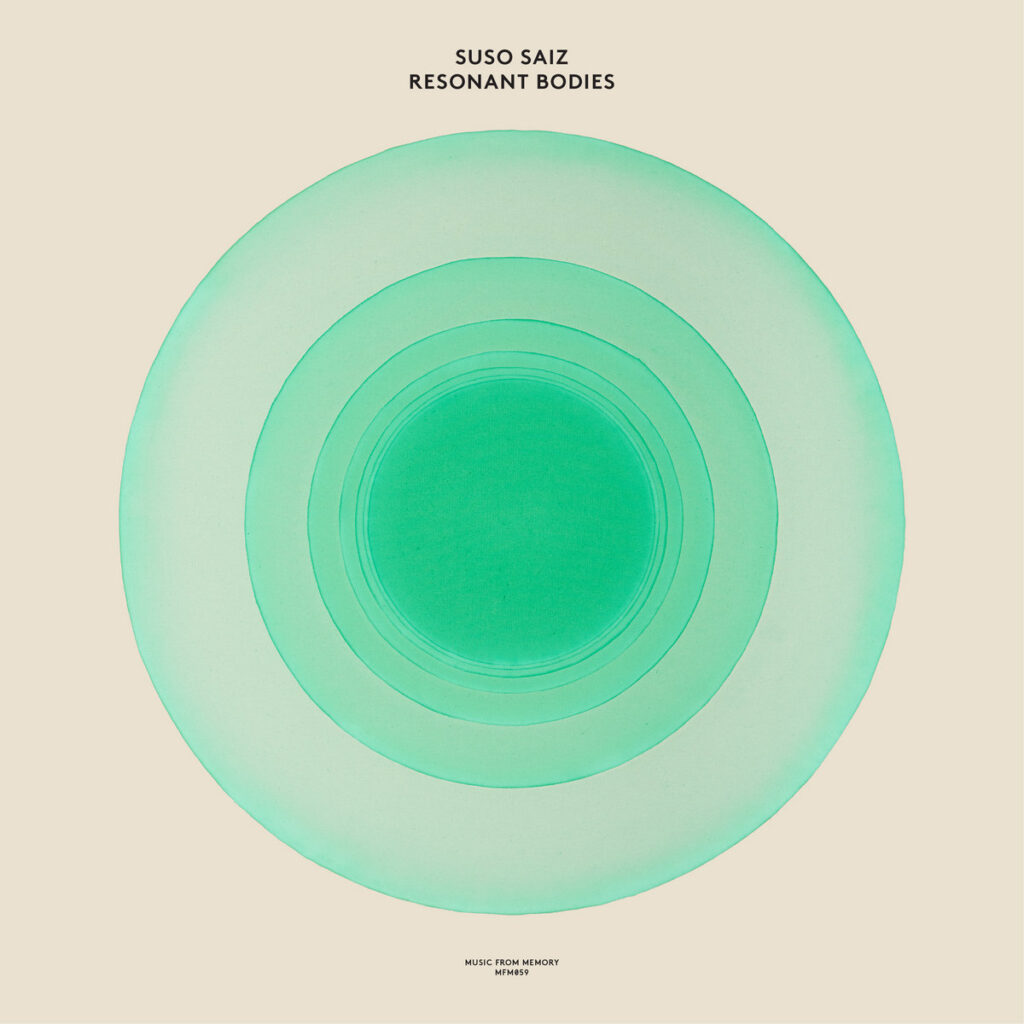
  • unbounded exploration with Suso Saiz

    unbounded exploration with Suso Saiz

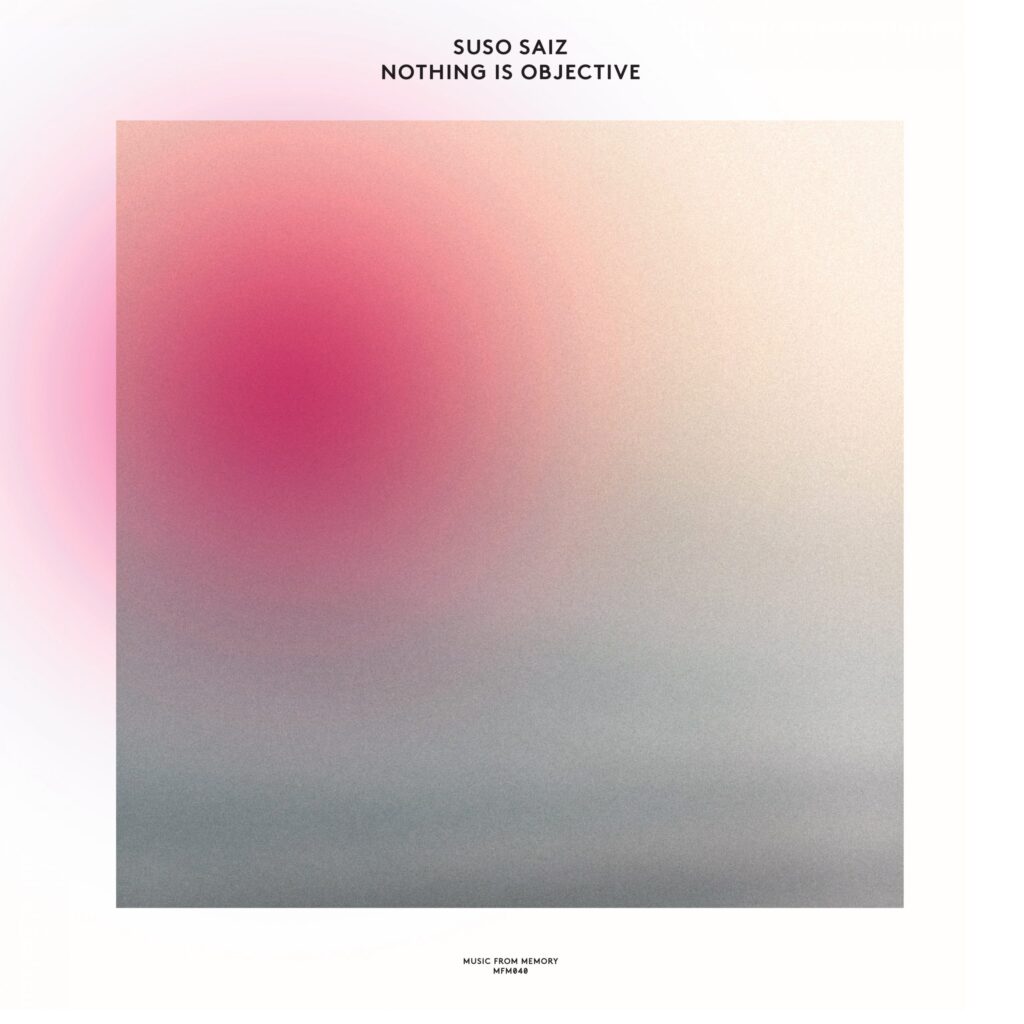
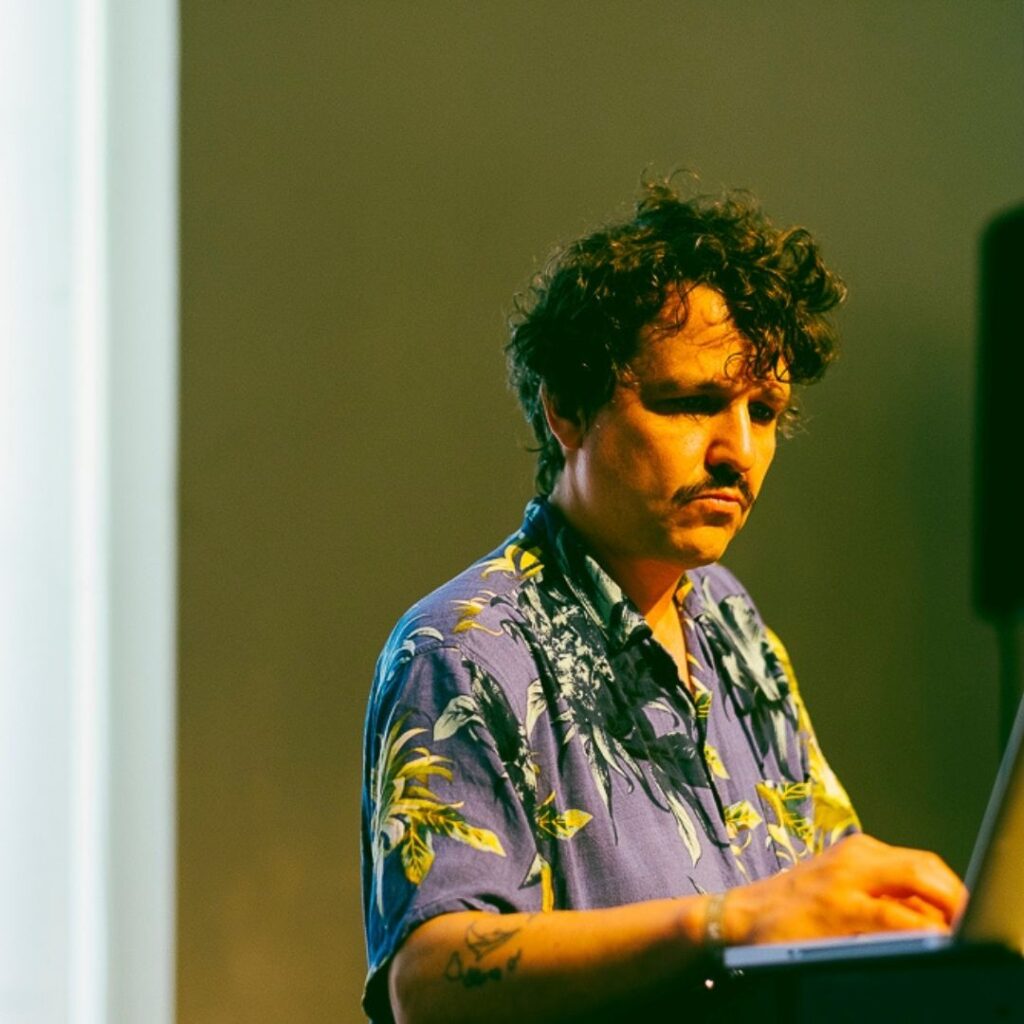
    Spanish musician, composer, and producer Suso Saiz needs no introduction in the world of minimal and experimental electronic music. Since the late 1970’s, Suso has been guided by an insatiable curiosity for the (sonic) world around him, engendering an ever-evolving and ever-expansive sound palette. While his inspirations and techniques may have changed over the years, this exploratory sensibility has been the benchmark throughout his musical career. 


    In this mood talk, Suso shared with us his approach to experimentation, finding his sound, and the joy of following the unexpected.

    You have been making music for decades. How has your music changed over the years?


    Evolution is necessary for me. I try to repeat myself as little as possible, and I trust that my music has changed during all this time. I think my principles were previously more anchored in traditional concepts, structures, harmonies, and rhythms. Little by little, they disappeared, at least on the level of evidence, and my music became more horizontal, static, and reflective. Timbre became my main interest as a means of expression and experimentation with textures.


    In short, my music has evolved from a kind of minimalist new age sound with pop touches to electroacoustic experimentation and reflections on listening and its psychological implications.


    Does making music always come natural to you, or do you have to be in a certain mood or state of mind?


    For me, music is the key to enter, effectively, a state of mind. I make music from that state that I hope will help others to find their own state of mind, as well.

    O&S Mood Talk - Suso Saiz 1

    Where do find inspiration for your work?


    The true inspiration in my work comes from the work itself. Daily work and daily brushing with sound surfaces create acoustic yearnings that become obsession and objective. This is mixed with the ideas generating reflections, which feed my work with content.

    You’ve been involved in a lot of different projects. Some more experimental, some more popular. What drives you to make music?


    Every day, I go into my studio and work for hours. I am a music lover with eclectic and open tastes.
    You grew up in Madrid, a city that was having a creative explosion in the early 80’s. How did this shape your work?
     

    I have spent many years feeling that the “movida madrileña” had not influenced my personal development, but now I think it has, though not in an aesthetic way. I think that the open, spontaneous, and feverish atmosphere of those times pushed me to be a musician more open and less afraid to express myself with absolute freedom.

    O&S Mood Talk - Suso Saiz 1

    With Orquesta De las Nubes, there was this idea that members could bring all kinds of things into the studio – from frying pans to bird lures to synthesizers. Do you still often experiment with new unusual sources of sound in your work?


    Of course. From my condition as an electroacoustic musician (in which I insist on calling myself because I don’t use synthesizers), I work on acoustic sonority processes, and the source of my work varies continuously. I look for new elements, and experimentation is the essence of my work.

    What is your favorite setting for a performance?


    Out of habit and comfort, I keep the guitar as a generator of tuned-sound impulses. From there, granular samplers, loopers, filters, delays, reverbs and all kinds of processes appear in my sets, which changes for each project.

    When you are not busy with music, what do you enjoy doing? What is your favorite pastime?


    I really enjoy cooking. It is also an incredible stress reliever. For me, cutting vegetables is an exercise in meditation. I also really enjoy reading, but I understand reading as a part of my job as a musician, because it fuels my ability to find new ideas.

    What kind of collaboration or adventure are you most interested in exploring in the future?


    One is always attracted to what one understands most closely, although it is not always the collaboration that bears the best results. Sometimes seemingly absurd collaborations generate wonderful sound objects, so I have destroyed my prejudices around collaborations. I’m generally open: I like to collaborate with anyone who enjoys the unexpected.

    O&S Mood Talk - Suso Saiz 1

    To end: what advice would you give a young artist that is just starting out?


    That they experiment, that they maintain curiosity around others and specifically for musicians, and that they develop and perfect their listening skills.

    listen to suso’s music

    continue reading

  • Hugo LX’s 10 album picks to revel in unfathomable emotions

    Hugo LX’s 10 album picks to revel in unfathomable emotions

    Hugo LX is a Paris-based DJ and producer. In his sets, he tends to cruise from downtempo beats to soulful electronic dance music and everything in between. His productions are equally rich and colorful, taking cues from various styles and influences.


    Enamored by Hugo’s natural knack for moodsetting, we recently invited him to share with us a mood list. He captures the vast range of emotions ensconced within a single day, or even a single moment. In the way that memories are oftentimes woven into settings and sounds, Hugo’s selections intertwine the volumes of joy, sorrow, vibrance, grief, desire, and all of the unfathomable emotions in between that can be experienced within every simple or detailed memory. The tracks capture his time spent in Kyoto, where he spent hours listening to ambient or instrumental music with his friend Takuya, whether at home, driving through mountains, or attending performances at dedicated small venues such as Urbanguild.


    On his chosen albums, Hugo reflects: “These tunes tell about my profound attachment to nature. Now a city dweller, I grew up by the Atlantic Coast, and it took a long time before I could really put words to this connection. A love refound, so to say. The textures of nature – water, stones, light, leaves, mist, and smokes – and those of music – tones, motifs, spaces, and depth – offer different expressions of the same material.” 

    O&S - Mood List - Hugo LX
    Chihei Hatakeyama – Late Spring

    Hatakeyama’s newest album — another cornerstone in a very unique catalogue — makes instruments “sing” in very particular undertones and “printed” textures. This one tune is aptly named after the sea. You can vividly hear that pale azur color and its reflections.

    Sam Gendel – Fresh Bread

    From Sam Gendel’s monumental 50+ song compilation. Huge sound and refreshing experimentations. This tune could carry you into some past dimensions, unwrapping a lot of those deeply buried memories.

    Cktrl – Robyn

    Robyn is the latest EP from London-based saxophonist Cktrl. This song is one of the most emotional tunes I’ve ever had the chance to hear in years. So much is said in less than two minutes. It takes me to those vibrant, sunny afternoons before the fall season. Praises to Errol from Touching Bass for releasing this magical piece!

    Sam Wilkes – Live On The Green

    Sam Wilkes’ solo offerings are simply my favorite recent albums to date. They reach near perfection in terms of texture, space, and pace — all with that complex simplicity. This Alice Coltrane cover epitomizes the magic Wilkes and his band are able to produce every time around. It takes you THERE. I’d listen to this on a dark winter night to face the cold.

    Shuttle358 – Frame (20th Anniversary Edition)

    A really mineral, crispier take on the great “Lyndon Tree” tune. It shows how texture is everything in music. I would listen to this on some sunrise occasion, by the lake or in the mountains.

    Brian Green – Impressions for Headphones

    One of the darkest cuts on the extraordinary Impressions album. It has a strong drive to it. Perfect for a slow-paced trip in a repetitive landscape, like a forest with high trees and grey light.

    Rei Harakami – Colors Of The Dark

    Harakami’s music has been essential to me in times of pain and sorrow, especially. I could use a thousand words to describe how I feel listening to his pieces, but this song says it all. It’s a walk in the wild, a climb on a mountain, a new day with a new template. It’s after all that was before everything has finally collapsed.

    Daniel Aged – You Are Protected by Silent Love

    This brilliant, spacey album is a new chapter in Daniel Aged’s endless creativity. This song is the closing cut, and it takes a few listens to fully get all the nuances and details of it. Do you already know this song? What is it saying exactly? It has a hundred lives by itself. If not a dream, then what is it?

    H.Takahashi – Sonne und Wasser

    Can you see the drips sliding horizontally on this grey and blue canvas?

    Sam Gendel & Sam Wilkes – Music For Saxofone and Bass Guitar More Songs

    I can’t have enough of these two together. A lot of unexpected poetry in this tune, starting in mono before a mind-blowing overture in stereo. But where are we?

    continue reading

  • finding symphonies in everyday sounds with Lieven Martens

    finding symphonies in everyday sounds with Lieven Martens

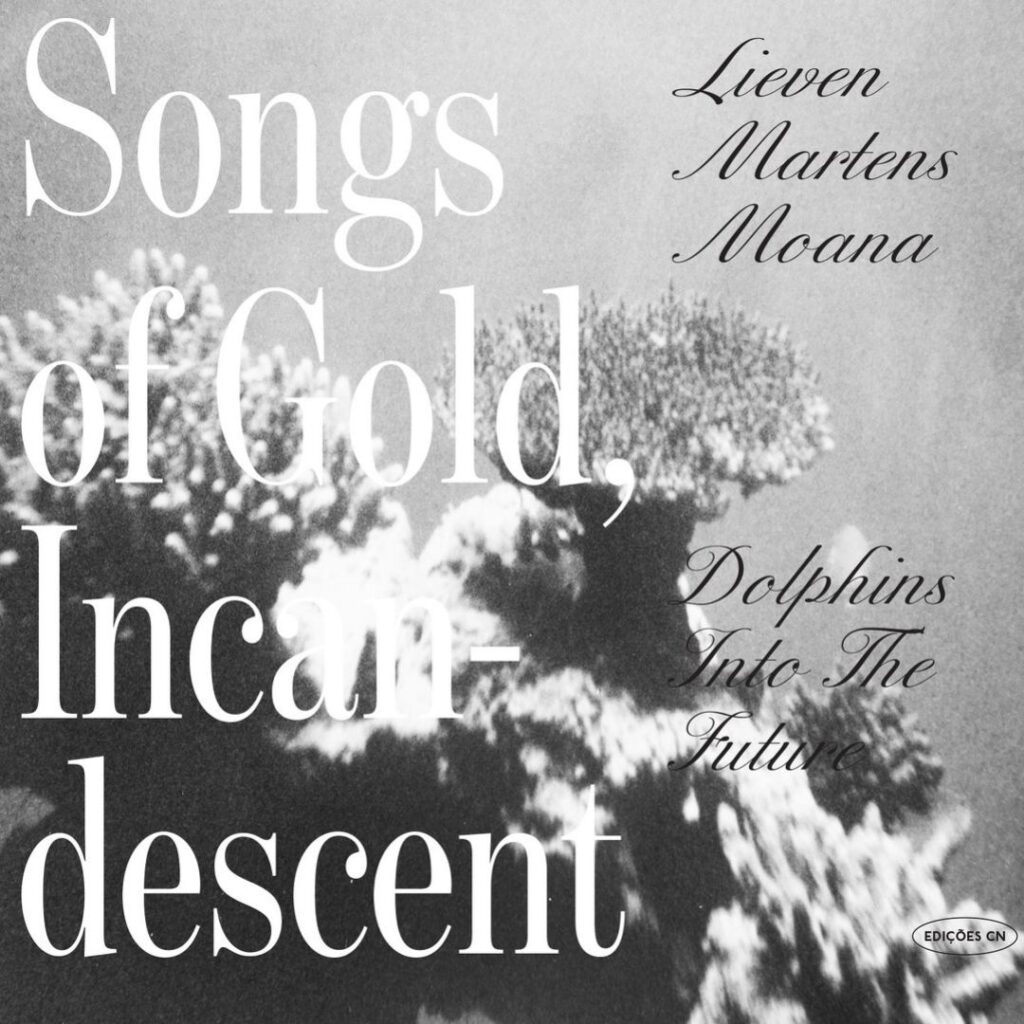
    Lieven Martens is an Antwerp-based composer with a knack for storytelling. He greatly enjoys weaving narratives into field recordings. Transforming the most mundane sounds into full-fledged pieces, he invites you to open yourself to deep listening in places you would least expect.

    On his label Edições CN, Lieven carefully crafts a unique world for the adventurous listener. Often blurring the lines between sound and music and between the traditional and the fictional, the various releases in the Edições catalogue showcase both Lieven’s own explorations and works by many like-minded artists such as Christina Vantzou, Sugai Ken, Andrew Pekler, Hiele, Francesco Cavaliere and more.

    Lieven agreed to meet us for a chat in a lush botanical garden in the heart of Antwerp. We couldn’t have thought of a more suitable location.

    How do you pronounce Edições? E-di-ci-os?


    Yes, that’s correct, but it doesn’t really matter. I chose Edições as a name because it sounds nice if you pronounce it correctly, but I also like all the different pronunciations of it.

    You recently did a heritage project called Serrisme highlighting the grape culture in Hoeilaart. How did that come about?


    I was actually invited by Hoeilaart to take part in this heritage project. It was a way of documenting the culture of grape cultivation under glass through the use of photography, text, music, and sound. Instead of looking for exotic sounds, it was really cool to do something close to home and related to my own culture. It is always really nice to take something that’s already there and make a story out of it.


    For the label, I want to explore all kinds of ways to do something with sound that’s not purely musical. I don’t think it’s my job to do that.


    I’m also working with Simon Van Honacker on a project that’s quite similar in nature. He’s really interested in ‘braderieën’, which translates to street fairs in English. These are very communal happenings with buzzing atmospheres and he approaches it with a deep listening perspective. Imagine the various sounds of the fair colliding into some sort of ambient sound. That project is still in the making. We’re going to do some documentation around it and really work it out as a story.


    Looking for organic symphonies in existing things is really something central to the label. It’s the same story with the grapes and the islands and all the other things I do.

    O&S Mood Talk | Lieven Martens | Edições CN

    You once mentioned that water is a very important element for Edições CN. Can you share more about it?


    Water is one of those sources of organic symphonies. It was a strong focus when I was making music with my ‘Dolphins into the Future’ moniker. It comes from a time when I felt really limited with just musical instruments. There are also so many forms of water and they all have their own rhythms. Artistically, water can also hold memory. I’ve always been fascinated with that idea.

    So, are you exploring sound or music?


    I would view it more as exploring sound. Sometimes in a very musical way, but sometimes also in a less musical way. I am also really interested in capturing the story behind something.


    In Hoeilaart, I gave a speech for the elderly people in town and there was a cricket chirping in the background. I was trying to explain our way of working by using the sound of a cricket as an analogy. You can record the sound of a cricket, but what’s the big story or the why behind it? How do you conceptualize that moment? How do you tell stories through sound? How do you convey feelings through sound?


    That’s the thing for me. Music is so cool, but when it’s just music, it feels a bit limited.

    We definitely understand what you mean. A lot of your releases also combine different art forms such as poetry and visuals.


    I didn’t come up with this explanation, but somebody once told me that it’s maybe out of a fear for a release to get lost in the void too quickly. Often you’d put a record out and it would just sell out and that’s it. The story is over. With having a strong narrative, it somehow feels more timeless and lasting.

    Do you think you’re doing it out of fear? 


    Maybe not fear, but perhaps the need to create something that is relevant for myself and the people that follow my work. I’m also seeing it with other artists. People are taking more time to conceptualize their work, and I definitely feel attracted to that.

    Maybe it’s accelerated by the push to do everything online. 


    For sure, COVID definitely pushed some projects to take on other forms. You still might want to present something, but the concert format was gone all of a sudden. It forced us to get creative. For example, the release of Friendship Songs with Ken Verhoeven ended up becoming so much more than a concert. It was a full experience. It became an exposition that turned into a book with an accompanying CD.

    Where do you find your inspiration?


    It often comes from moments or memories.


    A few months back, we were visiting friends in Samsø in Denmark. There’s a long cliff between the fjords and the oceans with a trail that stretches for about three kilometers. We went on a hike with family and friends. At some point, we looked back and the sky just instantly turned pitch black. All of a sudden, the most extreme storm broke loose with heavy rain and pellets of hail. We started running for shelter. 


    On the way back, we passed a group of people who were sitting in a super strange formation facing the storm. You could tell that they’re used to this and they’re probably from the island.


    Seeing that powerful image combined with the sound of the storm left a big impression on me. That image keeps reappearing in my mind. It looked like a Werner Herzog film. Just imagining how they were sitting with their eyes closed had some kind of religious quality to it. It looked like they were bowing down to the elements. 


    Images like these are what I sometimes have in mind as inspiration. 

    Do you always need a visual angle to spark your creations?

    Not always. Sometimes it just stems from wanting to create a certain sound. I also sometimes just go in the studio and see what happens when I jam. I used to have certain strict rules I would impose on myself, such as using only analog instruments, but it’s nice to break these rules now and then too. It all depends. Often, it’s just way more vivid when I see it visually. 

    Edições CN | Label | Lieven Martens

    Next to Edições CN, you also work on communications for a non-profit organization. Is it difficult to balance or can you always make time for music?


    I have been doing communication work for two years now. It’s sometimes a lot of work to combine both, but I like it. Sometimes I think I have the tendency to be lazy, but now I am forced to work with text. It forces the brain to compose something and I think the combination of both is healthy for me. I noticed it makes me better at composing.

    Good to hear because it seems like finding that balance is something a lot of musicians and creatives grapple with. 


    I have a short attention span, so it was a conscious choice for me to find my own balance. I would never be able to do the same thing all the time. Even if that thing is making music. I like doing different things.

    When you talk about your music, you use the word compose a lot. Yet, there’s often a strong focus on experimentation and improvisation. 


    I would say I combine both composing and improvising, but the improvisations are in the end composed in the album.


    I started using the word composing in my descriptions not to be pretentious, but as a form of respect to musicians. I manage a recording studio really well, but I actually don’t manage an instrument. I can play the piano, but I’m definitely not a professional pianist by any standards. So I stopped calling myself a musician and started to use composer instead.


    In the end, the processing and collaging of sounds is what I do best.

    O&S Mood Talk | Suso Saiz

    How do you know when a composition is finished?


    It’s hard. Sometimes I have an actual deadline to make and that helps a lot, but sometimes it is also a gut feeling. Sometimes I think I stopped at the right time. Then, a bit later, I think it sounds really weird. But then, half a year later, it would sound fine again. 

    You do re-work your past works sometimes, right?


    Yes. I want to do it more actually. I really admire artists who are super self-referential and constantly rework and rethink their own stuff. It’s really human, I think, to form an idea, get a different perspective in five years and revisit it with new input.

    And why do you feel the need to create music and release music with Edições CN?


    The music I make and release sometimes has a really personal effect on people. A few times already, someone came up to me and told me that my music took them through some difficult moments. In some way, I am communicating with them through my music.


    I also feel there is a certain need for what I do and what people around me do. It finds an audience. Not a big one, but a dedicated one. So, let’s keep doing it.

    listen to lieven’s music

    continue reading

  • Morgan Cuinet’s 8 records to entice reverie

    Morgan Cuinet’s 8 records to entice reverie

    Morgan Cuinet is the co-founder of the independent micro-record label, Hands In The Dark. Founded in Besançon in 2010, Hands In The Dark focuses on proposing exciting auditory explorations and singular visions of experimental and psychedelic music. As fans of the label and having a handful of their titles in store, we asked Morgan to put together a mood list for us, and the result is a collection of records that gently whisk the listener into a dreamlike state of mind.


    Morgan’s selections represent music that transcends everyday mundanities and transports him to a place of reverie. He notes, “I feel like everything goes much too fast nowadays. It seems like we are reaching the limits of a system that has become very harmful. The ‘reveries,’ or ‘pleasant, dreamlike thoughts,’ have a crucial role, in that they help me escape this bleak context.”


    Next to running Hands In The Dark, Morgan is a collage artist with several books already published featuring his creations. He is currently working on the next publication entitled “Reveries,” which will showcase these brief mental projections.


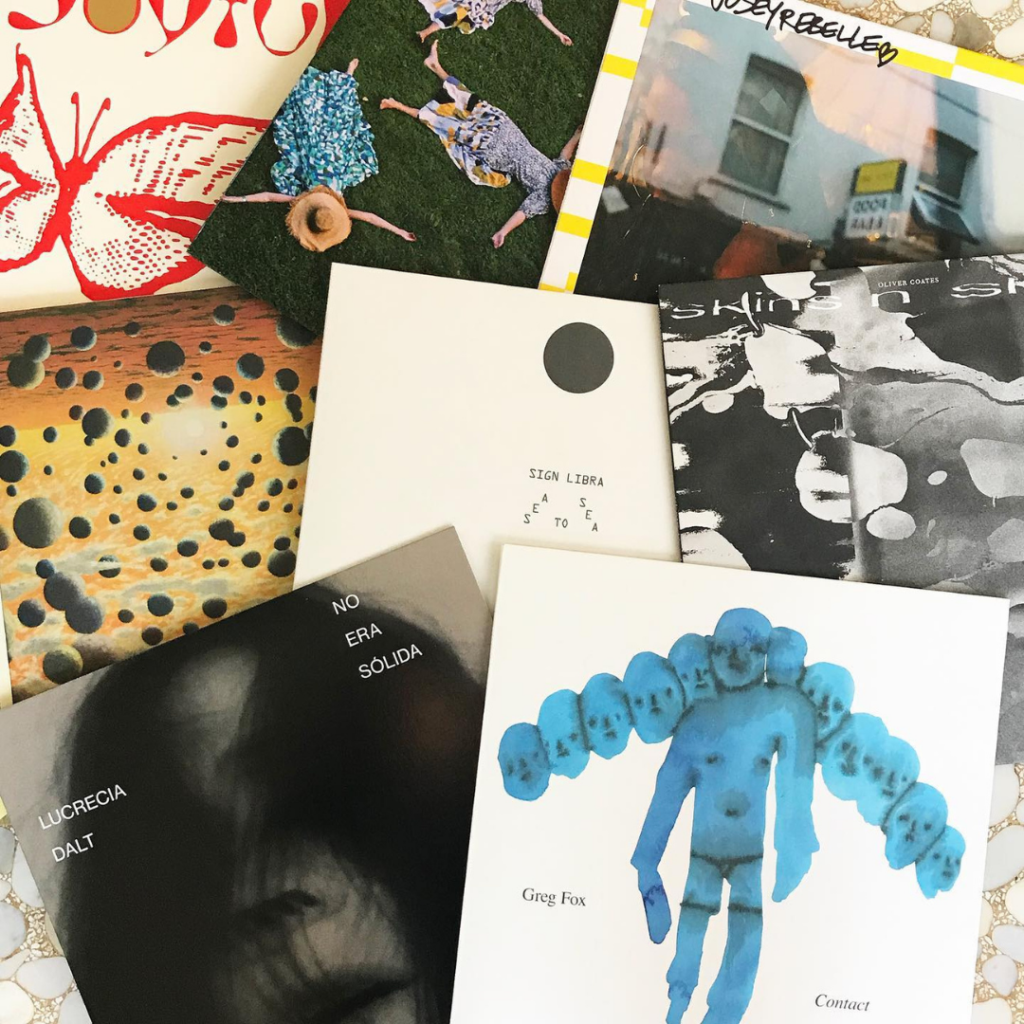
    We invite you to take a listen to Morgan’s picks below, along with a selection of Hands In The Dark records we have in store.

    Morgan Cuinet - O&S Mood List
    Ben Bertrand – Dokkaebi

    Ben Bertrand is a Belgian composer and clarinet player. I find his music fascinating. He’s got a new album out this month on Les Ateliers Claus. Highly recommended! 

    Tara Clerkin Trio – In Spring

    Their debut album is one of the most captivating albums I’ve heard in the last few years. They subtly mix jazz, gamelan, electronica, and experimental music with a very “pop” sound. I love the feeling of freedom they convey with their music.

    Razen – Blue Rot

    I’ve listened to this album a lot in the last year whilst making my collages and I am very happy it’s finally out. The way these improvised songs slowly develop make them really unique. It took me a bit of time to understand this album in its entirety but that’s what made it all the more special. 

    Blue Chemise – Flower Studies

    This is an album composed by the Australian artist Mark Gomes, inspired by a series of photographs by Adolphe Braun. Musically, it reminds me of Erik Satie and Dominique Lawalrée. Simple and sublime.

    Ana Roxanne – Because of a Flower

    Although I really liked the Californian musician’s debut album, I wasn’t much into this new one until I listened to it very carefully whilst driving to a show in Switzerland. Sometimes it takes a certain mindset and context to enjoy an album as it should be. Sadly it is now very hard to find a copy of this magnificent piece of music.

    Brannten Schnüre – Erinnerungen An Gesichter

    This album was written by Katie Rich and Christian Schoppik (for whom we will release a solo album in the next few months on Hands In The Dark). The German duo based in Würzburg proposed some sort of haunted album often described as surreal folk collage. A very well kept secret but definitely worth digging into! 

    Enhet För Fri Musik – Det Finns Ett Hjärta Som För Dig

    Another album that revealed itself during a long drive. Apparently the intention was to keep a memory of a certain moment, not to make an album as such. That’s perhaps what makes this imperfect album so fragile and special. I find this experimental folk and ambient music amazing. 

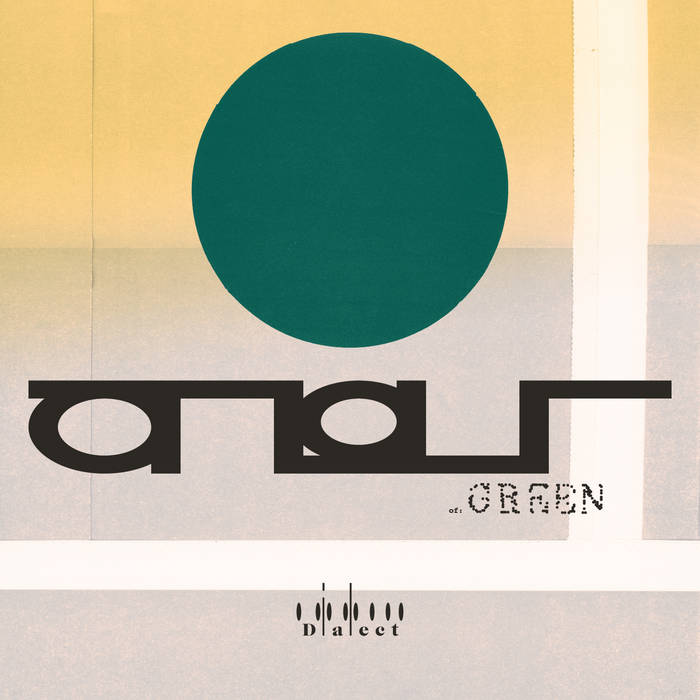
    Francesco Cavalière & Tomoko Sauvage – Viridescens

    This is a meditative album based on the color green. It is composed with an original and inventive palette such as bowls of water, xylophones made of bamboo and synthesisers. The music is really calming and stimulates my imagination.

    discover hands in the dark

    continue reading

  • painting musical scenes with Razen

    painting musical scenes with razen

    Razen is the playground of Brussels-based Brecht Ameel and Kim Delcour. 


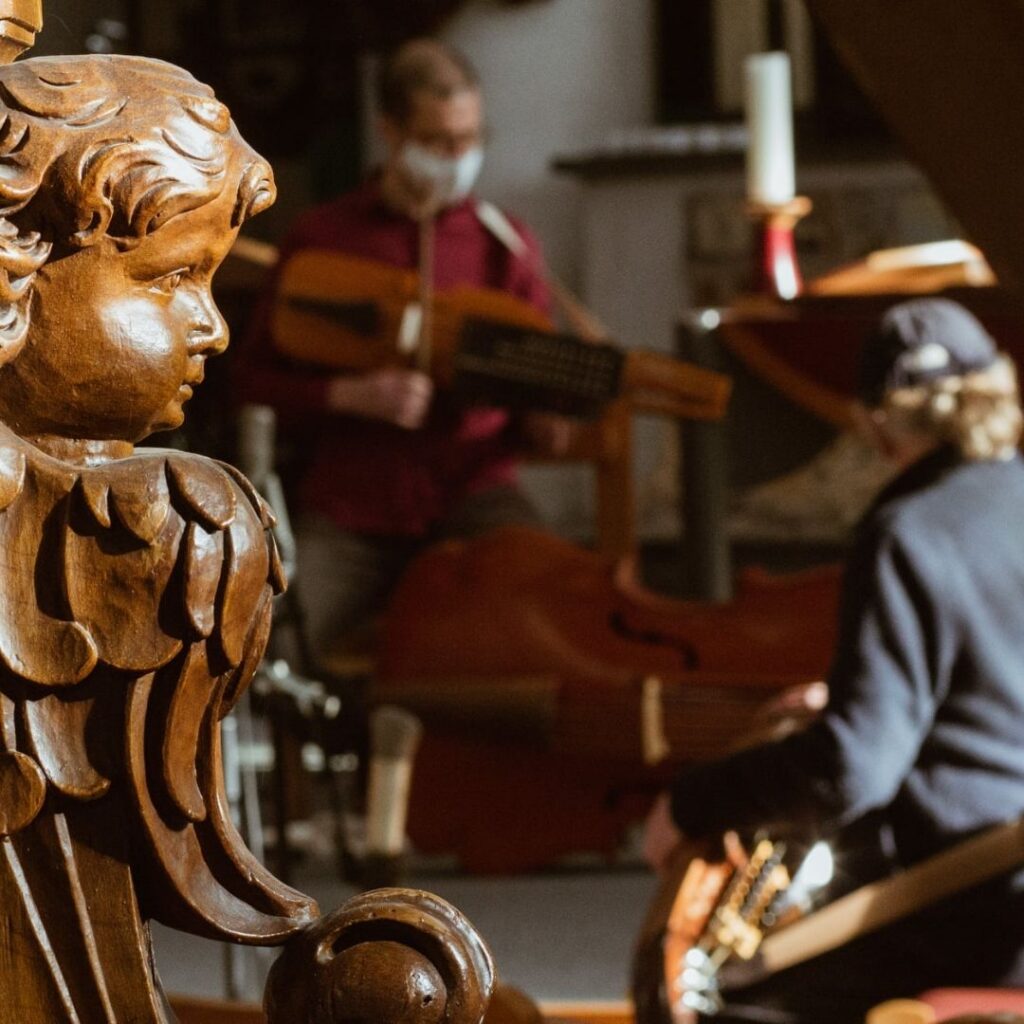
    Together with an ever-shifting ensemble of musicians, they employ a wide array of ancient and sometimes unusual instruments to create emotive music that can’t easily be put into scores. Deviating from the comfortable confines of notes and rhythms, they turn to colors, texture and composition like painters do. 


    Engrossed with their latest album, we recently met the duo in an old and charming café in the heart of Brussels to get a glimpse of their universe.


    Photography: Joeri Thiry

    Razen means speeding in Dutch, but the music you create is often very soft and slow moving. 


    Kim: Although we play very softly, the intensity is under the skin.


    Brecht: Our music has drive, even without rhythm at the forefront. We have a certain drive in our way of improvising and going from point A to B. There is movement in our music, even if it’s just seemingly very soft or very empty.


    Kim: On a first level, our music is introverted. The anxiety seems to lie underneath.

    Is that the feeling you want to express with your music?


    Kim: Our latest album Blue Rot is very much that feeling. On the surface, it is calm, but there is something tense and unsettling about it.

    You often play with additional band members. Is it easy to convey the razen feeling to them?


    Kim: In the last 10 years, we’ve only had six guests and we’ve chosen them very carefully. They need to be able to improvise, as a lot of classical musicians need a score and are not able to improvise. But we never work with a score. We never work with melody. We never work with rhythm. We never work with chords. 


    Brecht: In a way, it’s not so easy to play this kind of music. Usually, it requires a very controlled tone. Putting emotion in it requires virtuoso musicianship. It is totally different from a wild saxophone solo. People must be able to step into that direction and want to do it. They need to have the spiritual openness to play this kind of music. 


    Kim: When we talk about music, we also never use musical words. We use words such as texture and repetition that painters usually use. It’s very important for us to find musicians who can communicate in colors, moods or images.

    How has your music evolved in the last 10 years? 


    Brecht: With every live set and with every new album, we approach the music differently. Yet at the same time, the way we tend to approach things and the way we tend to try to bring them into our world will remain the same. It may be very similar in the search for freedom. It’s just about trying to escape the boundaries as much as possible.


    Kim: The spiritual aspect wasn’t so present in the beginning as it is now. When we first started playing together, it was mostly driven by experimentation and curiosity of what the instruments could sound like. Over the years, we realized that we are not playing instruments. We are the instruments. 


    Brecht: We also decided throughout the years that we don’t want to try to blow people away with volume and just embrace the nakedness of doing something soft. It could only evolve in this direction because we stuck together and experienced many things together. We have been quite severe about it. 


    Kim: Yes, we’re hard on ourselves.

    And do you feel that you’ve already found your sound?


    Brecht: We are constantly redefining our sound, but the essence is there.


    Kim: Our last two albums may be very different in sound, but the intention remains the same. 


    Brecht: Next to the intention, the instrumentation also plays a crucial role. Kim is a specialist in early recorders and bagpipes. That’s a very rare combination and that certainly has an influence on our sound. Razen is mostly circled around the whole idea of just giving freedom to a sound.


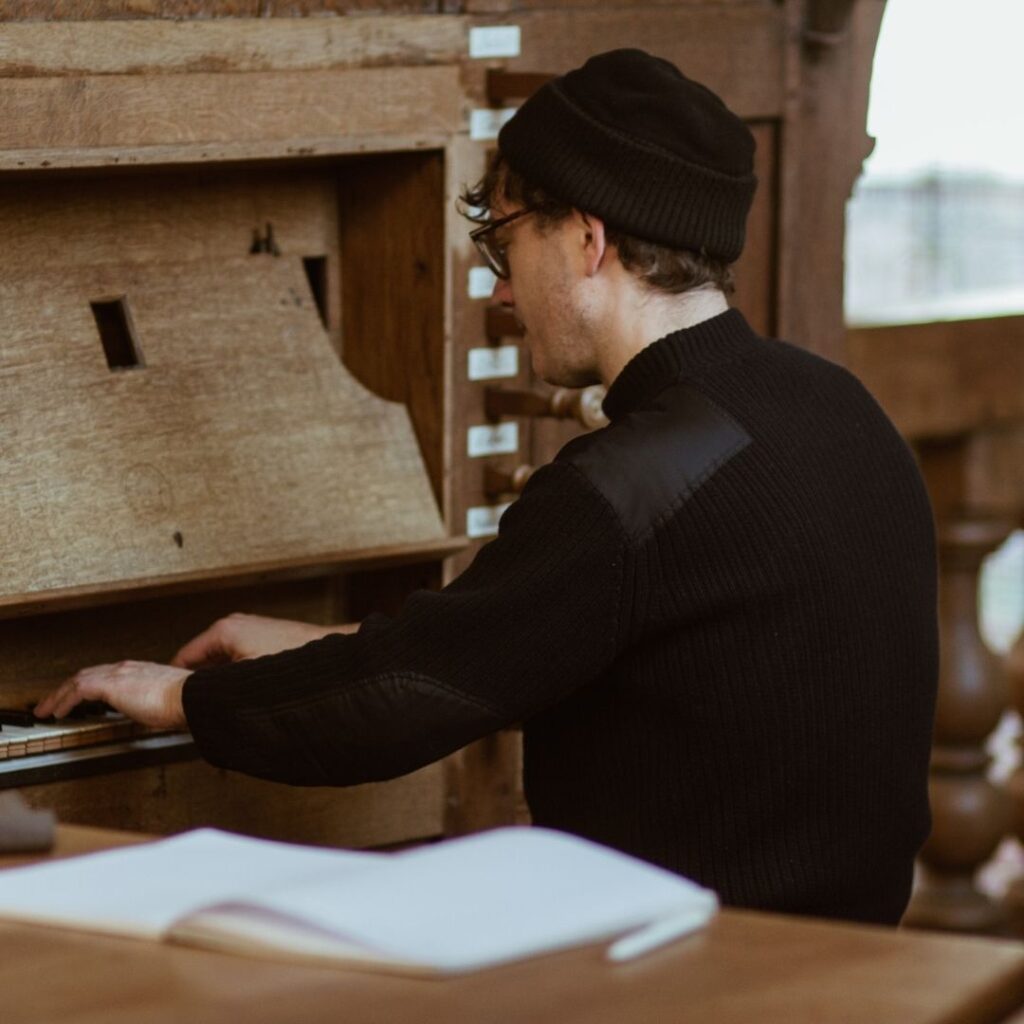
    Kim: Sometimes Brecht plays the church organ, sometimes he uses small string instruments, sometimes he plays the bouzouki, sometimes he plays an Indian harmonium. But whatever he plays, there will always be that tension and that atmosphere. 


    Brecht:  I think our sound is defined by a combination of different things: the instruments we use, our way of seeing things, the other musicians that we draw along in our story. Those elements together are what makes our sound what it is.

    How do you go about the process of building an album?


    Brecht: Sometimes the idea is there before the album.


    Kim: We really had a strict idea for Robot Brujo. We went to the studio with the intention of making an album based on a book we both read and fervently discussed.


    Brecht: That translated to tiny movements played in a very dehumanized way. For Blue Rot, we recorded in the studio, but it was only until after the recordings when we learned about the essence of the album. So, if we wanted to portray this essence in a good way, we had to look for a good title and the artwork. 


    Kim: It’s also about choosing the right tracks that belong together. We often throw away good tracks simply because they don’t fit very well in the specific mood or concept we want to convey with the album.

    So, how do you know when an album is done?


    Kim: We stop when we feel the story is there and it conveys what it needs to.


    Brecht: Luckily, Kim and I have the same gut feeling about these things. I think it’s mostly because we are also avid readers too. We have a shared sense of knowing when a story is finished.

    Did you have a color in mind when you created Blue Rot?


    Kim: When we listened to the tracks, it really evoked an image of a tiny room with brown walls and someone who’s laying before the open fire. 


    Brecht: It had something to do with a solitary person but not knowing with full certainty if this domestic setting is positive or not. It also evokes the vibe of an afternoon daydream for me, as well. When you wake up from it, it reflects in a very unsettling way, and it also has a weird effect  for the rest of the day. Those two images combined made the album.

    Is there a difference between how you approach albums and live shows?


    Brecht: We consider live shows and albums as two different worlds. When a new album is out, it doesn’t mean that we’re going to play those tunes at a live concert. For the albums, we also get to divide them in separate pieces, but a live show is just one big piece of music.


    Kim: When you’re playing live, you need to create an arc of 45-60 minutes to keep the audience’s attention. 


    Brecht: I see them more as moments. Moments you share with each other and the audience. It’s a different focus, but the whole idea of being fully in the moment remains the same. 

    What’s your favorite concert setup?


    Brecht: We always improvise during live performances. Whether we play in a grand church or a sober club, we adapt to the venue. We always play differently in every venue, as the acoustics tend to be very different. We also never play with the same band, so we adapt according to the situation. 


    Kim: I think the most important element for us is attention and focus. Our music doesn’t work when there is a lot of movement or talking.

    How did you gravitate towards recorders and bagpipes, Kim?


    Kim: I didn’t choose it. My father played the bagpipe, and I have been playing it since I was eight.

    For you, Brecht?


    Brecht: I am a guitar and lute player, but I recognized from the onset that if we wanted to convey something primitive and intuitive with Razen, then I would fail to do it in the right way with the guitar. I am very aware of what can happen. The color of the instrument is also very distinct. So, I chose instruments that I’m less familiar with. I pick up on some early string or key instruments. When we are in the church, I go to the organ. I would never say I’m a good organ player, but I know what I must do to do it in the right way for our music. 

    You don’t have the same feeling with the bagpipe, Kim?


    Kim: I see it as a painter who learned how to paint human figures. But this time around, he wants to be an abstract painter. That’s the thing I’m trying to do. When I play the recorder or bagpipe for Razen, I try to play them as naively as possible.


    Brecht: Keep in mind, you must also be highly skilled to get to that point.


    Kim: I’m in control because I know the pitch and I know how to play in tune, but I try at the same time to just play three notes in a very naïve way, although in the very right moments.


    Brecht: Bagpipes and recorders do have a strong effect on people. I’m convinced that there’s something in their sound color that leaves a lasting impression. It’s not a sound that we are used to getting from a laptop. It is very primal. Especially if they are played in the right way, as Kim does, they can have a powerful effect.

    Do you approach your own music differently?


    Kim: Unlike our music that is composed, Razen is pure improvisation. In the latest album, it was our first confrontation with the serpent. It was also the first time Brecht didn’t play the strings, as well. These are all specific situations that influence the sound of the music that we make together.


    Brecht: I think our music with Razen is born from our conversations and from our friendship. With Razen, we never rehearse. We just get together to discuss books, films, or ideas and then somehow these end up becoming a concert or a recording. 


    Kim: It’s also music that is impossible to write as a score, because it has nothing to do with notes or rhythms. It’s mostly about colors or imagery. 


    Brecht: We place so much importance on elements that are never captured in scores, like very difficult phrasings or very specific ways of breathing. 


    Kim: I’m also a perfectionist when it comes to my own music, but it’s very difficult to be a perfectionist in Razen. There are a lot of things that can happen that are not so perfect in a classical way. We also very much welcome coincidences with Razen. When we play, we are very open to what might occur or what might happen. if something or someone does something, we go along. It’s our way of empathizing.

    What are you most looking forward to in the next months?


    Brecht: We recently created a soundtrack for a short film made by British artist Nicholas William Johnson. It is based on a sci-fi novel by James Lovelock called Novacene. It boils down to the idea that a hyper intelligent system will work in concert with humans to restore ecological balance to the planet. It will come to regard us as we regard plants.


    Kim: The exhibition is called They Regard Us As We Regard Them and it will be exhibited in PLUS-ONE Gallery in Antwerp starting October 16.

    To end, what advice can you give to a young musician?


    Brecht: Be a good listener. Play less and listen more.


    Kim: Go to museums and look at paintings. Find the link with music and try to translate it into music. 

    continue reading

  • making tea a ceremony with Anna Morton

    making tea a ceremony with Anna Morton

    Inspired by her passion for botanicals and the healing power of plants, Anna Morton founded Leaves and Flowers with Emily Erb in 2014 to offer a unique selection of handcrafted herbal infusions and premium small-batch teas.


    Apart from using locally grown botanicals, they keep the leaves and flowers as whole and as intact as possible, as a way to show their reverence to the tea and their commitment to deliver a multi-sensorial experience that is vibrant in color, form, aroma and flavor.


    Excited to carry their teas in store, we caught up with Anna to learn more about her everyday tea ritual and how to transform the sole act of drinking tea into a meaningful ceremony.


    What sparked your interest in tea and botanical experiences?


    I wasn’t so familiar with tea as a child, nor did my parents teach me about plants. But as a teenager, my friend’s mother (an herbalist) became my first plant teacher.


    She was very gentle with her guidance. I started noticing her relationship to plants – how she tended her wild garden and used herbs abundantly in cooking. With her I made my first healing salve: a balm of calendula, comfrey, and plantain. She had a wonderfully earthy scent about her from the oils and essences she used on her skin. She was a Hari Krishna and had lived in India for a time. She made the most delicious stove top chai.


    I have many memories of her making me a cup of tea. She really was the one who introduced me to both tea and botanical medicine.

    That must have been such a lovely experience. How did your relationship with tea and botanicals change after that encounter?


    The shift was gradual but because of her influence I grew more curious about plants. At first my interest opened to Ayurvedic medicine. Alongside my university studies, I began reading books about Yoga and Ayurveda. I even lived at an ashram in Northern California for a short time working in their herb and vegetable garden, practicing yoga every day, and studying with the resident Ayurvedic doctor.


    I can’t say I had a conscious relationship to tea until much later when I did a year of botanical study at the California School of Herbal Studies in Forestville, California. During that year, I discovered that the way I most enjoyed ingesting plants was as tea.


    I loved steeping fresh herbs from the school garden or collecting herbs for tea on my forest walks. I learned the most about the plants when I consumed them this way. I could taste them and smell them and feel their energetic effect.

    Anna Morton | Leaves and Flowers

    What made you decide to work with tea?


    I think the simplicity of tea drew me towards it. The relationship one can develop rather quickly with the tea plant, or any plant, through infusing it in water is striking. I became fascinated with this relationship and how simple and elemental it was. And I wanted to offer this experience to others.

    How do you go about creating your infusions and finding the right local partners and botanicals to work with?


    The whole process has evolved a lot over the years, but it remains quite natural and intuitive. At first, we worked with farms in our neighboring county, which is mostly an agricultural area. We crafted our blends from botanicals that were already being grown on these local farms. Herbs like mint, lemon verbena, sage, thyme, rosemary.


    As our business developed, our needs increased, and we started sourcing herbs from outside of California. We now work with small scale herb farms in California, Oregon, Vermont, North Carolina and Maine that are devoted to cultivating medicinal plants.


    With each infusion that we create, we begin with some initial inspiration – a single herb, a season, a mood, a time of day. From there, we imagine what botanicals would pair well with that flavor or feeling. We build our infusions deliberately and slowly, adding one ingredient at a time and taste it alongside the other ingredients at variable ratios. It’s surprising how quickly the flavor can shift with a little more or less of this or that. We always strive to achieve that perfect balance in which each ingredient is distinct but also married with the others.

    It’s so interesting that your infusions sometimes stem from a mood or a feeling. We’re curious: when are you most in the mood for tea?


    I’m most in the mood for tea when I don’t have much going on. When I have a moment to be quiet and present.

    What does your everyday tea ritual look like?


    It seems to change with my mood and the weather, but usually I prepare tea (black or puerh) first thing in the morning before I meditate, then continue to enjoy tea throughout the day. I typically end my day with a botanical infusion, something soothing and tasteful like our Sleep tea or Digestive Seed tea, or a fresh tisane of mint or thyme.

    Anna Morton | Leaves and Flowers

    Does your tea preference or drinking habits change over the seasons?


    I’m one of those people that loves hot beverages all times of year. You’ll almost never see me with an iced drink. But I do have seasonal tea preferences. In the spring and summer I drink more green tea. The lighter body and fresh flavor of green tea feels renewing and hopeful. While in the fall and winter I drink more grounding teas, teas with a splash of cream, or spice like ginger. I also like to make chai in the colder months.

    How do you select which tea to enjoy for the moment? 

    I usually go with what I’m craving or choose a tea based on how I’m feeling. If I’m having tea during or after a meal, I choose a tea that pairs well with those flavors, but if I’m having tea on its own the options are more open. In that case, I somewhat unconsciously consider factors like the time of day, the light, how much time I have, if I’m tired, or energized, or if I’m making tea for myself or for another person. Some teas are more giving and best to share with others.

    What makes for a good tea?


    Awareness and intention take you far. And being tuned into the elements of tea preparation—weight, water, temperature, time—are most important.


    But really, like most things, it’s about the quality of the tea. Where and how it was grown, when it was harvested, how it was processed. The age of a tea is also important, and how it’s been stored. Some teas expire quickly, while other teas get better with age.


    It’s definitely worth spending money on good quality tea. Once you experience what tea can offer in its energy, aroma and flavor, your relationship to tea will only deepen.

    When you’re not busy with tea, how do you enjoy your downtime?


    I walk a lot in nature, read, swim in the sea when it’s warm, and cook for my friends. My partner and I are also renovating an old cabin in Topanga Canyon at the moment, so recently lots of my time has been committed to that.

    Objects & Sounds | Object Playlist | Music for Tea Drinking | Tropic Garden

    And how about music? What’s your relationship with music? 


    Music has played a major role in my life ever since I was a girl. My father listened to a lot of folk music in our home, so I grew up with Peter Paul and Mary, Bob Dylan, Joni Mitchell, Neil Young, Leonard Cohen. I’ve also dated a few musicians over the years and my understanding and appreciation for music has certainly been shaped by being close to them and their music making process.


    In regard to tea and Leaves and Flowers, music brings us so much joy and inspiration. We often listen to music while working. Luckily, Emily and I have similar taste in music. We’re big fans of NTS and have discovered an array of artists and genres through their djs and live stream radio. 

    Are there any particular albums or artists that have really resonated with you recently?


    I am really enjoying Pink Floyd’s ‘Meddle / More’ and Ana Roxanne’s latest album ‘Because of a Flower’. I also really enjoy the music by Fishmans, a band from Tokyo that was active in the 90s.

    Lastly: Any tips you can share to make tea drinking a more meaningful and pleasurable ritual?


    Invest in beautiful and functional tea ware. Light a stick of incense. Pay attention to the quality of the water you’re using. Make it a ceremony.

    continue reading

  • music as a form of meditation and healing with Noémi Büchi

    music as a form of meditation and healing with Noémi Büchi

    Noémi Büchi is a Swiss composer searching for musical structures to evoke both emotional and intellectual euphoria. She stumbled on her parents’ ancient piano at a very young age and it was clear from her first keystroke that music would always be a part of her.


    Though she’s very much at home with keyboards, she embraced the modular synthesizer as her instrument of choice for her debut EP Matière. Infusing this with field recordings of sounds and noises surrounding her every day life, she leads the listener safely through deep paths of complex rhythms and otherworldly sounds. She also recently put out two digital albums titled ‘Ne Parle Pas De Secrets‘ and ‘Prismic Passages‘. 


    Intrigued to learn more about her creation process, we spoke with Noémi about her triggers, inspirations and what’s next.

    Tell us about how you started making music.


    My parents owned an ancient, unused and out-of-tune piano. My first approach to this instrument and thus to music was improvisation. That never let go of me again.

    It was clear from the first keystroke that the piano and music would never leave me, or rather that I would never leave them. A world opened up for me in which I could suddenly express myself so easily and intuitively.

    My parents then decided to send me to a composition class and piano lessons, where I learned a classical repertoire and discovered my fascination for romantic and impressionist music.

    How has your music making evolved over the years?


    I’ve been making music for as long as I can remember thinking. Be it in my head or on an instrument or on the computer. My compositional interests and techniques have evolved over the years and so has my material. I’ve been making electronic or electroacoustic music for about 3 years now.

    Noémi Büchi | Mood Talk

    Can you tell us more about your creative process?


    I would describe my creative process as a “three-phase adventure” in which I go in search of inspiring moments, ideas, or materials. The three phases of my process have all their clear function.


    The first phase is in a certain way permanent. Even when I’m not sitting in my studio, I’m, always working. I record sounds. I get inspired by all sort of things, which are external from music, and I collect thoughts. I could call this first phase of the working process ‘the collecting phase.’ I collect sounds, I record everything that interests me. I collect thoughts, I collect images, I take pictures, I draw things, and I collect ideas from conversations or thoughts that could be interesting for my music.


    The second phase of the working process happens in the studio. This is the phase of cleaning up. It’s a bit like the collector who comes home after his adventure and has to put his things in order. Here I make folders in my computer, divide everything up, make categories of sounds, with the different characters of sounds. In this phase I also clean all my material. I repair, cut, refine my sound recordings. Here it can also happen that I make certain sound transformations already, although this belongs to the third phase.


    So, phase three: that’s the most difficult phase. I’m not ready for this one every day. I know exactly when I get up in the morning whether today will be a receptive day for this third phase or not. I always work differently in this phase too. It’s a bit of a tranny phase and I let myself be guided by my concentration and by my collected and tidy sound world.


    I don’t like to limit myself in terms of sounds. I mostly let myself be controlled by the sound and not vice versa. For me, every possibility of sound production must be accessible. That’s the reason why I have such a hybrid way of working. I work a lot with analog synthesizers, my computer, objects and acoustic instruments, my own recordings and my voice.

    How did your debut EP Matière come about? What inspired you to make it?


    Matière was an experimentation with rhythms and especially a first try with my modular synthesizer. When I have a new instrument or something, I want to learn it as fast as possible, so this EP was a good opportunity to put some pressure on myself and make rhythmic etudes with it.


    I like to deal with rhythms and in general I’m very interested in the temporal processes in music, or more precisely in the durations of sounds. Whether it’s very slow sounds, like drones, or very accented, precise percussion, it’s all very much connected to our perception of time.

    Aside from music, do you resonate with other creative expressions too?


    I am inspired by all kinds of extra-musical impressions. I have a very broad interest in art in general and in simple things of everyday life. I am also a very visual person. When I’m not able to compose music, I do a lot of sketches, abstract drawings or I take photos. I love editing pictures, it has a very calming effect on me. I need these other resources more as preparation or as a balance to making music.

    What drives you to make music?


    That’s not a simple question. It has always been clear to me. It always felt a bit like a destiny, without wanting to sound religious. I somehow know that I’m able to do it and that I want to do it. It makes sense to me. Anything else would be a meaningless life for me.

    And what does it mean for you?


    It is the meaning of my life. “My task”, so to speak. And music was always a place where it was possible for me to deal with difficult moments of my childhood. I don’t want to use the term ‘escape’, but maybe it was a form of expedition. A journey from which I came back a little smarter each time. So, it has also a healing function for me.


    The moment of creation is very close to meditation. In this moment, I don’t think about a broader identity. On the contrary, I encapsulate myself from it. At the same time, I am closest to my true self in this moment, and closer to my authentic self than ever before.


    For me, this is my true identity, when I don’t have to subject it to a social and cultural context and can and may just sound like ‘me’.

    So beautifully put. Do you have to be in the mood to make music?


    I need a special mood to be able to be productive. I have to be in a specific mindset. The three most important things in this state are: concentration, inner peace, and warm energy.

    And what about listening to music?


    Listening to music is an important process for me on different levels. On the one hand, it serves me to practice my hearing and to keep developing it. I love to delve into the smallest detail of a sound. It gives me the feeling of truly understanding the inside of the music.


    On the other hand, listening to music is also a source of inspiration for me. I love discovering new things that give me ideas or listening to old things that allow me to go back in my memories and travel through time.


    Unfortunately, however, listening to music has also become difficult for me. It’s getting rarer and rarer for me to really listen to music to enjoy it, because I listen very differently than I would if I wasn’t working with sonic material. For me, switching off is more about not listening to music anymore and seeking silence or listening to the sounds of nature.

    So, what music are you gravitating to right now?


    I love many different forms of music. Be it classical music, folk music, experimental, electronic music. I am far too curious to limit myself to a favourite type.


    I am completely immersed in drone music at the moment. I am writing a thesis that is connected to the temporal experience of this kind of music. ‘A Music of the Now’ will be the title.

    That’s very interesting would love to learn more about it. What inspired you to dig deep into this?


    I came to it for the simple reason that academic texts about music or essays never really satisfied me. Writing about music – that is, a verbalization of the musical experience is not possible in my opinion. That’s why I was looking for a form that comes closest to musical reality and tries to represent the musical experience in a special way. The book will probably be published by the label -OUS.

    Do you also explore collaborations with other artists?


    Yes, I also work occasionally with other artists. Also with artists from other disciplines , such as Alice Gilardi, or Claudia Stöckli for example. However, I am quite a loner when it comes to artistic production. Therefore, it can only work with very specific people with whom I have a special relationship.


    For example, the duo called Musique Infinie, which I developed with Feldermelder. It is the perfect and the most beautiful collaboration, on all levels. It will now probably and hopefully accompany me for the rest of my life.

    Looking forward to it! What are you most excited to explore next?


    I am always excited about the future because I let it come to me. That’s the beautiful thing about being an artist. You never know exactly what tomorrow will bring, but I’m especially looking forward to my next major album, which I’ll be releasing on -OUS Records.

    continue reading