• feeling free with Baal & Mortimer

    feeling free with baal & mortimer

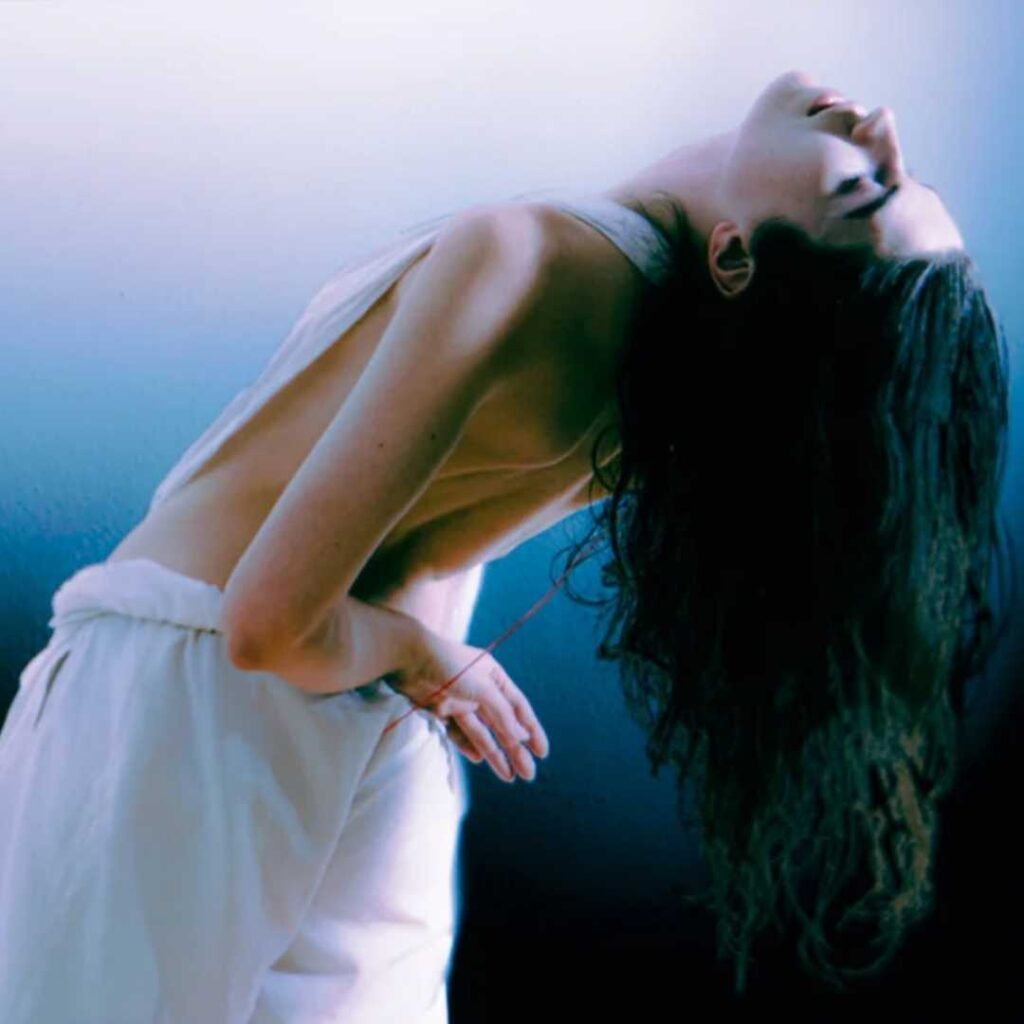
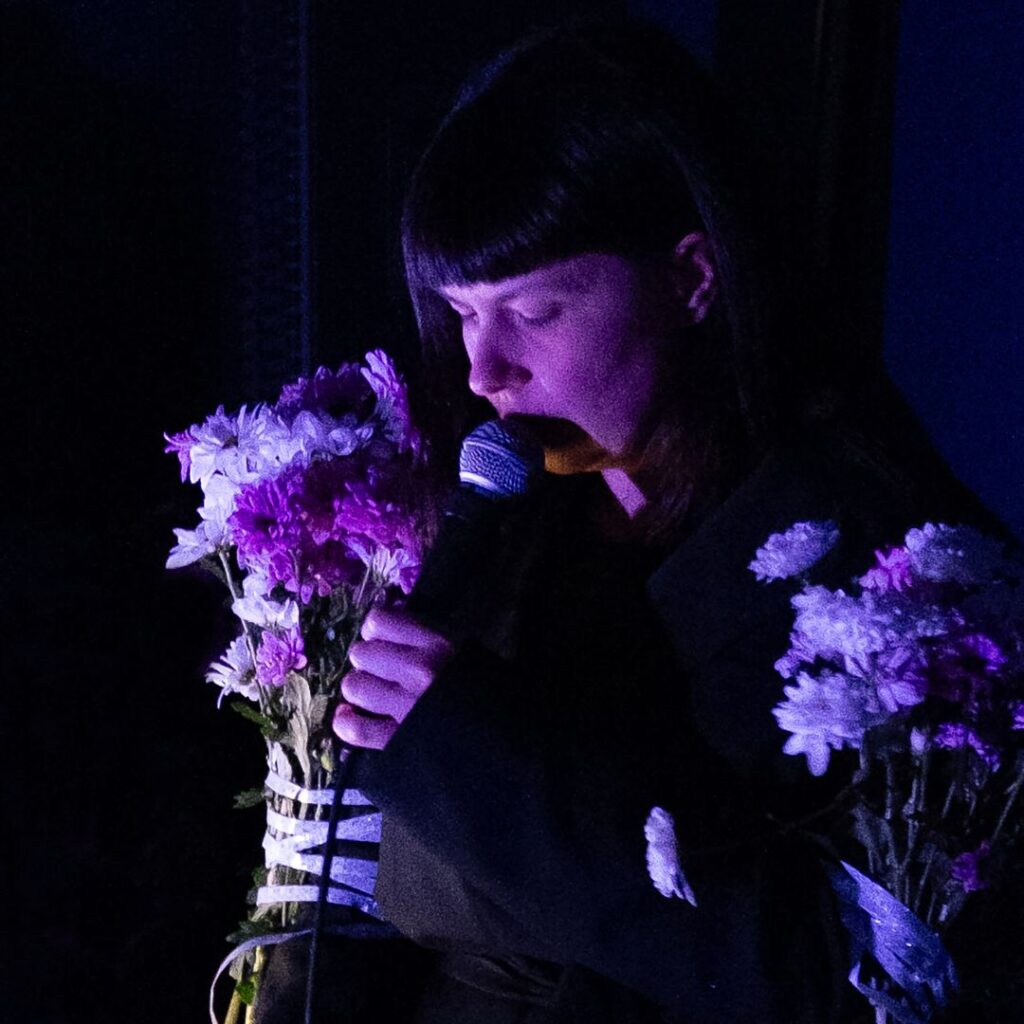
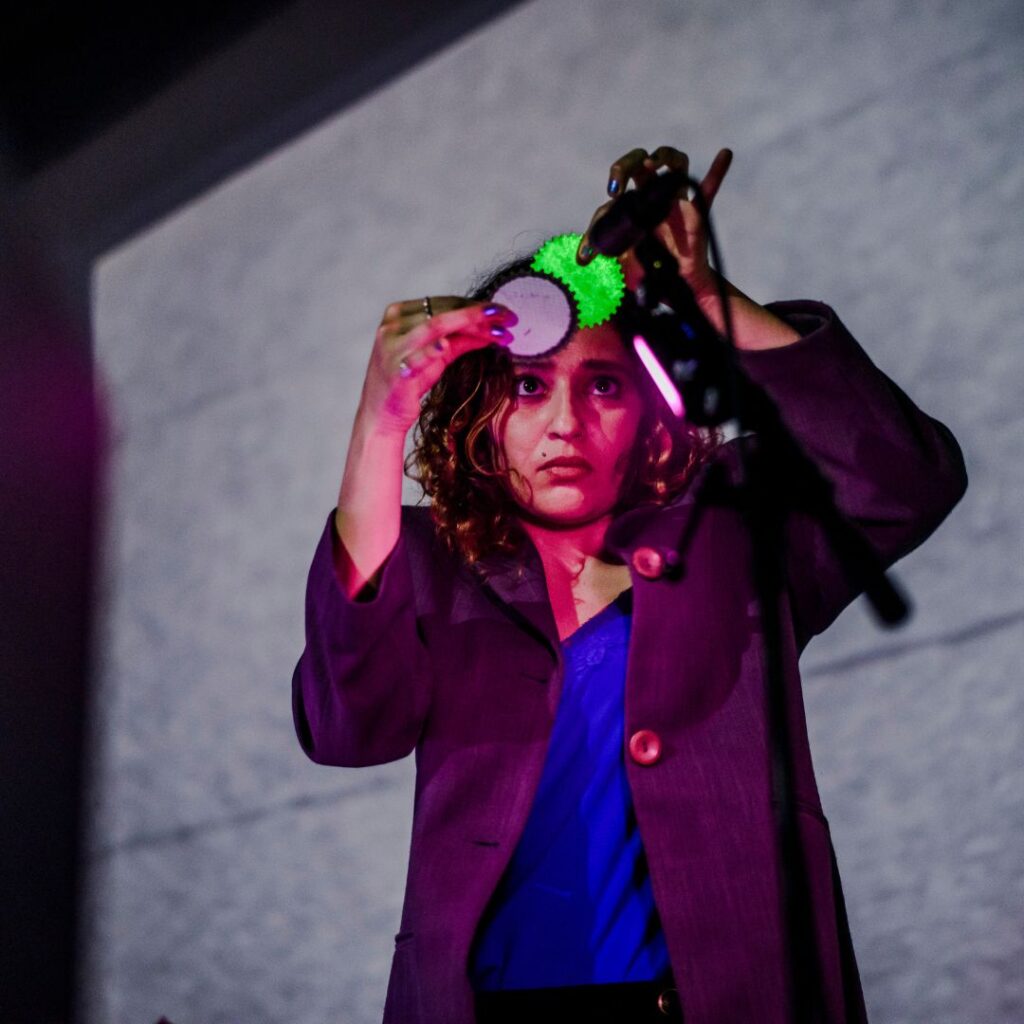
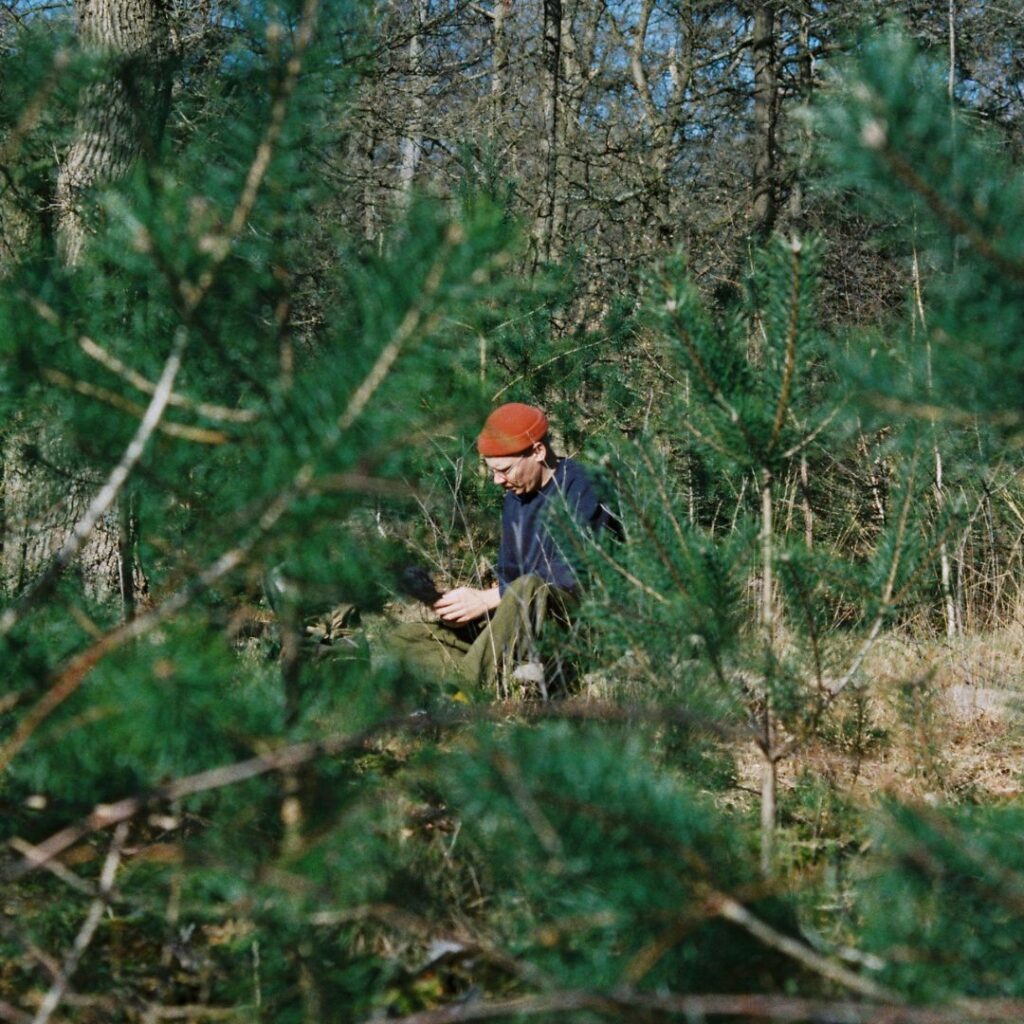
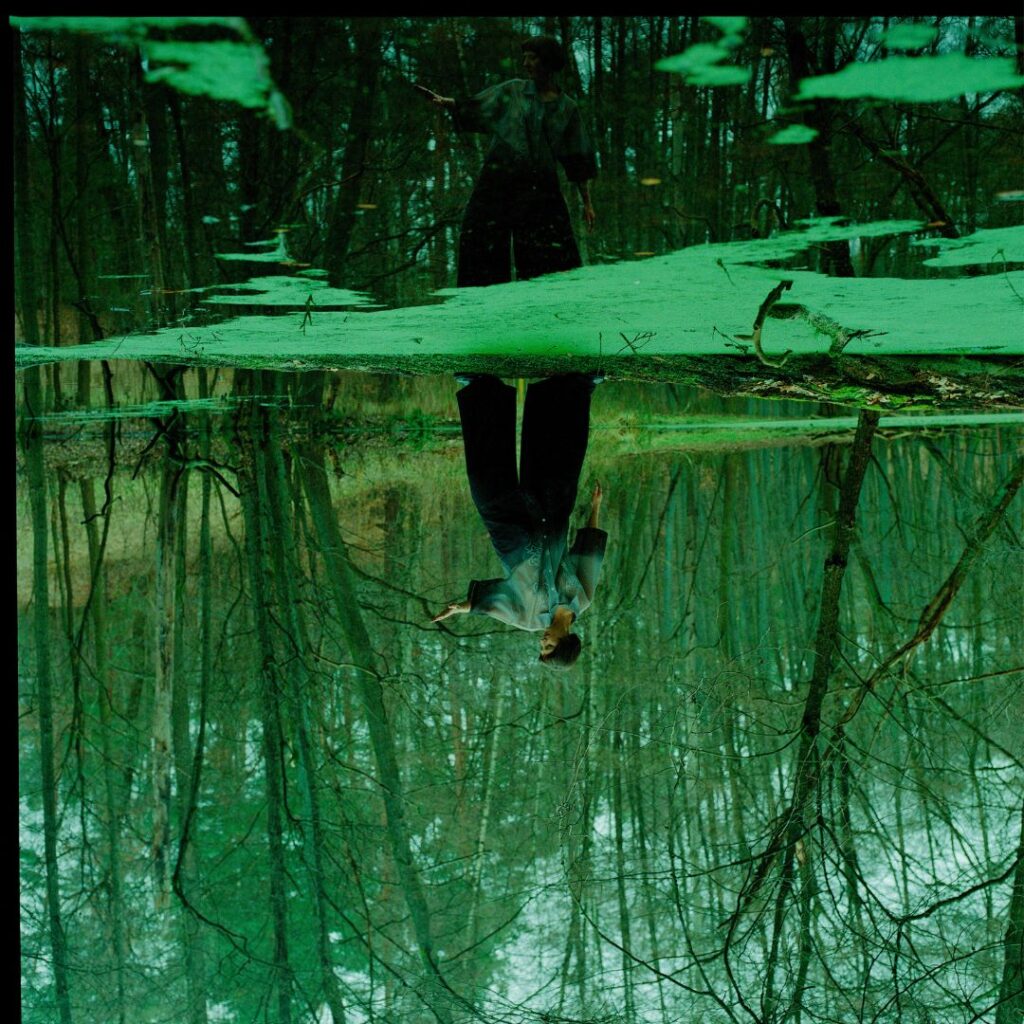
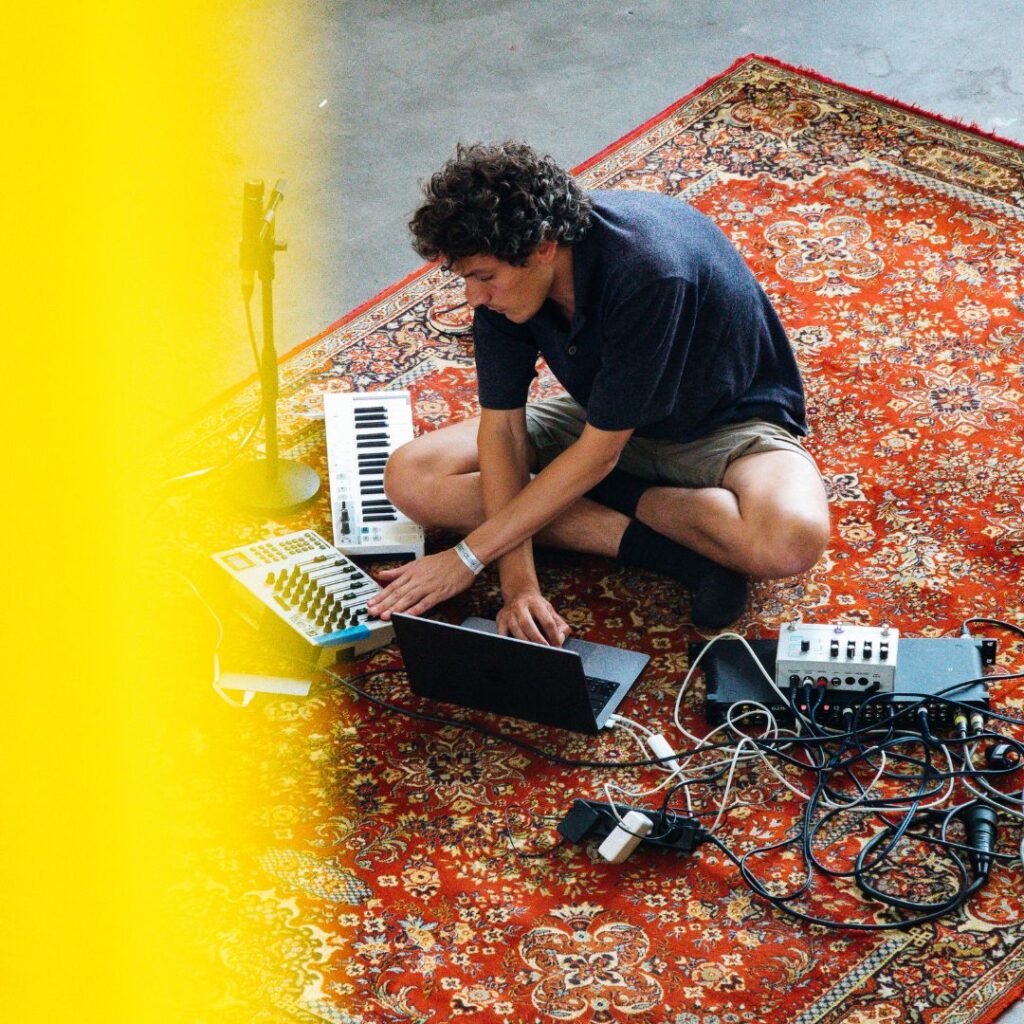
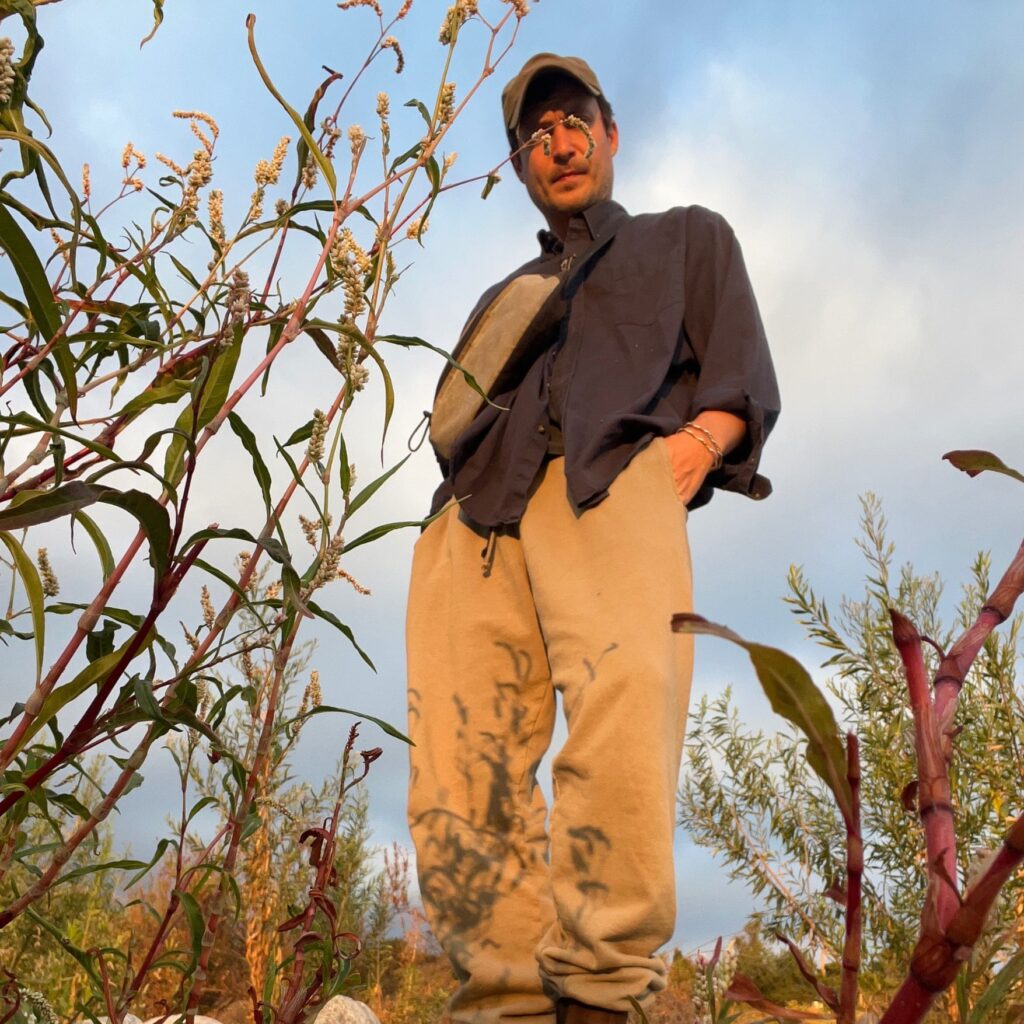
    Baal & Mortimer is more than just a project by Alexandra Grübler. It’s an unbounded universe. A probe into the concrete possibilities between tone and image, language and body, research and movement. 


    In 2020, Baal & Mortimer released their debut album ‘Deixis’, followed up with an EP called ‘Torso Tapes’ released on Italic early this year. Both albums combine sensible atmospheric synthesizer sounds with downtempo rhythms and choir-like voices. Although there’s more to the music than how it sounds. These sonic explorations do not only wrestle with themes of autonomy, language, and identity; they also form an arresting, ever-evolving narrative teeming with equal bouts of expression and resistance. 


    Yet, sound is just one outlet for Alexandra Grübler. Movement, poetry and dance also inform the universe of Baal & Mortimer.  Like different parts forming one whole, they’re also German, English, machine, human, male, female, ancient and now.

    Why Baal & Mortimer?


    I’ve had the name since I was 17. I remember feeling free of gender, of age, of the contemporary when making music, so originally back then I was interested in a name that would hide the number and sex of my project. I live by and fully support the spectrum, so I would like the music to speak for itself too and not because I’m read as presumably female.

    I also wanted a hint to the ancient. Baal is a god and a demon in the old grimoires. Mortimer is some 14th century earl I read about. I wish I could remember why I chose that name. I think I just liked his name phonetically, sadly.

    When did you start to make your own music and how has it evolved over the years?


    It started with classical vocal training, piano lessons, choirs and such. I then started experimenting around with my own material but it all went very slowly.


    On a technical level, I’m not even close to where I want to be, but it is nice to be in control of all the steps. It propels a trust forward, in my voice and the background horizon Baal & Mortimer has formed to my own existence. It’s its own sustaining safe place, one that demands me but also stabilizes, one that I can always return to.

    Baal Mortimer | Mood Talk 1

    Can you tell us more about your creative process?


    It’s quite sculptural. In the beginning, there is usually a concept. Be it a written piece or a visual collage. Then, I accumulate and accumulate the sonic levels, until I have an undefined blob of sound. From there, I start chiseling away. Moulding, taking out, deleting, placing, curating that sonic marble block. I also tried the more carefully additive way, but it didn’t work, unfortunately.

    Where do you draw your inspiration from?


    From the details. Details in the texture and fracture of life in all its spectrum. Details that interrupt the narrative. But also from width. The meta, abstract thought. The reflection inherent to our species. Although ultimately, from the knowledge that all is not only ever changing but also finite, so you better get on with it.

    One thing we noticed very distinctly on Deixis is that you distort your voice often. Why is this so?


    I sometimes do, but actually not that often. On my new EP The Torso Tapes, the voice comes out even rawer. Although in Deixis, on tracks like Prostheses or Caryatid Fall, it’s pretty clean too. I distort it mostly for the choirs. I play with bending the status of male, female, human, machine. When you’re a project that only consists of the Self and believe in ultimate fluidity, you do start playing with multiple versions of yourself. But generally, the singing voice is pretty left alone. A little hall, a little reverb, that’s about it.


    The human voice transmits it all: all the flaws, all the human condition. I don’t have the desire to cover that up with autotune or crazy plug-ins, although I see that being a trope of the contemporary. It just doesn’t interest me and I don’t find it subversive in a time where not using a IG filter already counts as radical.

    Aside from music, are there other creative expressions you resonate with?


    I feel it all feeds into the same channel. The sonic outlet is just one language or one expression of the same core for me. I like to move and do dance and body work, but I equally find drawings, diagrams and the visual side in general to be equally important.


    There is less pressure on the non-music side because there is less emphasis on it, so it generally comes out more easily and freed of pressure. It’s a good counterweight but ultimately ends up in Baal & Mortimer anyways.

    Baal & Mortimer | Alexandra | Mood Talk

    What drives you to make music?


    It’s difficult. It’s a fight and struggle. It’s not therapy and it’s not even particularly fun often, especially when it comes to the “industry side“ of it.  Yet it’s the only thing that I know will transgress me and will transform me.


    It is the one duty I was given. It’s the one thing where I feel I have something to say that I can’t say through my body, thought or words. To then be so often hindered from it due to lack of payment or other struggles in the current system is beyond painful.

    So, what does music mean for you?


    It’s the complex, complicated bridge putting me in touch with existence and the lived world with a completely unknown outcome. It’s the place where I understand myself the least and where I need to sit with that loss of control and trust the outcome the most.

    How would you describe your music to a stranger who has never heard it before?


    Andreas Reihse from Kreidler wrote a beautiful press text recently and the last line became such a punch line for me: a Canterbury of the 23rd century. I loved that.


    There is obviously an obsession with ancient worlds: their fiction and truth, medieval polyphony and so on. A focus on these raw, cracked themes. But then there is the desperation of the future, the direction of the coming age, with an exhausted climate but the persistent hope for a post-capitalist world, falling in slow motion.

    What are you most excited to explore next, whether sonically or metaphorically?


    A world post-covid, and how that changes production means and conditions. That is what I will explore by necessity. Sonically I would like to get deeper into writing my second album. I would like to have a different hardware set up for that. That will be exciting and will shift the sound too I reckon, which is beautiful.

    Is that how you’ve kept yourself busy during this interesting period?


    That notion that people needed to think about the concept of “staying busy“ during Covid still baffles me. Many unideal things happened during Covid for me personally, as for countless and everyone, so it was more of an ongoing quest for survival and trying to find a moment of respite.


    All the precariousness of the neoliberal late capitalist system was known before, but Covid bent it to a level that in combination with mental health ended up being very, very mediocre for some. But generally being busy is something that seems inherent to all people with an artistic output. The second your chores or day jobs end, you turn to the actual cause and task: the art. And that is not just the production itself, but also researching, preparing, defending the psychic space to be able to make it. Or literally trying to not be too exhausted by the rest to actually have the capacity to do it, because making music or art is, contrary to most beliefs, not only the living embodiment of the soul but also real work.

    That’s really profound. On al lighter note, can you tell us more about yourself that you haven’t shared yet on the Internet?


    I can write with my left and right hand at the same time. Wobbly, but still a party trick.

    Pictures by Jelly Luise

    listen to baal & mortimer’s music

    continue reading

  • 9 albums for finding a new clarity by Sean Conrad

    9 albums for finding a new clarity by Sean Conrad

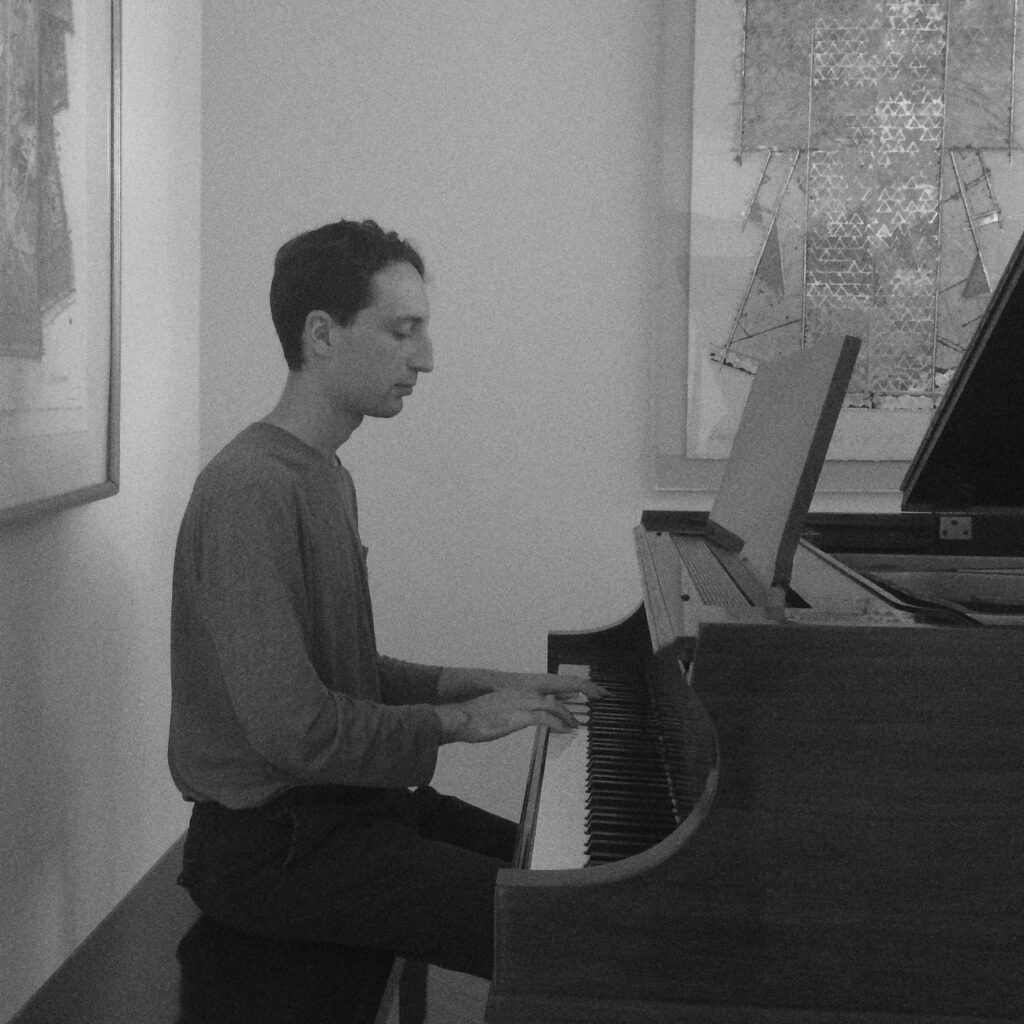
    Sean Conrad is an artist and musician based in Oakland, California. He predominantly records as Channelers and Ashan. He also recently started a collaborative duo with Michael Henning recording together as Skyminds. Next to making music, he also runs the Inner Islands label since 2014.


    Both as a creator and a curator, Sean is drawn to sharing honest and heartfelt sounds that are often peaceful, positive and inward-looking. They mostly find inspiration from the natural world and are rooted in improvisation which he once shared as “a pathway and a tool for delving into and revealing the inner world.”


    Happy to have his releases in store, we asked Sean to put together a mood list. He shares with us 9 albums for finding a new clarity. It couldn’t have come at a more perfect time, as we enjoy a new season and gradually tiptoe out of lockdown almost everywhere in the world.


    “I feel a new clarity come over me when I engage with certain sounds that expand my perception and awareness both deeper into the mundane and into the unseen. There can be a sense of being grounded in the physical moment while having an experience of the ethereal reality that is ever-present. These are sounds that can help me wake up to those realities because I feel them resonate within these sounds. Perhaps it’s simply my projection, but either way they do the trick.”

    Sean Conrad | Inner Islands | Moodlist
    Yialmelic Frequencies – Yililok

    This is one of the most tactile-evocative collections of music that I’ve ever heard. Every sound feels so deliberately chosen and dialed in. I sometimes feel like I can hold these sounds in my hands. They have such a physicality about them. The shapes and textures are foreign to me, but they feel as if part of a benevolent alien ecosystem. This album is probably the closest thing I’ve experienced to ASMR.

    Popol Vuh – Spirit Of Peace

    Florian Fricke created a personal devotional music, which draws upon so many different religious music and ideas from around the world, but is ultimately a crystallization of his own spiritual experiences. Spirit Of Peace, to me, feels like a very pure distillation of that work. It is one of the most minimal Popol Vuh albums, and it has so much heart and spirit in every track. It is always an uplifting listening experience.

    Julianna Barwick – Nepenthe

    There has always been something magical about Julianna Barwick’s singing to me – ever since I first heard her work while on a sleepover at a friend’s house 12 years ago. The way she layers her virtuosic and emotive singing can feel so resonant in my own body. The mingling of hush and power in her voice overlays such depths of joy and sadness and everything in between. This album always helps me return to my emotional reality.

    Dylan Henner – Great Prairie Plains: Studies of American Minimalism

    I love Henner’s take on these two pieces because they feel both minimal and ecstatic. The repetitions and subtle movements which flow through these pieces help foster a sort of trance that keeps me in a prolonged state of catharsis.

    Joanna Brouk – Hearing Music

    So much of Joanna Brouk’s creative process is also a listening process: playing one note on a piano, synthesizer, gong, or whatever it may be and waiting/hearing/feeling what the next note should be. The music reveals itself to her, as it is revealed to us on these recordings. These sounds often feel in tune with the cosmic hum and put me back in touch with that most simple and essential presence.

    Alex Crispin – Idle Worship

    I think the title of this album actually says a lot more than being a cute play on words. This collection of pieces does indeed feel like a view into the divine through the everyday – the simple act of being as a prayer. This album is both lush and spacious, verdant and meditative. It feels like it was written by someone who knows how to watch the plants grow.

    Emily Sprague – Water Memory / Mount Vision

    Listening to this album gives me visceral memories of being on an ocean shore and being in love with the ebb and flow of the waves and all of the subtleties of sound and motion contained therein. Some parts of this album also give me vivid recollections of sitting in a forest and feeling the abundance of life all around me. These sounds can put me back in touch with my reverence for nature and how otherworldly it can feel at times.

    John Carroll Kirby – Tuscany

    This album is all about capturing the spirit of a place with a couple of solo piano outings. One track is channeling the aqueous motion of a frequented waterfall. The other track is a meditation on the site of a WWII era massacre. Each piece is a loose improvisation around a melodic theme or mood and there is an organic freedom in that mode of playing that makes each of these pieces feel all the more alive and evocative of their sources of inspiration. I feel like I’m right there with John.

    Laraaji – Unicorns In Paradise

    Laraaji’s work always feels in some way extra-dimensional. This album is no exception. For me, it feels like a bridge to another plane that exists alongside this physical one. Experiences of that place are translated through vibration to give us a window into its feeling-tone. It has mysterious depths and it means us no harm.

    discover sean’s picks in store

    continue reading

  • delving into the rich world of overtones with Pak Yan Lau

    delving into the rich world of overtones with Pak Yan Lau

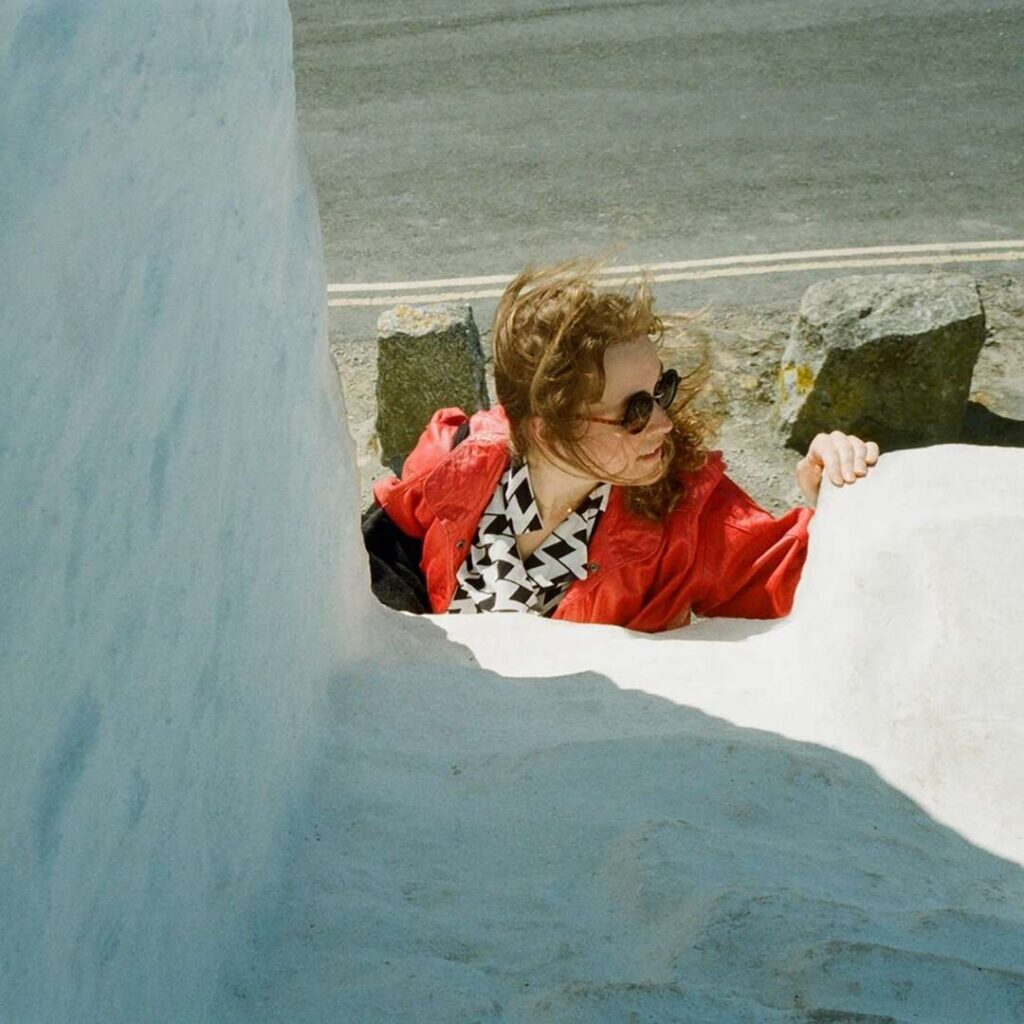
    Pak Yan Lau is a Brussels-based artist with a relentless curiosity for sound in all its different forms and possibilities. As a multi-instrumentalist with a diverse sound palette, she has a knack for creating little sound mosaics that merge acoustic and electronic elements with emotion and poetry. She also enjoys collaborating with musicians and multidisciplinary artists of all stripes, having made music for dance theater, photographs and documentaries.


    In the recent years, Pak Yan grew particularly fond of toy pianos and the rich harmonic overtones they produce. This led to the creation of the Book of Toy, which is part of a wooden object trilogy she released on Silent Water in 2015.


    Taking her fascination for these unconventional instruments to the next level, Pak Yan recently started a fresh new ensemble where they delve and dig deep into the sound spectrum of detuned toy pianos, secondhand gong rods, metal tubes and ring modulators. The result of their sonic exploration is Bakunawa, a spellbinding album released on Belgian label Cortizona with rhythms shifting in haunted patterns. It takes cues from Philippine mythology where the only way to stop the serpent dragon Bakunawa from swallowing the moon was to drum loudly on pots and pans or use their native instruments to lull her peacefully to sleep.

    How did the fascination for toy pianos start for you?


    It must have been 15 years ago when I first saw one. I thought it was quite cute and I immediately ordered one on eBay. As soon as the baby grand piano arrived, I just started experimenting with it and the fascination kept growing and growing by the day.


    There’s a certain aspect to the sound of the toy piano that really plays with my imagination. The sound has a kind of childlike and dreamlike quality. You can get a surprisingly tribal feeling out of it too, especially when you add electronic effects. When bowed, you also get these ethereal high frequencies. It is surprisingly diverse and I think that’s where the fascination comes from.


    The next thing I knew, I developed some kind of fetish for toy pianos. Whenever I see one, I’m immediately intrigued. People started finding them for me too. My boyfriend found one in Japan. A friend in France also gave me one. So now, I have about seven or eight toy pianos at home.

    When did you decide to actually make music with the instrument?


    I have a classical piano background and I just didn’t see myself having a future as a concerto pianist. I didn’t have the motivation to practice all the time and play pieces that I did not actually create. It was just not for me.


    I started playing the toy piano after my graduation. It was around the same time I moved to Brussels. The moment I had a toy piano, I directly started experimenting with it. Out of that grew ‘The Crappy Mini Band’, my toy experimental pop/rock quartet. We only had one rule: your instrument had to be small.


    For a while, we even had a Japanese tuba player named Daysuke Takaoka joining us. This made it very funny because we had small guitars, toy drums, a singer and then a big tuba. The contrast was not only great to look at, but it sounded fantastic as well.


    It was a super fun period. We made two records and toured Japan and Europe. We played quite a lot of shows actually. It was very liberating and light.

    Pak Yan Lau | Mood Talk

    How do you approach your creation process? 


    In general, I’m really an improviser. I very much like this freedom of starting from one point and then seeing where it can go. My creation process can start from improvisation, but it can also start from a concept or an idea. I recently made a radio piece with haikus and all the creation and inspiration came from the haikus themselves. Or with limitations. For instance, Bakunawa started with the limitation of instrumentation. I wanted to make a piece mainly for toy pianos and gong rods.

    What attracted you to the sound of toy pianos and gong rods?


    These instruments are not well-tuned. They are basically just pieces of metal, which just get more and more broken over time, giving the sound so much personality. It gets very interesting when you start combining different instruments together. They create very weird overtones. Just like the gamelan, but in a different way.


    In the gamelan’s case, there are always two gongs. The upper one is tuned a little bit higher and the lower one is tuned a little bit lower. When you play them together, they have some sort of friction and they create a new note, which you would not have when you just play the gongs separately.  


    When we play different gong rods or toy pianos together, the idea is a bit similar. You create a completely new sound, but it’s not something you can control at all. The sound can change depending on the room or even on the weather. Also, if you play a piece too much, it might break. That’s what I like about it. I don’t like to control everything, so there’s always an element of surprise to it.


    With these kind of instruments, you start something and you just see how it flows. It’s the total opposite of the classical world where everything takes place in a very controlled environment and everything has a score. I think it’s nice to have that freedom. Also, when you play for a live audience, there’s also the energy of the audience at work and things just happen. It’s very powerful and also very natural too.

    Bakunawa is inspired by a Philippine myth. How did this myth inform the piece?


    I was in the middle of the creation process of Bakunawa when I was reading a book about mythologies. I directly loved the image of a dragon swallowing moons. I felt it connected with the sound, the structure and the pace of the music. I felt there was a ritualistic aspect to it, as well. The fact that the myth came from Asia and I have Asian roots probably also played a role.

    It must have been challenging to find four toy piano players for the ensemble.


    Aside from myself, the ensemble consists of Giovanni Di Domenico (pianist), João Lobo (drummer), Mathieu Calleja (drummer) and Vera Cavallin (harp). Except for Vera, we are all part of a band called ‘Going’ for more than ten years now, so we already have some kind of dynamic when we play together.


    Although, I definitely asked them to step out of their comfort zones and play instruments they are not used to playing at all. They are very open musically and they also know me very well, so I don’t have to explain everything to them. It just comes naturally.

    Pak Yan Lau | Mood Talk

    Where there a lot of differences in between the band ‘Going’ and the new ensemble?


    Yes. Going is a collaboration of four musicians with very distinctive functioning and with improvisation as their beating heart, but in Bakunawa, they are basically playing one musician’s dream. Mine.


    With Going, the four musicians have the freedom to play as they feel like. It’s not the case with Bakunawa because I ask them for specific sounds and distinct ways of playing.


    Bakunawa is a composition. It is an open composition, which allows some personal freedom, but it nonetheless follows my direction in terms of how I have constructed it and how I imagine it should sound.

    Do you see Bakunawa as a one-off piece or do you plan to work regularly with the ensemble?


    Bakunawa is a one-off piece for now that I would like to tour with as much as possible. Maybe in the future I will write again for this ensemble, but then it will be for a different instrumentation. It feels like an opening of a new door and I’m very lucky to work with these talented musicians.

    We also often hear musicians refer to music as a sort of language to connect with other people. Do you also perceive it that way?


    I am absolutely convinced that music and I would add sound connect us on a different level. We must remember that the first thing that develops when we are only still in the belly is our hearing, so there is something universal about it. Even if we don’t speak the same language, it doesn’t matter when it comes to music. Just by listening to the same sounds or music, we already connect with it.

    Pak Yan Lau | Mood Talk

    And what sounds have touched you recently? 


    I can trip on anything that has very rich overtones. That’s probably why I’m very into metallic things. Metallic objects can really create these insane ghost tones. 


    The long string instrument of Ellen Fullman also comes to mind. The strings are probably around 50 meters long and she uses just intonation to tune them, which is amazing. It’s very mathematical and controlled. They are completely acoustic too and they are just so powerful and so beautiful.


    I actually wrote to Ellen Fullman asking her if she would want to collaborate at some point. She’s in the States now and she probably won’t be traveling anytime soon, but who knows what comes in the future. It’s really interesting for me because what she does is completely the opposite of what I do, but it’s also very similar at the same time. I do something which is not controlled at all, while she does something that is super controlled on the contrary. Fascinatingly enough, it’s based on the same idea of overtones, so I’m very curious to see how that would go together.

    Talking about the future, what’s next for you?

    Many things are coming up. I’ll be keeping myself busy.


    Before the summer, I’ll be playing ‘Forgotten Things and Lingering Thoughts’, which is a piece specially created for chapels or churches in Rotterdam. The first draft of this piece was created during the Sonic Treatise. It was organized by KRAAK and performed here in a small chapel in Brussels before Covid times. I’ll be probably performing it again in Les Brigittines Chapel in Brussels for Listen! festival in 2022.


    After the summer, I’ll be performing two new solo creations for two different festivals. One is called ‘Wander(E)ars’ and will premiere in Graz at the Musik Protokoll Festival. The other is called ‘Book of Toy – Weirdly Fun’, which will premiere in Geneva at the Piano Cataclysm Festival.


    I recently also played in the Brussels Planetarium with Going. That was such a mind-blowing and amazing experience that I’m now very much looking forward to be able to collaborate with them on the visual part and make a special concert in the future, or even a Planetarium tour.

    Pictures by Laurent Orseau

    listen to bakunawa’s music

    continue reading

  • reliving a long lost youth with Pablo’s Eye

    reliving a long lost youth with Pablo’s Eye

    The 90s was undoubtedly a prolific decade for Pablo’s Eye. Aside from releasing six albums between 1989 and 1999, they were also heavily involved in many artistic projects where music meets architecture, video, theatre, dance and design.


    Fast forward to today, what they thought to be a closed chapter from more than 20 years ago is very much alive again, in part due to a trilogy of selected works released on Stroom. Since their comeback in 2018, Pablo’s Eye has not only been actively making new music again, they have also started to perform live in concerts for the first time in almost 30 years.


    Curious to know more about the people behind the collective, we met Axel Libeert and Marie Mandi in their lovely apartment in the heart of Brussels for an inspiring evening filled with ruminations and insights into the unique world of Pablo’s Eye. 

    You haven’t released a new album since 1999. What made you decide to open that box again?


    Axel: Over time, most of our records went out of stock and our albums strongly rose in value on Discogs. We suddenly got requests from all over the world and we had the opportunity to release our music back from 25 years ago. 


    Marie: We wondered why because we didn’t really understand. We got questions from America and even as far as Asia. 


    Axel: I said no to everybody because I wasn’t interested in having our music released again. I didn’t really care about revisiting the past. But then, Ziggy from Stroom called.


    Marie: And he can be very persistent.

    How did the collaboration with Stroom go for the compilations?


    Axel: Ziggy proposed to work on 3 records together. I thought “3 records, my god!”. 


    Marie: He really took his time. He asked for all our records and then listened to them thoroughly before coming back to us with a proposal. When he came back to us, we were really confused with the selection. The music came from different albums released in different periods of time. There was no timeline. Sometimes there was even a jump of ten years between the tracks. It was very weird to us.


    Axel: At first, I really didn’t understand it, but I’m so happy with his selection now. I discover a lot of my own work just by going through it. He feels things that we didn’t see or hear.

    Pablo's Eye

    In what sense did it make you rediscover your work again?


    Axel: First of all, it makes you listen to your own music again. That music was a thing of the past for us, so we didn’t listen to it anymore.


    Marie: You also get to rediscover details that you simply just forgot about.


    Axel: Ziggy is also a DJ, so I thought he just wanted to remix or sample our work. 


    Marie: We thought he was looking for dance-oriented music, so we were surprised that he was more interested in our ambient-like tracks.


    Axel: There was a kind of sensibility that I was surprised to find in our music. There was a sort of feminine aspect to it that I overlooked.  Now, I am used to making music for commercials where the main thing is not to please the client, but to fit the project. It’s not about me and I just have to do whatever I can to make it work. Listening to our music again, I felt that there was something of my personality in the music, which I’ve lost maybe within my work during all those years. And it was a shock. It was like therapy. 

    Next to the music, we also really like the artwork of your releases with Stroom. How involved were you in the making of it?


    Axel: The first time we met Nana, who does the graphic side of Stroom, we were immediately in love with her. 


    Marie: It was just like she could have been my daughter, you know. There was immediately a very good link between all of us.


    Axel: We wanted to see it through someone’s eyes today, so we gave her carte blanche for the artwork on one condition. It had to be very personal. We even told Nana that she can have her own picture on the three albums if she wants. 


    Marie: It turned out to be quite challenging for Nana. She was used to getting a lot of input from the artists she worked with in the past.

    How did it go? Are you happy with how that turned out?


    Axel: Nana took it very literally. For the first compilation called Spring Break, she actually put her parents on the cover. She was like: “Personal enough?” 


    Marie: Also, the cover of the second compilation called Bardo For Pablo is actually a self-portrait of Nana. 


    Axel: We really love it. A lot of people even thought the cover of Spring Break was a photo of us, that I was the black man and Marie was the blonde girl.


    Marie: You see, we never put our faces on our previous covers. People didn’t really know who we were or how we looked like. 


    Axel: It’s like a play, and we love this. There were so many funny situations because of it.

    Pablo's Eye

    Like what?


    Axel: I remember when Moses Boyd, an upcoming jazz drummer from London, was playing in Ancienne Belgique. To our surprise, we got an email from his management a few days before the concert that he really wanted to meet Pablo’s Eye. On the day of his concert, we went to AB while they were still unpacking and I said, “Hello, I’m Axel from Pablo’s Eye.” You know, when they saw me, I really saw the disappointment in their eyes. They were expecting to see a black man. 


    Marie: We had a great time nonetheless. A bit later in the evening, we asked, “Oh, by the way, you were surprised when you saw Axel. Did you expect him to be black?” Boyd’s manager answered, “Yes, I thought it was a great joke.”


    Axel: Nowadays, there are a lot of Afro-American artists and also English artists of African origin doing experimental music. But back in the 80s and 90s, that was not so common at all. Of course, there was a lot of experimentation in the jazz world, but electronic experimental music and a lot of avant garde music was mostly conceived by white men apart from a few examples like Julius Eastman or George Lewis. That changed completely nowadays. Even popular artists like Beyoncé or Kanye West include experimental ways of working in their music sometimes. Thankfully there are no boundaries because of gender or race anymore.

    Do you feel that the acceptance of experimental music has changed tremendously over the years? 


    Axel: Yes, definitely. In general, there are many more niches than ever before, and there are way more people interested in those specific niches. There are also many more places as well embracing experimentation. Before, this music had no place to go. There’s also another big and important change I want to mention. Compared to our time, there are so many women now that are involved in doing music and experimental music, specifically. There’s a practical reason for this. I knew for a fact that a lot of female friends of ours were very intimidated to go to a shop and buy instruments. But now, young women can just buy a Mac with GarageBand and then they have all the tools they need. It’s fabulous. There are a lot of positive changes.

    We’re curious. What music do you listen to personally? 


    Marie: That’s a tricky question. We listen to a lot of music. Often, we listen to classical music on radio programs like Klara.


    Axel: We also listen to a lot of music digitally. We have a subscription to The Wire magazine and every time they speak about something new and exciting, we look it up on Spotify. The joy of finding new music never stops. Although, sometimes it’s also really nice to just enjoy the silence because of the nature of our work. I do a lot of synchronization between images and sound, which is a very active endeavour. It’s nice to give the ears some rest too every now and then.

    So music has always been a part of both of your lives? 


    Marie: We’ve been together for 35 years and we have been working together for 15 years. Prior to that, I used to work in the fashion business. It hit a certain point where Axel had so much work that I stopped working in fashion, so we could work together. It has been a good collaboration ever since.

    Pablo's Eye

    How does it feel to have Pablo’s Eye back in your life?


    Marie: It’s funny in a way. Some people got really mad at us because we didn’t tell them about Pablo’s Eye and they found out through the Internet that it was us. You know, we moved on and it was really a closed chapter for us, so we didn’t really feel the need to talk about it.


    Axel: Once we met Ziggy and Nana, we realized that everything they did was just to get this label running. Their involvement was so radical in a way. Their enthusiasm was so infectious that we also got excited. We felt that we should prepare ourselves to do concerts. You must realize that we’ve almost never played a concert. Only a handful of gigs, maybe. But I always liked the feeling of it.


    Marie: In August 2019, we were invited to play at Atonal in Berlin on a Saturday at 10 o’clock in the evening. Felicia Atkinson, whom we love a lot, was playing right before us. My god. It was strange. After that, we played in Helsinki and also at Listen! Festival in Brussels.

    Oh wow! So, it really became a new thing for you to play in concerts. How did that feel like?


    Marie: It was actually quite stressful at the start. Especially when you’ve never really done this before. 


    Axel: I’m a reserved person. As a matter of fact, I don’t want to be in the spotlight. Imagine arriving at Atonal and there is a screen of 14 meters high and wide. It was scary.


    Marie: Luckily, they were very well organized, so it went quite smoothly. But still, when you get on stage, the stress comes back.


    Axel: In the end, it was a lot of fun. Thanks to that experience, we also got to meet the only taxi driver in the world who knew about Pablo’s Eye. 

    Did this change your connection with Pablo’s Eye?


    Axel: We sold thousands of records in the past, but we never felt the reaction of our audience. We didn’t know who was listening to our music at that time. Now with concerts but also with social media, it’s different.


    Marie: We were operating in Belgium, but not for Belgium. No one knew us in Belgium. So when we played in Brussels, people came all the way from Chicago and the south of France, especially just for the gig. It felt so surreal.


    Axel: There’s just so much openness nowadays and social media connects us. We get so much feedback now. 

    Pablo's Eye

    So, how has your music making process changed or evolved over time?


    Axel: How old are you now?


    We  just turned thirty.


    Axel: When I was your age, I vividly remember being so restless. There was a kind of urgency in me. I was really expecting to do something which could lead to more success, but we soon realized that we couldn’t really expect mainstream success. It’s not that Pablo’s Eye is a very experimental band, but it’s also not a pop band. It’s something in between.


    Marie: That’s always a difficult place. When you’re in between, people cannot just put a label on what you are. Oh it’s not ambient enough, but it’s also not pop enough. It’s spoken words, but also not really. 


    Axel: Yet because much of the music we made was quite atmospheric, it did help us to have a career afterwards.


    Marie: I did get to do a lot of voiceover commercials, so yes, it’s true that it helped us a lot in a different way.


    Axel: Nowadays, I think we feel more comfortable. I don’t feel that pressure anymore. We are working in a very relaxed way. We’re just making music for ourselves and not really pushing for a record to be released.


    Marie: There’s no rush these days. We have to be really happy about the tracks. And when it’s finished, it’s finished. 


    Axel: We actually feel a generation gap when working with younger people now. They have this drive that we used to have and want to do as many gigs as possible. But there are other things in life as well that are equally important to us, like reading a book or baking cookies with our godchild.

    And what does Pablo’s Eye stand for?


    Marie: So, what is it going to be this time, Axel? 


    Axel: Well, I love it when something sounds open. Paaa-Blooo-s-Eye. To me, that sounds very open.  Also, I had a book and there was a photo of Pablo Picasso on the cover. It was called Picasso’s Eyes.


    Marie: Also, your second name is Paul. And Paul in Spanish is Pablo. I am Pablo. Pablo I. Really. We can go on forever.

    listen to their music

    continue reading

  • playing exquisite corpse with Cucina Povera

    playing exquisite corpse with cucina povera

    Our next mood talk brings us all the way to Finland where we spoke with Maria Rossi about how she found inspiration in the simplicity of Italian cooking and the joys of playing exquisite corpses with artists that have seemingly different approaches.


    Not only do we find her voice mysteriously captivating, we’re also intrigued by the Italian moniker she chose to inherit. As we’re sure we’re not the only ones who wonder about this, we thought it would be cool to find out for ourselves. Luckily for us, she happily agreed to call us from her idyllic cottage in Finland to tell us all about it.

    You only recently started making music as a solo artist. What sparked your interest?


    I grew up in Glasgow and was always surrounded by a lot of musicians there, but it wasn’t until moving to Paris that I thought of starting as a solo artist. Right before moving to Paris, I did an exchange in Ghana with some musicians from Glasgow. We went to a village called Tafi Atome and we stayed there for three weeks learning about traditional music in that region. It was a really inspiring time for me. When I finally got to Paris after that, I was spending a lot of hours on my own. It’s one of those cases when things start to kind of come to fruition somehow in your head when you’re just alone most of the time.


    I started playing house gigs when I went back to Glasgow in 2018. It started very small and my first gig was actually in someone’s bedroom. In Glasgow, there are a lot of very robustly-built Victorian houses with really tall rooms. They’re so good for gigs because they are all kind of rundown, so no one really cares if things get a bit trashed. Not that the gigs were wild parties. It was always really nice, like an easy Sunday afternoon.

    What made you decide to actually start releasing music on vinyl?


    I think I was really against it at first. In my mind, I was like, does it make sense to have it on vinyl? It’s a material that never biodegrades. But it was Michael from Night School who convinced me. I was working in a kitchen in Mono and Michael was working in the record shop next door that belonged to the same building. It’s a fun place where a lot of music people pass through in Glasgow.


    Michael’s a go-getter who’s done a lot for the Glasgow music scene and my release sort of became our shared project. It was my music, but he took care of everything related to the packaging, production and design. After a while, you just distance yourself from the actual object or record and it becomes more like a collaboration. 

    When did the singing start for you? Have you always done it or did it start with the gigs?


    I’ve always sung. I didn’t learn to sing in music school or anything. I went to music school for different things like classical piano or music theory. For singing, It’s mostly self-taught and I just always sang at home. 


    I think it’s the kind of thing that comes when I pass through different periods in my life. It kind of follows the ups and downs. Recently I tend to sing more because I’m in a more calm place. But when it’s more stressful, I don’t sing at all. 


    When I was younger, I was never in a band or anything. I remember I had friends in bands and I was so envious. It looked so cool. But I was in choir instead. I was a choir person.

    Maria Rossi | Cucina Povera

    Do you still dream of being in a band?


    Yeah, I’ve tried it once, but it didn’t really feel right at the time. The thing I really enjoy now is just collaborating with other people fluidly. It’s essentially like forming temporary bands. 

    Talking about collaborations, we’re big fans of your collaboration with Haron on BAKK. How did that come about?


    It was like one of those fun things that came through email. I had never actually met either Haron or Ruben in person, but it seemed like a really nice thing to get involved with. And yeah, they both seemed very lovely and there was a nice kinetic way of talking to each other remotely. 

    How did the creative process go for this collaboration? 


    It was kind of like an exquisite corpse. Like when someone draws the head and the next person has to draw the shoulders of the next person draws the belly and the next person draws the legs and so on.


    Haron sent me some clips, so what I did was kind of listen to them a bunch of times. He sent about 15 or so clips in different lengths. Some of them were really long and others were really short. I think I chose a few which I felt like I could sing on top of. It was a nice sort of epistolary almost sending things back and forth, but in music form. Ruben was the one keeping us in shape and making sure it moved along. Not in a pressuring kind of way, but rather in an encouraging way, which was nice.


    It was really fun and I also think I really learned a lot in the process. When I work on my own, I tend to just do things very cheaply, or rather very quickly. I’m not paying so much attention to how polished it sounds. It’s more like a rock texture. Raw and a little bit rough on the edges. When you work with someone else, you can really pay attention to different details.

    Maria Rossi | Cucina Povera

    Whenever we listen to the music of Haron, it feels like his music is often very patient and sparse with a lot of silence in between. It feels like there’s a lot of detail in the work.


    I think he’s definitely very detail-oriented and his club music is really interesting too. 


    It’s also very thoughtful. He really thought about it in every detail. I find that fascinating. I think one of the reasons they got us to work together is because we have such a different approach to making music.  


    I’m by no means the most chaotic person I know, but I do tend to work in a kind of intuitive sense. I just kind of stack things on top of each other and I just hope for the best. I think it’s nice to have a dialogue and work with two different approaches.

    Did you work on any other collaborations after that?


    Yeah, definitely. Maybe because I was also living in London at the time. When you’re in London, it’s inundated with possibilities for things to do and people to collaborate with. 


    I was living with a musician at the time and we did this collaborative record together. Sometimes I just felt lazy because I was just singing and I wasn’t doing anything post-production, but it was, again, like two different yet complementary approaches. 


    I also did another kind of like exquisite corpse-style collaboration with Mary Hurrell who is an amazing songwriter and visual artist as well. I actually really enjoy collaborations with people who are very good at making things visually. I don’t have that kind of power myself, so it’s nice to do things with someone who can do it really well. 

    Maria Rossi | Cucina Povera

    You’ve been everywhere and it seems like a lot of cultures and influences have passed your way.


    Yeah, I try to be thoughtful about it, and I don’t know if I always can. I don’t probably borrow or steal from influences in a very orthodox way. 


    My roots are mostly in Karelian folk songs. And then obviously, choir singing is also something I grew up with. I think that’s just always going to be there as an influence. Maybe I steal from it quite heavily and probably wrongly most of the time, but I think it’s fine. 

    And where does the name Cucina Povera come from? 


    It’s funny that you ask. Most people don’t make the connection that it’s a phrase in a different language and they presume it’s just my name. Often I get greeted with ‘Oh, you must be Cucina’, like it’s my first name. But Cucina Povera is actually Italian for ‘the kitchen of the poor’. It’s a traditional cooking style characterized by its simplicity. 


    I got the inspiration back when I was living in Paris when I was sitting around and watching cooking shows. I just thought, oh, this is a really nice concept of taking something that’s readily available and cheap and making something good out of that. At the time, I didn’t have any equipment or anything to make music. Then I thought, OK, I’ll use this idea of just using the voice, an ingredient that I already have at home, to make different things like percussion and so on. 


    As soon as I moved to Glasgow, I bought a few things like a microphone and cables and a small mixer, which was rubbish. It was very buzzy, but it was my first mixer. So that’s where that came from. It mostly stems from the idea of taking stuff that’s already around. I felt like that cooking style was exactly describing what I was doing.

    Why did you decide to sing in Finnish?


    It kind of came natural to me to sing in Finnish. I never really thought about reasons why. Although in Glasgow, when you’re in an English speaking community, it seems too much to expose yourself to sing in English all of a sudden when you’re a beginner. Finnish also sounds a bit exotic, which gives it a little bit more mystery.

    Someone actually just told me recently that the Finnish language has different frequencies than any other language and that’s why it sounds best sung. I also just find it so much easier to sing in it than any other language. I never thought about this, but maybe there is like a basis for this in maths somewhere. 

    Do you also sing in a different language?


    I did a cover of a French song in English once and some other covers, but it always turns out poppier. When I sing in Finnish, it’s way less structured and it’s kind of more immediate. All of the things that would come to me in Finnish are maybe also more personal or even therapeutic in a sense. There’s also a soothing effect in singing in your own language. 

    Maria Rossi | Cucina Povera

    Your gigs were mostly outside of Finland, so probably the people you play for don’t really understand what you’re singing. How do people perceive that?


    Yeah. It’s funny. People often ask me what language I am singing in. And then also some people are assuming that it’s made up words, which is kind of interesting as well. It reminds me a bit of Cocteau Twins, although I am definitely not comparing myself with Liz Fraser. 

    Last question for now. What are you listening to for the moment?


    I’ve been really enjoying making mixes lately. I am not a DJ or anything like that, but I like making thematic collages and it’s a good way for me to listen to and discover new music.


    A lot of the music that I listen to I didn’t even discover on my own. It’s mostly friends who discover it or make it, although I like to go digging on bandcamp now and then. Also things that I listened to when I was younger are starting to return to me as well, like Cocteau Twins as I was saying earlier. A lot of Scottish bands these days and I think it’s been kind of like a weird homesickness. 

    listen to cucina povera’s music

    continue reading

  • Kong’s 7 record picks for gentle mornings

    kong’s 7 record picks for gentle mornings

    Passionately spreading the real house sound for longer than anyone can remember, Koen Galle is one of the most industrious tastemakers of Belgium’s scene. Aside from his close relationship with the capital’s paramount underground club C12, he’s been relentlessly busy unearthing many stories about the rich Belgian electronic music and vinyl culture scene.


    As a thriving creature of the night, we’re mostly curious about how Koen spends his mornings. This is what he shares: “My morning ritual is sacred. I prefer to keep the transition from bed to breakfast table as smooth as possible, which mostly means: to keep the outside world muted for yet another hour or so. The only world I allow to enter my head is the newspaper and music. For the latter I have a few options, from a dedicated Spotify playlist to a section in my record collection with calm, energizing music.“

    Kong | Koen Galle
    Mantris – Souvenirs From Imaginary Cities

    Over the last year, my mornings have often started with the inaugural release of my new label ‘Souvenirs From Imaginary Cities’ by Belgian but Mumbai resident Mantris. Sent over as a Soundcloud playlist by a mutual friend about a year ago, I was immediately hooked and invited Antwerp Jan and Floris Machiels aka Hill Men to participate in creating our imprint. We are extremely happy and excited to finally share Mantris’ beautiful sounds with the world, a versatile 40-minute long album reminiscent of the finest UK leftfield experiments, Detroit future sounds of jazz, and sophisticated house not house.

    Peter Zummo – Frame Loop

    Anything Arthur Russell has touched during his short but productive life can make it to my morning playlist. This recording by his good friend Peter Zummo, with Russell delicately jamming his amplified cello, is a good example. I enjoy long tracks that seem to have no start or end, just endless variations and loops. With most tracks on this release reaching around ten minutes, this work of art checks all boxes.

    Strobe Light Network / Lapis Lazuli

    Strobe Light Network by Cold has a great story. This 15-minute track was first released in 1995 and was played by German DJ Sven Väth to end his marathon set at the legendary Berlin Love Parade in the same year. Starting with an ambient vibe and slowly building up to more grandeur, it was the last track of a long night of dancing in the German capital, rightfully representing the sound of a city waking up. Now reissued on Nosedrip’s Stroom label.

    Kuniyuki Takahashi – Early Tape Works (1986 – 1993) Vol. 1

    I once spent an evening at a restaurant in Tokyo sharing the table with Kuniyuki Takahashi, who at the time I only knew for his house music 12 inches on Mule Musiq. When his excellent ‘Early Tape Works’ were released on Music From Memory years later, I was delighted to learn more about the man and his early work. This album is a great showcase of the avant-garde oriental electronic music scene from the eighties and nineties and a quintessential piece for any record collection.

    Carlos Maria Trindade / Nuno Canavarro – Mr. Wollogallu

    Blu Terra, the first track on the B-side, is an out of this world piece of music that I can listen to over and over and experience the same joyful emotions, every time again. This track was my way into this beautiful collaborative album by Portuguese musicians Trindade and Canavarro dubbed Mr. Wollogallu. It sounds like daydreaming in the warm Lisbon air on a Sunday afternoon, when time is in slow motion and peace of mind is all there is. Thanks Joao for the tip.

    Forma – Semblance

    It takes a few repeated spins to be able to discern all the layers on this record by New York trio Forma. But it only takes 10 seconds to get drawn into the band’s musical black hole. Their sounds have more impact than a magnet lifting a wrecked car into the air. I recommend this record for powerful mornings, after a great night of sleep ready to conquer the world. The album offers a variety of ambiances, from uplifting cosmic synths, dreamy pianos to calm electronica, all together perfectly assembling a peculiar but utterly beautiful atmosphere.

    Nasca

    Another excellent release on Cortizona, the label run by Philippe Cortens. The track Josaphat – named after the most beautiful park in Schaarbeek just a few hundred meters from my house – sounds like Wim Wenders is moonwalking from Paris to Texas on a disco beat. Recorded in 1987 in Ghent, the whole album is a timeless exhibit of futuristic nostalgia and jazzy experiments made in Belgium.

    discover kong’s picks in store

    continue reading

  • ruminating about the meaning of music with Roméo Poirier

    ruminating about the meaning of music with roméo poirier

    Hailing from Strasbourg, Roméo Poirier had always been making music for as long as he can remember. He currently lives in Brussels, so we met up with him for a chat. We talked about his fascination for water, his love for languages, and his never-ending quest for music. Though much of the conversation was dominated by buzzing wasps, it didn’t stop Roméo from sharing what’s on his mind.

    What brought you to Brussels?

    Together with a group of friends, we decided to do a collective move to Brussels six years ago. When you live in the same place for a long time, you become entangled with memories. Strasbourg became too familiar of a place to me, and it’s liberating to do something fresh and free. 

    And do you feel at home here in Brussels?

    There’s an appetite for experimentation here in Brussels and a lot of cool things are also happening here musically, so it’s a good place to be. 

    How did you get into music?


    I started playing drums at 5 years old with my father. He was in a rock band in France which enjoyed quite some success in the 90s and early 2000s. It was called Kat Onoma. It’s not really well-known but I think they were a really good band. I was following them in the studio growing up.


    I was also into pop music at some point in Strasbourg. Together with a girl named Sarah, we had a two-person band singing easy-going songs in English. Our band was called Roméo & Sarah.

    Romeo Poirier | SWIM PLATFORM

    Do you see pop music and your own music as two different worlds or rather a combination of a whole?


    I like to have a foot in the world of pop music. Pop music is often very immediate and brings things back to the essentials very quickly. I like the efficiency of it.


    Pop music is also music made to be popular, so it’s music designed to be listened to by a large amount of people. The purpose is good, because you want music to find the most resonance possible. You don’t want your music to be put in a tiny box.

    Are there elements from pop music you bring to your own music?


    Yeah sure. I don’t really play instruments in my own music anymore, but I do play the trumpets every now and then. To me, the trumpet symbolizes the voice. It can have the same presence and texture.

    What is your relationship with music?


    Before being born, hearing is the first sense you develop. You don’t hear a properly articulated language, but you hear sounds and prosody, which is the musicality of the language.


    The quest for a musician could be the search for something you know already, even before you are born. What I am trying to do as a musician is to create an echo of this sensation of the prenatal prosody.


    And in trying to create this echo, I’m learning to find my own way of amplifying my music. I have to define in what space I want the music to resonate. I really believe without amplification, music won’t really be music.

    That’s a really profound way of describing your quest.  What is your fascination with water, as a lot of your releases seem to share this theme?


    As a kid, I was really fascinated with the submarine gear and it was a big dream of mine to own a full diving suit. I started to develop this phantasm of all things submarine and apnea records from Jacques Mayol. After following this attraction with water, It got to a point where I just needed to get out of this phantasm. That’s when I decided to become a lifeguard here in Schaerbeek at the Neptunium pool.


    It was interesting for me because I had to break away from contemplation and change my attitude to be ultra-attentive in order to fulfil my duties as a lifeguard. I feel like constantly being on the lookout forced me to actively engage with and apprehend the world in a different manner. This change of perspective has certainly brought me closer to people.


    Now I stopped being a lifeguard, and I think I finally understood the starting point of my music. For a long time, I thought I was intrigued by deep water. Going through the motions of it for around two years, I realized deep water is actually quite boring and I’m rather more inspired by water interacting with things. I really like the dynamic of the shore, a place where you have the limit between the water and the earth. It’s a territory that is always moving and redefining itself in flux.

    Romeo Poirier | SWIM PLATFORM

    Do you ever incorporate the shore, or the environment in general in your music?


    No, I don’t, although I like the idea of the environment enhancing the music listening experience. When you are listening to a record for example, it can be nice to listen to it in silence, but it can also be equally nice to enjoy it while some other elements from the outside are coming in. Like some birds in the background or people talking over it. It gives a fresh perspective to the music.

    Does your environment influence your music making?


    When I make music, I need to be in a really calm setting or a familiar place. That doesn’t mean I need to isolate myself completely, but I have to be able to choose what I want to let in from the outside.


    I have a new friend. A bird on my rooftop that is singing like crazy. It’s amazing how many songs it can sing. When I make music, the bird is often there and I think we make quite a good duo together.

    You’ve released on a number of labels. How do you decide which label to release on?


    Kit Records was a random encounter. I was just arriving in Brussels about five years ago and through a friend from Strasbourg I met a Scottish artist named Object Agency, who’s now also signed on Kit.


    Richard Greenan from Kit contacted him to do a mix series and he included a song of mine at some point. Richard liked the song and we met online. He asked me if I had any music to release. I released four digital tracks under the name Swim Platførm. Everything was done digitally and I only met Richard in real life about a year later in London. At first, we had some difficulties understanding each other. I really had to get used to his strong accent. But we got along and I released a few more things on his label, driven by his enthusiasm.


    I also really enjoyed working with Will Boyd for my latest record, Hotel Nota, on the Manchester-based label sferic. He really has a clear idea of what he wants to release, and was pushing me in certain directions. At some point, I thought I was done and he just told me that we’re not there yet.

    Romeo Poirier | SWIM PLATFORM

    One of your releases on Kit Records features Norwegian poetry. How did that come about?


    This was another very random encounter. I like it when I meet people that don’t speak the same language as I do.


    I had a roommate in Strasbourg who comes from Norway and I went to visit him once. His friends were very welcoming and offered to tour me around. During the trip, I met these twins in Bergen. One of them was Lars who at that time was writing poetry about whales and the movement they do when they die down.


    Apparently, when whales die down, it takes a few days and sometimes even weeks before they reach the bottom of the sea. They have this very slow movement of falling. This was the starting point of Lars’ poetic movement. That exchange between music and poetry was how Kystwerk happened.


    I don’t understand Norwegian, but I liked his voice because it sounded very steady. In Norwegian you don’t hear the lyricism in poetry as much as in French or in Dutch or in English. The lyricism is somewhere else, perhaps in the repetition rather than in the tone. Interesting just to hear a language without being aware of what it means. It probably goes back to that prosody experience I talked about earlier.


    To me, it’s really a fascinating idea how music is not language but without language there would be no music. It’s fascinating how all of us listen to music even if it’s not really something we understand.

    Do you actively seek out this encounter of languages?


    The more you learn languages, the richer your thoughts and imagination seem to be. The more you have different words to use, the more you can elaborate. I unfortunately don’t speak Dutch yet, but I really like the language.

    Romeo Poirier | SWIM PLATFORM

    It’s quite cool that you are exploring different collaborations.


    Yeah, it’s not always so fun to do things on your own. Some things need to be done that way. Some others don’t. It’s a balance. The balance also needs to be unbalanced sometimes. Music is mostly about repetition and surprise, as well as the familiar and the unknown.

    Has the way you make music evolved a lot over the years?


    I get the impression that I can better visualize a form, an idea and then realize it. It is trying to look for a form of abstraction by extraction. I often initially take a piece to its extreme. With that, I then cut back on the frequencies and instrumental sounds to make for a more refined, minimal piece. It is a quest, an attempt to find something—a lost music, before words, and to echo it. For me, music does not create an escape, rather on the contrary. Through an experience of immobile intensity, music refers to the most vivid aspects of life.

    Last question for now, what is your favorite sound in the world?


    I like voices a lot. I also like random sounds such as fire cracking or a drop of water hitting the fire. I like textural sounds like the voice too. I don’t really like clean sounds. I like it when the frequency spectrum is really full. I like it also when the sound has some noise. To me, there is this idea that the sound is transporting something from the past, almost like a ghost traveling forward in time.

    continue reading

  • Jeffrey Silverstein’s top 10 albums for recentering

    Jeffrey Silverstein’s top 10 albums for recentering

    Jeffrey Silverstein is a musician, writer and special education teacher living and working in Portland, Oregon.


    He recently put out his debut album ‘You Become The Mountain’ on Arrowhawk Records. The record is inspired by the landscapes of the Pacific Northwest, mindfulness meditation, long-distance running and his work as a teacher.


    The result is a soothing collection of guitar pieces that are perfect to get you in a calm & collected mindset. The album shines in its simplicity and we can perfectly imagine listening to it during a long car drive into a sunny horizon. Just smiles all the way.


    Intrigued by the world Jeffrey has set out, we asked him to share with us a mood list that captures the mood he was in when he recorded the album.


    Jeffrey shared – “Instrumental music has a way of grounding me in a way lyric-driven songs often cannot. The albums I’ve selected below help bring me back to the present moment and towards my spiritual center. I’m grateful that music has that power over me. Perhaps one these records will have a similar effect on you. Happy listening.”

    Jeffrey Silverstein
    David Naegele – Temple in the Forest

    I first discovered David Naegele’s Temple in the Forest via one of my favorite Instagram accounts, Ultra Village. A classical piano prodigy, Naegele became the first in-house music producer for Dick Sutphen’s Valley of the Sun label, one of the most prolific new age/self help labels out of Los Angeles in the early ‘80s. He put out five albums with the label under his own name including Temple in the Forest which contains just two long tracks of harmonious music for relaxation. 

    Ryan Dugre – The Humors

    My Arrowhawk Records labelmate Gabriel Burnbaum turned me on to this one. A talented multi-instrumentalist, this is Dugre’s second full length release from 2019. His guitar playing is technical but not overdone. Every note counts. The title refers to the ancient medical system based on the theory that one’s health and emotional well-being is determined by the balance of the body’s four fluids, or humors, each of which corresponds to an aspect of temperament. 

    Green-House – Six Songs for Invisible Gardens

    Six Songs for Invisible Gardens is the first release from Los Angeles based artist Olive Ardizoni under the moniker Green-House. Designed as “a communication with both plant life and the people who care for them,” I’m sure Mort Garson would be a huge fan of this one. Simple, calming, meditative and great for focus.  

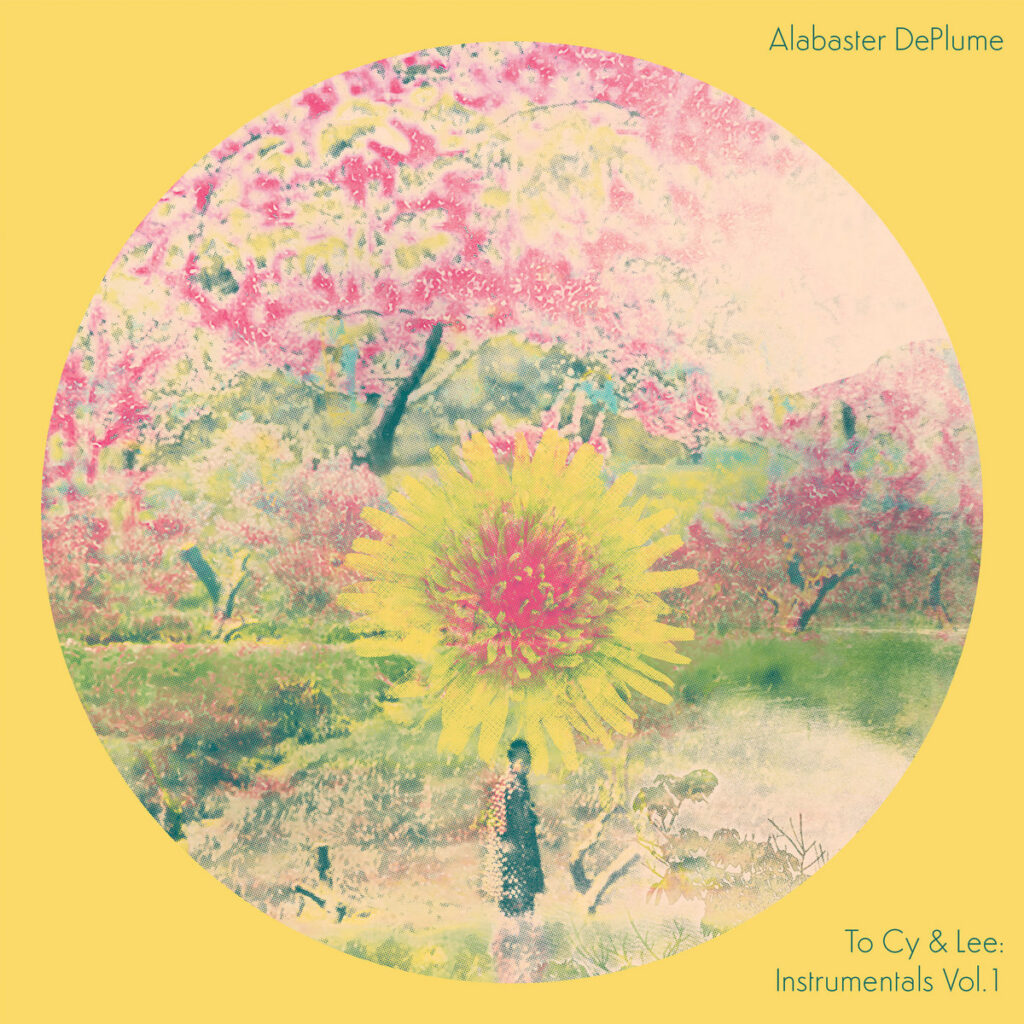
    Alabaster DePlume – To Cy & Lee: Instrumentals Vol. 1

    The backstory of this album drew me in immediately. Cy & Lee was written for two gentlemen with learning differences that DePlume supported via his work at Ordinary Lifestyles, a charity in North Manchester. His job was to get the guys socialising and he did this by making up songs with them. They’d make up melodies together, humming tunes in the house when they needed something calm, or when they were haring round the city in a battered car. DePlume would record these impromptu sessions on his phone, then go to the studio and use the material as starting points for songs. The result is a set of gorgeous instrumentals sitting at the crossroads of psych, folk, jazz and more. 

    Amparo – Dark Sky City

    I came across the music of Sweden-based Arizonian Lela Amparo via the Rural Sounds label/blog. This five song EP was released in 2019 and Amparo says the release is a “way of remembering and recalling memories of years spent in the Arizona mountains and desert valleys. Each track carries with it a connection to a special place or adventure that helped guide me to where I am today. The warmth that emanates from each guitar recorded in the EP is reminiscent of the feeling when the summer heat clashes with the approaching autumn and the distinctive feeling in the air when seasons are about to change. “

    Channelers – The Depth of Rest

    I was just blown away the first time I heard this record. Released in 2019 on Inner Islands, I have returned to it countless times throughout quarantine and it continues to have the same restorative effect on me with every listen. My highest recommendation. 

    Ernest Hood – Neighborhoods

    Released in 1975, Neighborhoods is the lone private press LP from Portland, Oregon musician Ernest Hood. During the early ‘70s, Hood would go on “special road trips” around Oregon, visiting different covered bridges or country stores, recording ambient sounds and sketching the locale (the cover of Neighborhoods is one of Ernest’s own drawings). He would then return home to create a “travel tape” that was intended for the disabled and housebound. Originally given away for free in Portland to modest fanfare, there is now a beautiful reissue from the Freedom to Spend label. 

    Smith & Erickson – Blue Skies

    Originally released in 1985, this is a favorite new age record of mine. Not a ton of info out there on this one, but there is digital reissue via Yoga Records now available. Starts with a really neat guided meditation. 

    Misha Panfilov Sound combo – Days as Echoes

    Recently I have had the pleasure of becoming internet friends with this group. Released in August of this year, Days as Echoes channels Krautrock philosophy and Library music and is peppered with elements of jazz, Ethiopian, cinema, ambient and bits of everything between. Perfect for a crisp autumn drive/walk. 

    Peals – Walking Field

    Composed of Future Islands bassist William Cashion and Double Dagger’s Bruce Willen, Peals are one my favorite Baltimore-based groups of all time. Walking Field is a record that turned me on to the idea of writing instrumental music of my own. I love how quickly they establish mood. Such beautiful melodies and a record I’ve used countless times as a reference point for myself before entering the studio. 

    discover Jeffrey’s recommendations in store

    continue reading

  • navigating the in-betweens with Karl Henkell of Record Culture Magazine

    navigating the in-betweens with Karl Henkell of Record Culture Magazine

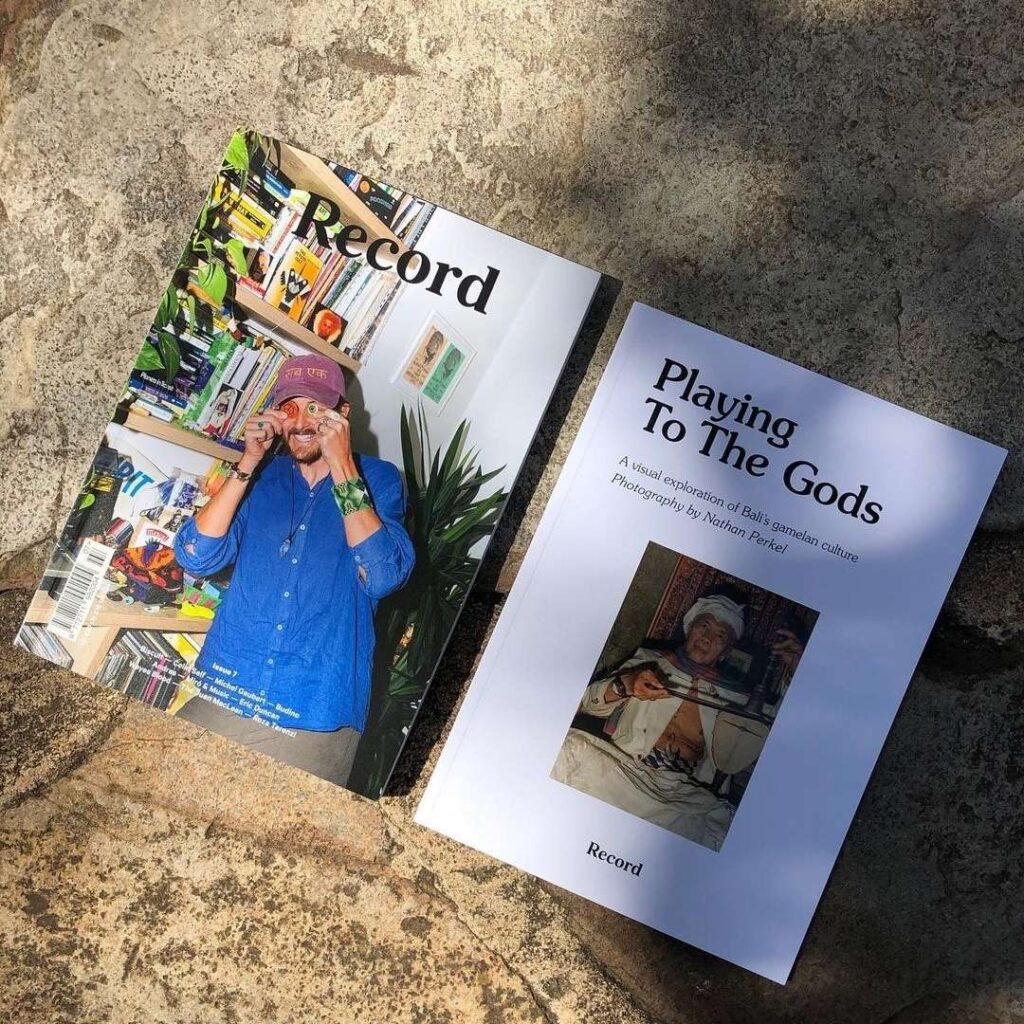
    As we constantly find ourselves dabbling in the space between music, design, culture and lifestyle, we feel a strong pull towards concepts and endeavors that resonate with this mindset. Record is an independent music publication that highlights unique music subcultures and communities around the world – but it’s more than that. Music is just a starting point for Record and simply a lens to see the world.


    We are very excited to collaborate with Record for an edit – a selection of eight records that match our eight moods together with a complimentary copy of Issue 8. It’s an ode to this year’s issue and a celebration of mutual interests.


    Karl Henkell, editor-in-chief and driving force of the magazine, tells us more about his picks and also gave us a little bit of insight into the world of Record:

    Tell us about Record and how it all started.


    It all started in 2015. I was living in New York back then. I’ve always wanted to start a print magazine and I found it really strange not finding a print magazine that represented the music I was listening to.


    There’s so much great music in the underground – or the fringes of it at least – as people like Tim Sweeney from Beats From Space and Veronica Vasicka from Minimal Wave are all kind of a little bit underground, but at the same time not really at all. There’s a lot of online media covering them and they were all doing club nights every week with hundreds of people. I just felt there should be a print magazine about this.


    There is also often a huge mystery around record labels and people in the music world in general. They operate under a lot of aliases and sometimes you’re enjoying the music but you just don’t know who it’s coming from. I wanted to know who these people actually were and where they came from. 

    What was the preference towards doing it in print? 


    An aversion to digital.


    I was an online editor for a website and I was just on a computer all the time. The idea of the magazine was to get off the computer and to interact with something physical, which I find to be just more enjoyable. It also ties into record collecting where you could easily listen to the same music digitally as well, but there’s just something about not looking at a screen while you do it that makes it a lot more enriching. It’s kind of an antidote to the screen overload that a lot of people feel at the moment.


    Also as with anything that needs to go to the press – be it vinyl or a magazine – you definitely think about stuff at least ten times over. You want to make sure there’s no typo in there before you send it off to the printers. Whereas if it’s online, you can always just go back and edit it very quickly.


    There is something really final about printing a book or pressing a record, but I’m not a purist by any means. I like to listen to music both offline and online. Same with the stuff I read. Both just occupy a different space in my life.

    Karl Henkell | Record Culture Magazine

    How do you go about finding the people you interview?


    When we start putting together a new issue, we do some sort of litmus test worldwide and check out what is happening all over the world. We cherrypick different people from different local communities, because I think that also keeps it interesting and keeps the point of views quite different and also refreshing.

    The magazine is now eight issues deep. Have you felt like you’ve already interviewed everyone on your wish list?


    The first issue was definitely a personal wish list. A dream team of people that I admired and followed, like Tim Sweeney, Andrew Hogge and Philippe Zdar, who passed away unfortunately. From there, it kind of became like a family tree that keeps branching out and we just kind of hop from one person to another who definitely have some kind of connection with each other.


    As it goes on, it’s just become kind of a never-ending wish list. By researching one artist, you come across three more. Also when someone is brought up more than three times, you can’t help but wonder what that person is up to. It’s a nice and also natural way to keep things going.

    Is it mostly only collectors you put in the spotlight for Record?


    Not necessarily, but a lot of them happen to be collectors definitely. The thread that binds everything together is simply people who are passionate about music. Whether they make a living out of music or not.


    We don’t only just feature DJs, radio hosts or record label founders. We also feature fashion designers and art curators like Matthew Higgs from White Columns who don’t make their living through music per se, but whose art and life are definitely influenced by music.

    This connection between fashion and art seems to be very central to the magazine. Has this always been an intention since Day 1?


    Definitely. I’m interested in the crossover between music, design and art. That is the crux of the magazine. We’re never really trying to be just a music magazine, or just a lifestyle magazine. We are kind of occupying this in-between space, which is a nice space to inhabit. 

    Karl Henkell | Record Culture Magazine

    Having interviewed people from many different backgrounds, what scene do you most relate to personally yourself? 


    That’s an interesting question. I grew up in Melbourne and spent 24 years of my life there. I have a lot of nostalgia for the time in Australia before I was born, like 70s post-punk and 80s electronic stuff, which labels like Noise in my Head, Efficient Space and other labels in Melbourne are really trying to capture in sound. At the same time, my parents are German, so I always had a link to Germany and I have a bit of a nostalgia based on nothing in particular for Krautrock and Neue Deutsche Welle. 


    Having said that, a nice thing about doing the magazine is finding likeminded people all over the world. I was always quite glad to grow up in Australia, because skateboarding and music were very heavily represented. You had American skate teams coming every week and in nightclubs there were always Japanese, American or European DJs coming to play, which felt quite rich culturally. But I think through chatting with people from all over you realize you could probably have had a similar upbringing everywhere. There are always people from all over who are totally into the same things. I was maybe aware of that in an abstract sense, but chatting to people really makes it concrete.


    For example, I could really relate to the life story of Phillip Lauer, the German DJ and musician that’s in the current issue. He grew up skateboarding as well. Sometimes, I also meet people with a totally different life story. Laraaji comes to mind right away. He started out as a comedian and then moved on to healing communities. That diversity is totally interesting and keeps me going. 

    Has your relationship with music changed by doing the magazine?


    Yes, undoubtedly. It becomes your job, rather than just something that runs parallel to your life. The funny thing about making a magazine about music is that while it’s all about music, it’s not that I listen to music 24/7. I am not someone that can write an email with music with lyrics playing. I still kind of have that fun playful relationship to music, because 80% of making a magazine is about other stuff. It’s still fun to discover new stuff and dig into things.


    If anything, you realize that music is just this ever-expanding universe. It’s like that thing where you think you know it all, but you’re just scratching the surface. Even when you chat to people like Danny Krivit, the legendary disco New York DJ with 40,000 records in storage, they are very aware that they haven’t heard it all. It just shows you can’t really go to the bottom of it. Which is a really nice thing.

    It’s definitely a gift that keeps on giving. We’re curious now, what does your personal record collection look like?


    It’s not that over the top actually. Maybe two hundred odd records I love and have picked up just randomly all over the place. You know that feeling when you are not really looking for anything particular, and then you just find something that sounds right in that moment? I like those finds the best.

    Karl Henkell | Record Culture Magazine

    You’ve selected one record in each mood for the Record Edit. Can you share with us why you resonated to these records specifically?


    · Having a Blast | Leon Lowman – Liquid Diamonds

    This happens to have been the first release on Music From Memory, and what a way to kick things off. It’s idyllic, classy, cocktail hour music for the fantasy bar in my mind.


    · Ready for Action | Trance – JD Twitch / Trance Not Trance   

    One side of this record is titled “Contemplation”, and will have your mind pleasantly floating off in all directions in a meditative expanding horizon kind of way. On the flip what JD Twitch, of duo Optimo, delivers is hypnotic in a different way. Well suited to the club, or strobed up living room. 


    · Emotional Rollercoaster | Georgia – Immute

    Georgia, whose minds we delved into in the pages of Record Issue 6, are prolific and always delivering up surprising, healing, and mind-expanding music. “Bendires Trasher” is a highlight on this record. 


    · Lost in Dreams | Wilson Tanner – II

    This is a really lovely record. It’s contemplative and emotional. There is a theme of water that runs throughout. The collaboration consists of Andrew Wilson, aka Andras who features in Record Issue 7, and John Tanner. Efficient Space, run by Michael Kucyk who features in Record Issue 5, put this one out. Many reasons to pick this one up.


    · Taking it Easy | Liquid Canoe

    As the title suggests, this record is a bit of a mind-expanding psychedelic canoe ride down a calm river. Quite a ride.


    · A Sense of Melancholy |  Annelies Monseré – Happiness Is Within Sight

    This record suits the winter months ahead. Plenty of room for thinking here. Another great one from Stroom. 


    · Floating on Clouds | Suso Sáiz & Suzanne Kraft – Between No Things

    A modern supergroup of sorts, this record is the collaboration between Suso Sáiz, who features in Record Issue 4, and Suzanne Kraft. Both excellent producers in their own right, this record is an uplifting meeting of the minds. 


    · Calm & Collected | Ruins – Occasional Visits

    Another stand out discovery from Stroom that you didn’t know you needed until it was here. Self-assured in an ’80s leather jacket kind of way. This would surely make for good driving music.


    continue reading

  • embracing brokenness with Dauw and Skrew Studio

    embracing brokenness with Dauw and Skrew Studio

    Dauw is a Ghent-based label that draws its main inspirations from nature and imperfection. This seeps in through the music as well as the visual elements of the label — forming a strong marriage between different art forms. The result: unique handmade pieces of art that flatter both the ear and the eye. 


    After an inspiring chat with r beny who’s one of the cornerstone artists of Dauw, we spoke with Pieter Dudal and Maarten De Naeyer to hear their side of the story. Pieter Dudal is the mover & shaker behind Dauw and Maarten De Naeyer from Skrew Studio is the visual artist behind the latest releases. 


    For this mood talk, we talk about broken sounds, risograph printing and textures in nature. And most importantly, we talk about what lies ahead for Dauw. 

    Let’s start with something abstract. What are your favourite sounds?


    Maarten: I really like the sound of thunderstorms. There have been a few recently and I like how it sounds in my veranda. I also like the anticipation of it as it comes. It’s quite soothing.


    Pieter: I like all kinds of nature sounds in general. Recently, I have really grown fond of the rooster in my neighborhood. It’s such a pleasant sound to wake up to. I also never wear headphones when I am on my bicycle. It’s a good opportunity to take in the environment around me. Other than that, I also really like broken sounds: the sound of an old tape or of a gramophone. Anything old that has a history to it. This sound is very central to the label.

    Dauw is mostly a tape label but recently you decided to reissue four albums of r beny as a vinyl box set. The lo-fi sound aesthetic of r beny’s work really leans towards tape. What sparked the decision to go for vinyl?


    Pieter: I really like the music of Austin and had already been contemplating for a while now to reissue some of his earlier self-released work. I could have easily reissued it on tape, but I felt like I wanted to do something more special this time. As an ode to his work, I thought it would be really cool to make a nice vinyl box set. 


    It took quite some convincing, but Austin eventually agreed. It turned out to be a larger project than we anticipated, especially for a small label like us. 


    We did a total of 300 vinyl box sets. There were 4 LPs in every set. We also made 200 separate editions of each LP. All the original tapes were totally re-mastered for vinyl. The first 50 box sets contained a riso print of the artwork.


    It was a big investment and there’s been quite some delay in completing the release, but the response has been super positive and a lot of people were happy to have r beny’s music on vinyl. Really like how it turned out and would definitely do it all over again!

    Objects & Sounds - Mood List - Dauw

    The artwork of the vinyl box set is your first collaboration together. What made you decide to work with each other?


    Pieter: I chose to work with Maarten just because his work really lent itself to the label. 


    Maarten: I play a lot with textures and nature elements in my work. The music released by Dauw is also very textural, so it’s a quite inspiring starting point. 


    Pieter: Indeed, the music we release often has a lot of textures. Especially the music of r beny. He often makes music by using multi-layered tape loops, so there’s always so much things hidden in his music.


    Maarten: I also very much resonate with the music released by the label. I discovered nice new artists as well. 

    Why did you choose to go for riso print for the vinyl box set?


    Pieter: I’ve always been intrigued by the technique and Maarten is very skilled with it. His designs really lean to it and it’s almost as if he designs for this type of printing.


    Maarten: When designing for riso print, you’re limited in the amount of colors you can use. That’s a very liberating thought to me, so it’s a printing method I am really fond of using.


    Pieter: Riso printing is also quite an imperfect process. There’s a big margin of error and I’m really amazed by the subtle differences of every print. It gave almost a unique character to every release. It’s again the broken aspect of it that really fits with the label. Maybe that’s also something that scares people away from using this method more, but I really like it. We’ve already started integrating the technique for tape releases as well.

    Are you a big music fan as well, Maarten?


    Maarten: Oh yes, I listen to all types of music. In my cabinet you’ll encounter records such as the harder Amenra, the soulful Anderson Paak, the minimalistic Nils Frahm, the electronic Moderat or even the old school Beatles. If I were to choose an all-time favorite band, it would be Sigur Rós. I even used to play the bass guitar in a few bands when I was younger. Music also plays an important role in my design process. I always play music in the background when I work. It sets the mood of what I want to start working on.

    How did you get into designing vinyl artworks?


    Maarten: It’s really natural for me to work for music artists, as music is often the starting point anyway. I’m currently doing artwork design next to my job at the graphic studio, but I aim to go more into this direction. It’s something I really want to do and I hope it becomes a full-time engagement one day.

    Objects & Sounds - Mood List - Dauw

    Who would be your ideal artist to design something for?


    Maarten: Hard to pinpoint exactly. I really like music with texture, so that’s generally what I would be looking for. It doesn’t necessarily need to be a big artist, but it just needs to be someone with interesting music. Recently I did the merch for Whispering Sons, a post-punk band currently residing in Brussels. It’s one of my favorite Belgian bands and it would be really fun to design the cover of their second album.

    How much are the musicians involved in the cover design process for Dauw?


    Pieter: Dauw has a certain visual identity. By now, the musicians I work with know what to expect from the artwork of the label. The artists mostly finish their work first. At that point, the music gets shared with the designer. From there, the designer comes up with a few possible designs. The artist then makes the final choice. So far, these collaborations go quite smoothly. The artists sometimes comment on color choices, but that’s mostly it. 


    Maarten: For the r beny vinyl box set, Pieter sent me the music and I started the design process by just listening to the music attentively. This way, I could really immerse myself in the atmosphere of the music. It’s quite an intuitive process from there. I just make a design based on how the music makes me feel and the design comes naturally out of it. 
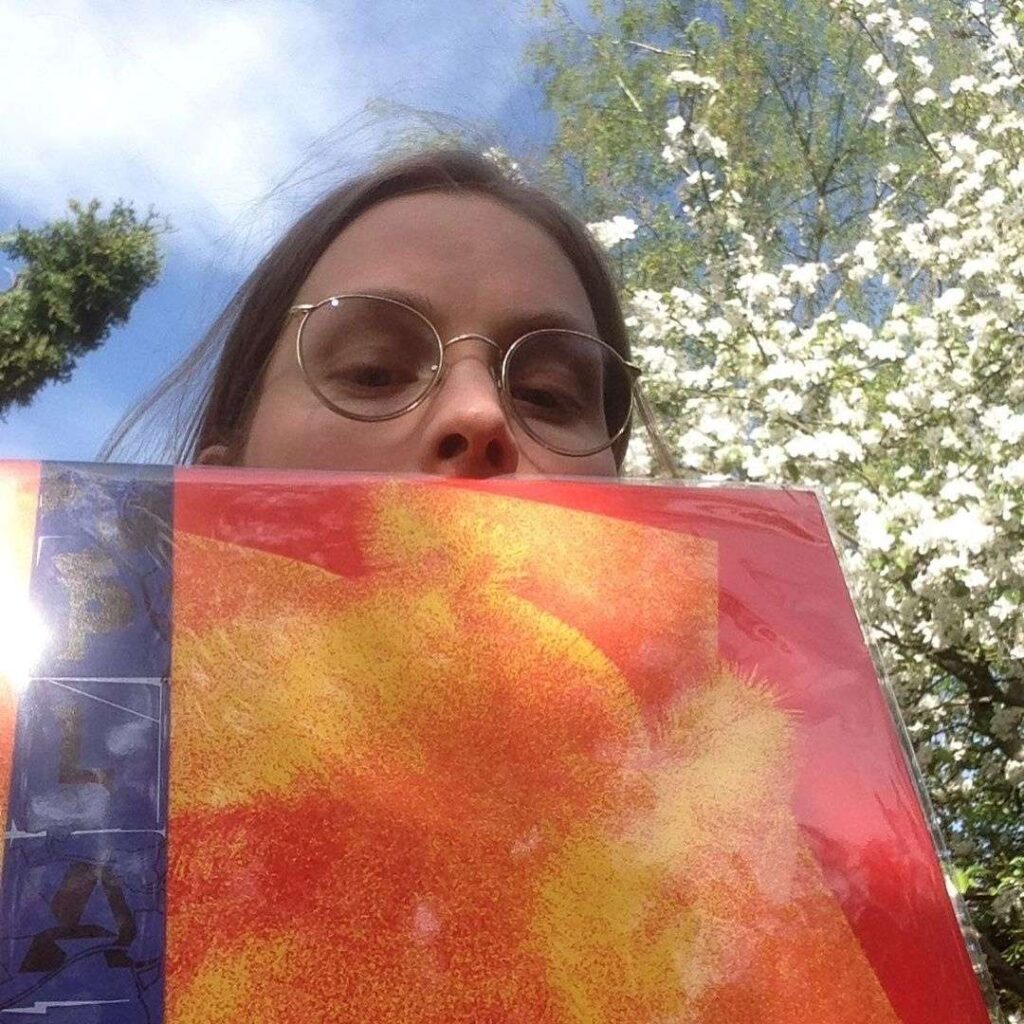
    By talking with r beny, we found out that he’s really inspired by nature and doesn’t like to confine his music to a specific grid. This theme really comes back in all five cover designs. Is this on purpose?


    Maarten: No, not at all. I didn’t get any briefing from the artist about his music. The result is purely based on what I instinctively felt fit with the music. I incorporated natural textures such as rocky surfaces or tree trunks because the music really reminded me of those elements. 
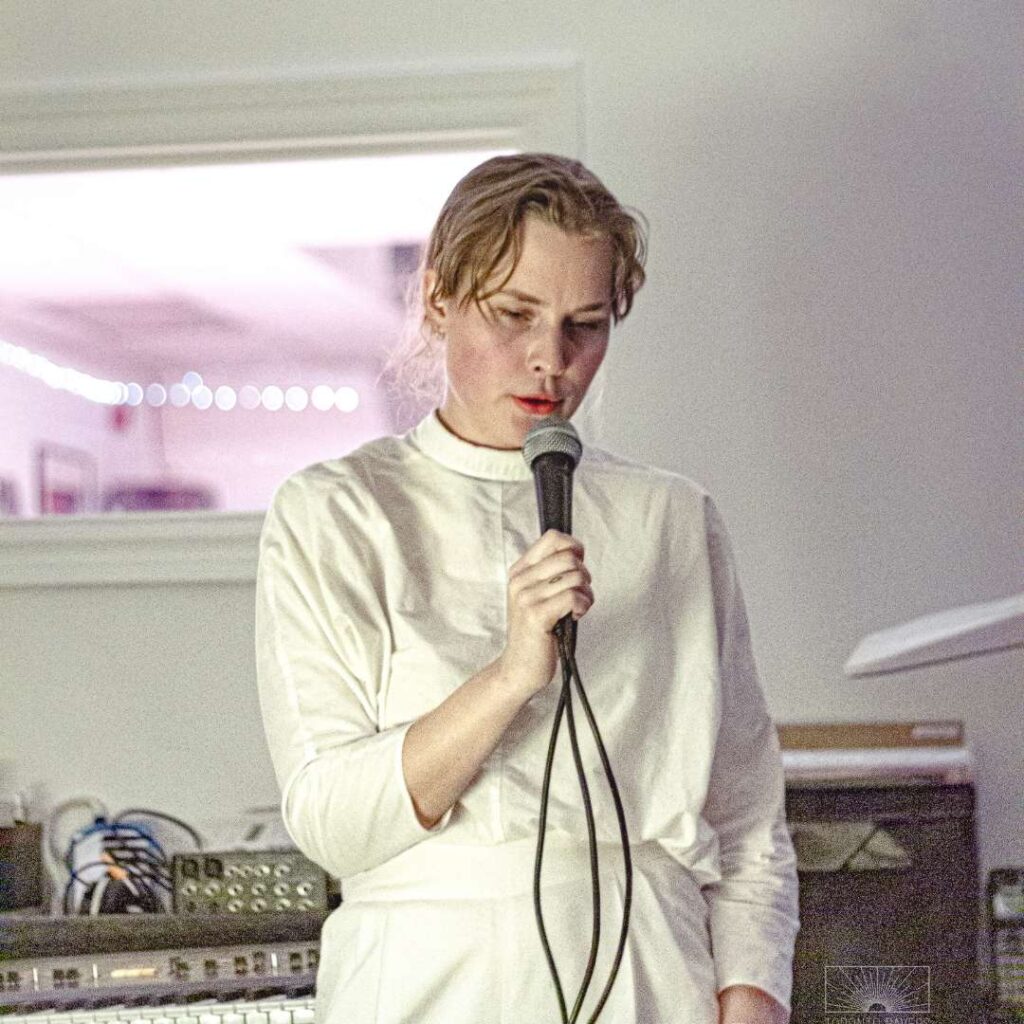
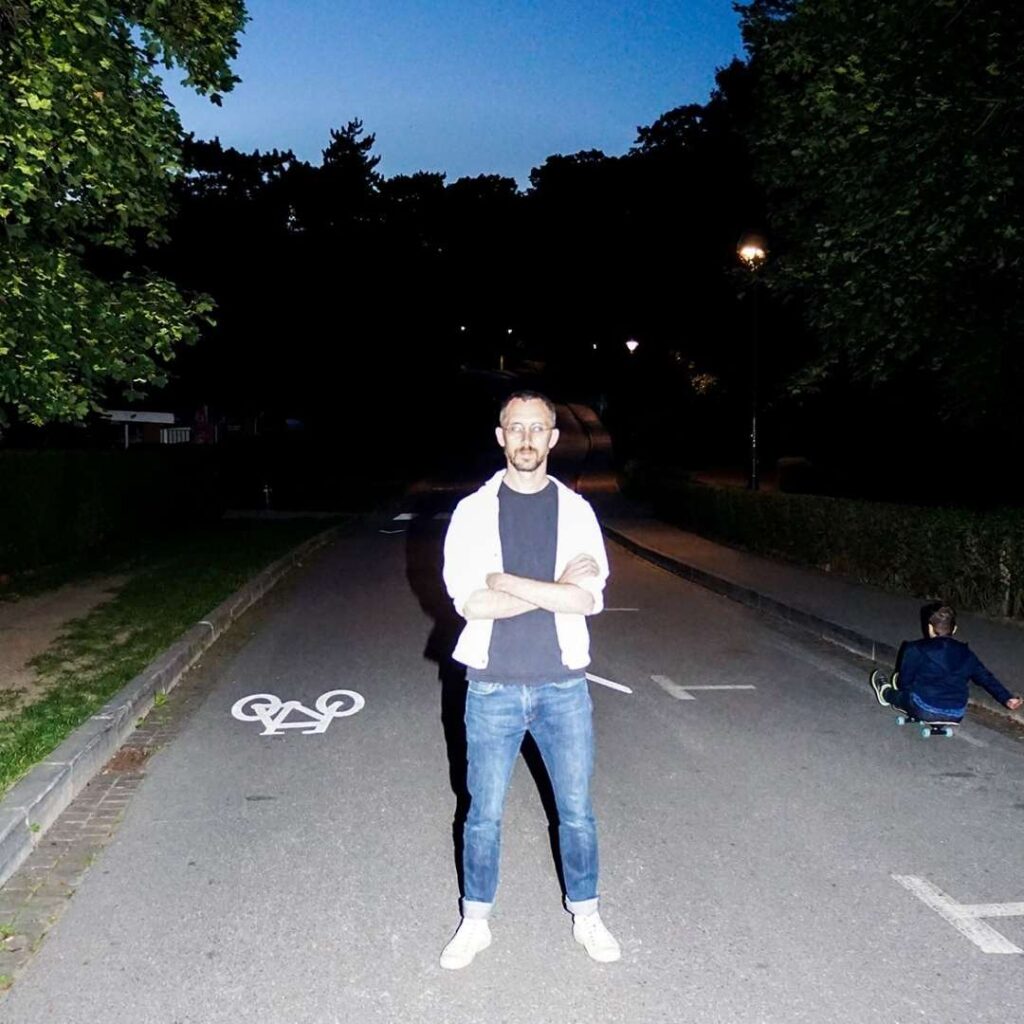
    Pieter, do you steer the direction of the music or the cover design from the label’s perspective?


    Pieter: I see myself as a facilitator between the different parties. I personally don’t want to influence the process too much. There’s already a lot of ideas floating around from different sides. I really trust the artists and the designers in what they do and I give them a lot of freedom to express themselves.

    Objects & Sounds - Mood List - Dauw

    How do you choose the artists you work with?


    Pieter: I get sent a lot of demos, but I’m not so interested in that. I mostly prefer reaching out to artists I believe in and want to work with. That’s the most fun part about it: looking for music and then connecting with the people behind the music.

    What music or labels are you currently listening to?


    Maarten: At the moment I listen to some bands on repeat such as Heisa, Hanni El Khatib, bdrmm, Rival Consoles, LA Jungle and 65daysofstatic. As far as labels go, I really like Ekster, B.A.A.D.M, Smaltown Supersound, Erased Tapes, Geographic North, Stroom, RVNG Intl., Tri Angle and Gondwana Records. All of these have a very strong visual style.

     

    Pieter:  I’m a big fan of the label Erased Tapes. I like everything they do. The releases and reissues from Jan Jelinek‘s label Faitiche are also super interesting. Within Ghent, I also really like the solo work of MATTIASDECRAENE. It would be really nice to collaborate with Mattias for Dauw at some point. 

    Last question. What’s next for Dauw?


    Pieter: There’s a whole lot more vinyl coming in the near future, including two artists who have released music on one of the labels I mentioned. Stay tuned.

    discover dauw

    continue reading