
















Imagining new realities with El Hardwick
In El Hardwick’s work, fiction and personal experience are closely intertwined. Having followed their photography since my teenage years, I’ve come to recognize the same immersive quality in their music. Through sound, imagery, and storytelling, they invite us to inhabit worlds that challenge what we know.
When I met El on a sunny afternoon in South London, the weather seemed to suit their warm and thoughtful disposition. We spoke about the political realities shaping their work and our relationships with the natural world. El’s approach is informed by curiosity, research, and a sensitivity to people and the world around us. Speaking with them was both inspiring and emboldening: a reminder to slow down while also standing up for what you believe in.
You work across photography, sound, and film. Does each discipline open up different ways of thinking or expressing something, or do you see them as part of the same thing?
I’d been taking photos for so long that when I started making music, I wanted to tap into something different. Photography often feels like an extroverted practice. A lot of it is about seeking out what’s around you in the world, going out and engaging with it. It can be quite fast-paced and results-driven.
Music feels like this really nice, slow, introverted process. It’s more about being in the moment, enjoying the feeling of making, and finding a way of expressing yourself. Of course, I think about the bigger picture of what the release is going to be, but not about who’s going to listen to it.
It can also feel quite seasonal. Last winter, I locked myself away in the house around Christmas and learned to play the harp. During that time, I barely took any photos because the weather was so unpredictable.
So, they can feel really different, not only in terms of energy, but also in the kinds of ideas I can explore in each.
Your visual and sound work often brings together cinematic, sci-fi, or otherworldly atmospheres with topics that feel very rooted in the present, such as relationships, intimacy, and illness. What draws you to exploring fiction and reality in this way?
With photography, I started making images through a very fictional lens. Over time, it’s become more documentary. That’s just a matter of changing as a person.
With music, that kind of fictional world-building feels really exciting to me. I love its capacity for building chapters and a storyline that changes throughout. When you create those stories, you can’t help but put yourself into them as well, to ground them in something personal.
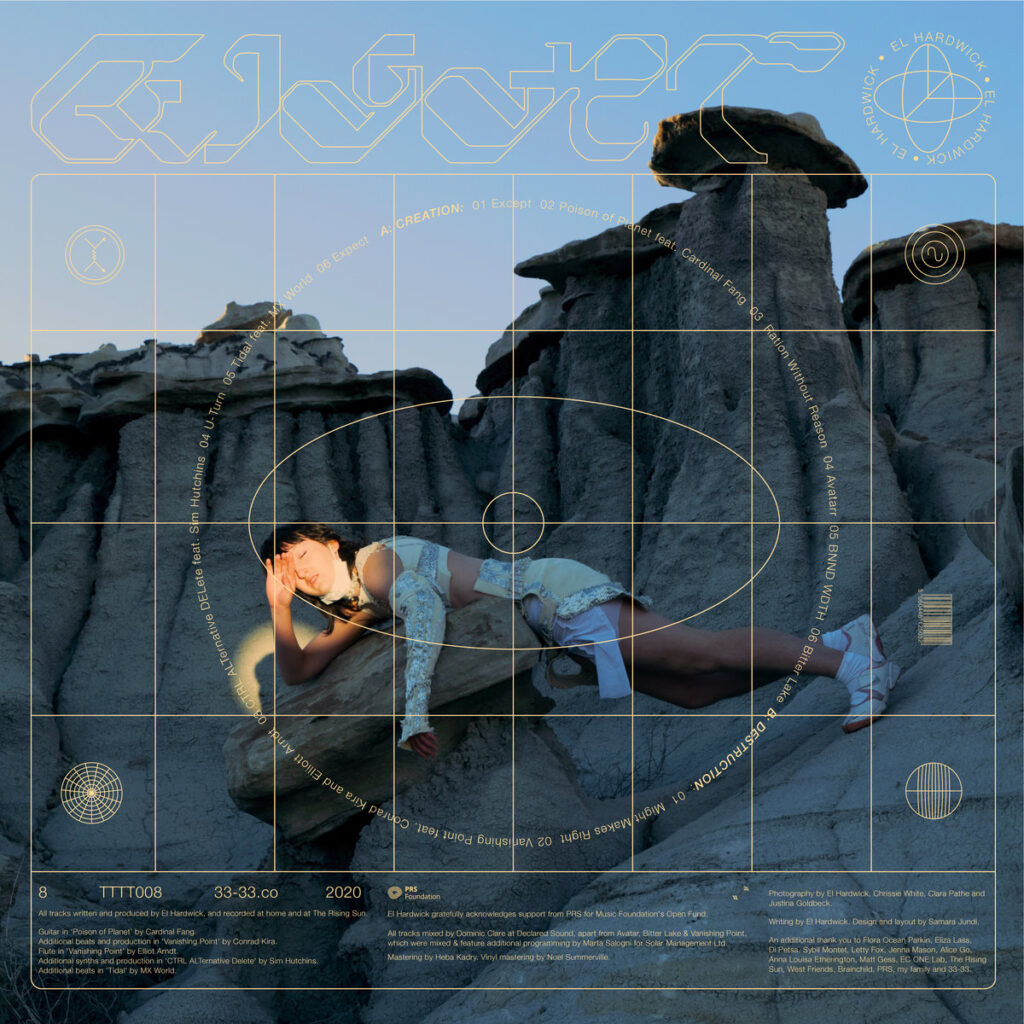
My first album, 8, started with a lot of thinking about interlocking political polycrises. There was a lot of fear around the climate crisis, but also a strong interest in the duality between the online and offline worlds, and the politics of cyberspace.
Even then, I found that my personal experiences were finding their way into the narrative in these multilayered ways. When you’re interrogating capitalism, colonialism, technocracy, and all these different things, you can’t help questioning your own role in them.
It’s interesting to reflect on that release, which came out in 2020, and think about how advances in AI relate to it.
Could you share a bit more about the world behind 8?
A lot of the inspiration came from a ’90s anime series called Serial Experiments Lain. It’s about a young schoolgirl who becomes addicted to using the Wired, which is essentially the internet, but also a kind of virtual reality. She has a completely different version of herself online compared to her everyday life. There are a lot of Jungian and philosophical concepts woven into the narrative, questioning what it means to give up your body and live entirely in cyberspace. She starts to want to live there more than in the real world.
The album imagined a planet Earth that had used up all its resources. A group of technocrats decide that everyone will migrate into cyberspace instead, but only the wealthiest and most privileged can afford to live there. The rest have to stay behind and maintain the servers, which continue to use up the planet’s remaining resources.
That’s where the parallel with AI comes in. We’re experiencing droughts while millions of liters of water are being used to keep data centers running. The power dynamics you see everywhere are playing out in real time.
The idea was originally to make a graphic novel, but it eventually developed into a visual album, with photography and music side by side.
You approach your albums almost like stories, with each track forming a chapter within a larger narrative. How does this way of thinking shape the music you make?
With both my albums, I’ve had a very clear idea of the storyline. I’d make something and already know where it would belong and where the gaps were that needed filling to bring it all together. I might start jamming and realize it doesn’t fit, so I’ll put it aside and return to it later if it feels like a good starting point for something else.
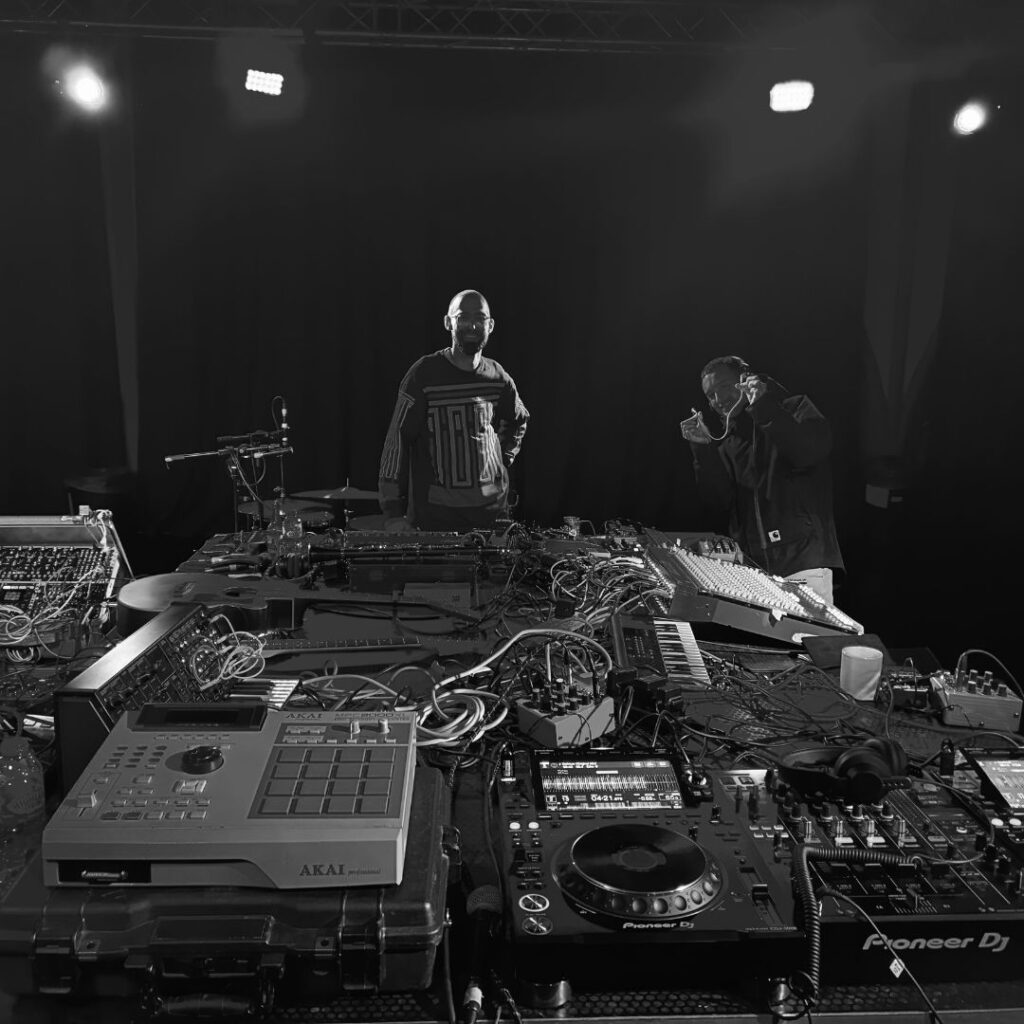
I’m not a trained musician, so I don’t necessarily feel able to sit down and decide exactly what I’m going to explore that day. It’s more intuitive and experimental, seeing what works.
With the second album in particular, I did a lot more sonic mood-boarding. During lockdown, I had a mentorship call with Kaitlyn Aurelia Smith, and she recommended it as a way of bringing together the different sounds, palettes, and genres I wanted to explore.
What do you need in order to make music? Are there particular conditions or routines that help you get into the flow?
I need a lot of space. If my mind is full of other things, I struggle to make music.
I haven’t made much this year because I’ve been so focused on photography. That was a conscious choice. I’ve accepted that this is a fallow year for music, and that’s fine. I never want to pressure myself into making it when I don’t feel like it, because that defeats the whole point of why I started in the first place.
How does that compare with your photography practice?
I started taking photos from a young age, so it’s difficult to say exactly when it moved from a hobby to something professional. I’ve fallen in and out of love with it many times.
My partner and I published the book t-fags earlier this year. It was the first time I’d been able to work on a project for so many years and do it entirely on our own terms. It’s been refreshing and a reminder of what excites me about photography.
A big part of that was deciding three years ago not to rely on it as my sole source of income. Before that, I felt I had to say yes to absolutely everything, and I didn’t have time for the things I enjoyed. Now, I love doing commercial work when the brief is inspiring, but being able to say no when the deadline is too tight, the pay is too low, or the project doesn’t align with my work gives me so much energy back.
Are there aspects of your creative process you’re trying to rethink or approach differently?
I’m trying to make my process more physical and less screen-based. Part of why I’ve been learning the harp is to bring a more physical, embodied approach into my music-making, which isn’t something I’ve explored much before.
When it’s sunny and bright outside, I don’t want to be sitting inside my dark flat on Ableton. A couple of times, I brought the harp into the garden, and it was a game changer.
One day, it was windy, and the harp started playing on its own, with the wind making the strings resonate. I realized I didn’t even need to play it. I could plug it in, add some reverb, put my headphones on, and just lie there listening to the wind play it.
It was such a different experience from sitting at a computer trying to control everything.
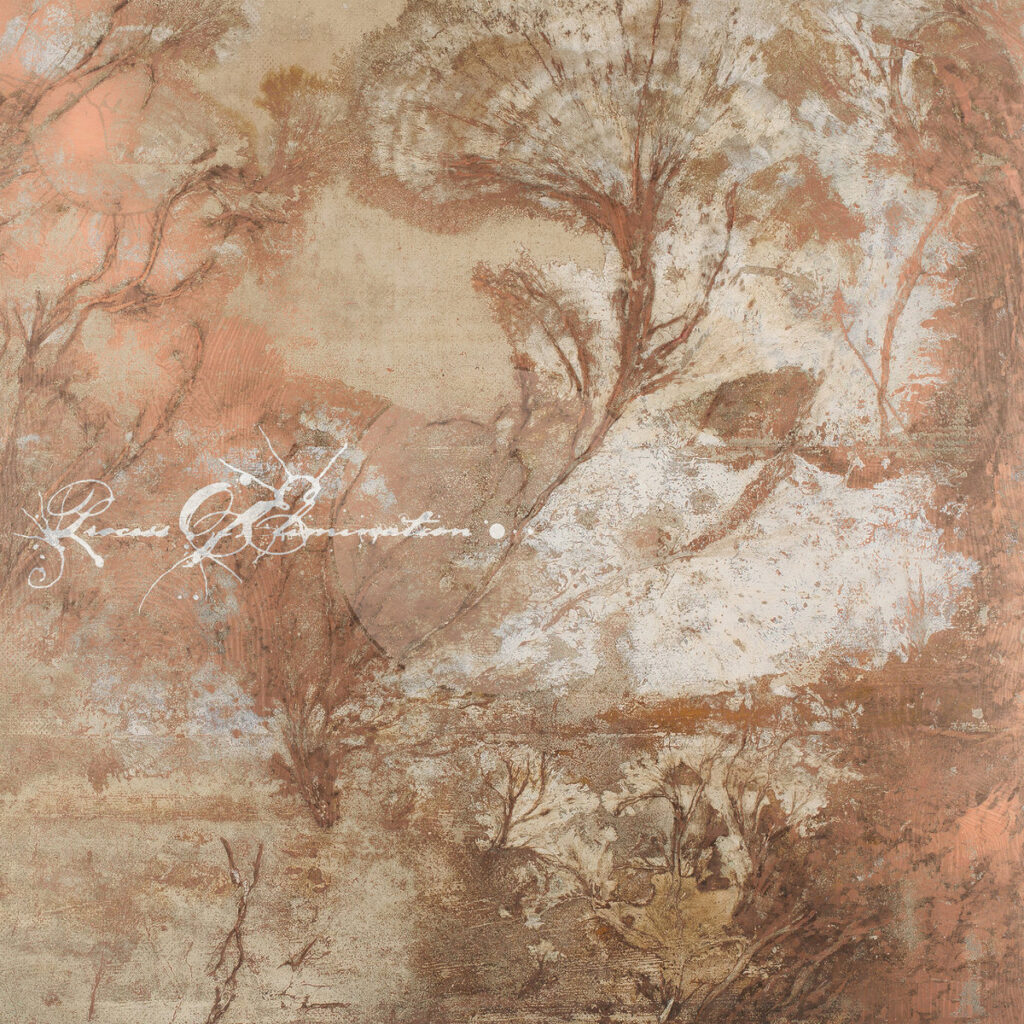
This idea of letting go of control also seems to run through your latest album, Process of Elimination, which explores chronic illness and the process of “determining the indeterminable”. How did you approach the tension between knowing and not knowing in the work?
Your question made me think of a quote from Parable of the Sower by Octavia Butler, where she talks about how the only lasting truth is change.
That became quite a mantra for me when I was at my most chronically ill. I had to let go of trying to control things and accept that the best way to get through life is to be adaptable and open to the unexpected.
I also got really into tarot at the time, and it became an important tool when I felt overwhelmed by my illness. One of the cards, the Wheel of Fortune, deals with what you can and can’t control, and the idea that change is always happening. It’s the only constant.
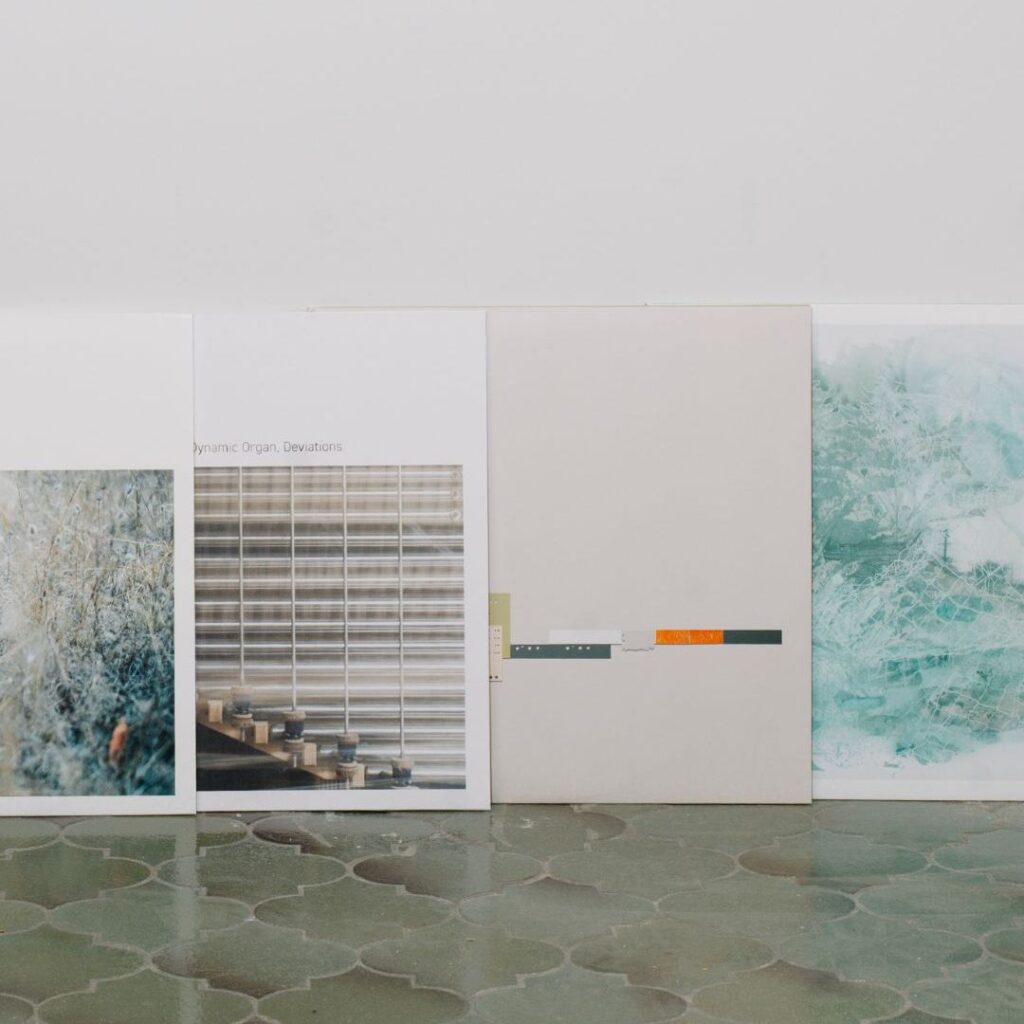
The designer of the album artwork wove tarot imagery into the back of the sleeve. The little figures around the Wheel of Fortune are moving around the center of the record.
Your work often explores social and political themes. Do you see it as a form of activism?
I’m engaging with political ideas, but I wouldn’t describe my work as direct action. I wouldn’t want to take that kind of credit when there are people really putting themselves on the line to change the world in very material ways. Sometimes I wonder if there are so many of us doing the storytelling and creative work, but not enough people willing to take on those other roles.
I have a friend who does intensive legal work, helping people in detention fight their cases and avoid deportation. They often say that without art, they’d feel completely overwhelmed and helpless doing such heavy work. I think art is vital.
Some of the people I look up to most, like adrienne maree brown, have written extensively about the power of science fiction to help us imagine different futures. In their book Emergent Strategy, they draw on the work of Octavia Butler to explore how activist movements can organize and strategize. They also look to nature and the ways its patterns can inform those movements.
I think their work bridges the gap between imagining and telling stories, and bringing those ideas into material change. One example they use is the murmuration of birds. For a murmuration to move, each bird doesn’t need to communicate with every other bird in a formation of hundreds or thousands. It only needs to respond to the seven or so birds around it.
When you think about making change, you can focus on what’s closest to you rather than trying to tackle a huge, abstract problem that feels impossible to influence. You can start with small acts of community, with your neighbors and in your local area.
Landscape and nature have been recurring elements in your work. Where does your interest in ecology come from?
I think it’s always been a part of me. My work has changed so much since I started out as a photographer at 14, but I’ve always gone out into nature to make work. I’ve always been inspired by being in open landscapes.
Growing up surrounded by fields, forests and rivers, I couldn’t wait to leave the village I grew up in. In London, I finally felt like I’d found home with the queer community there, but I also felt disconnected from the landscape.
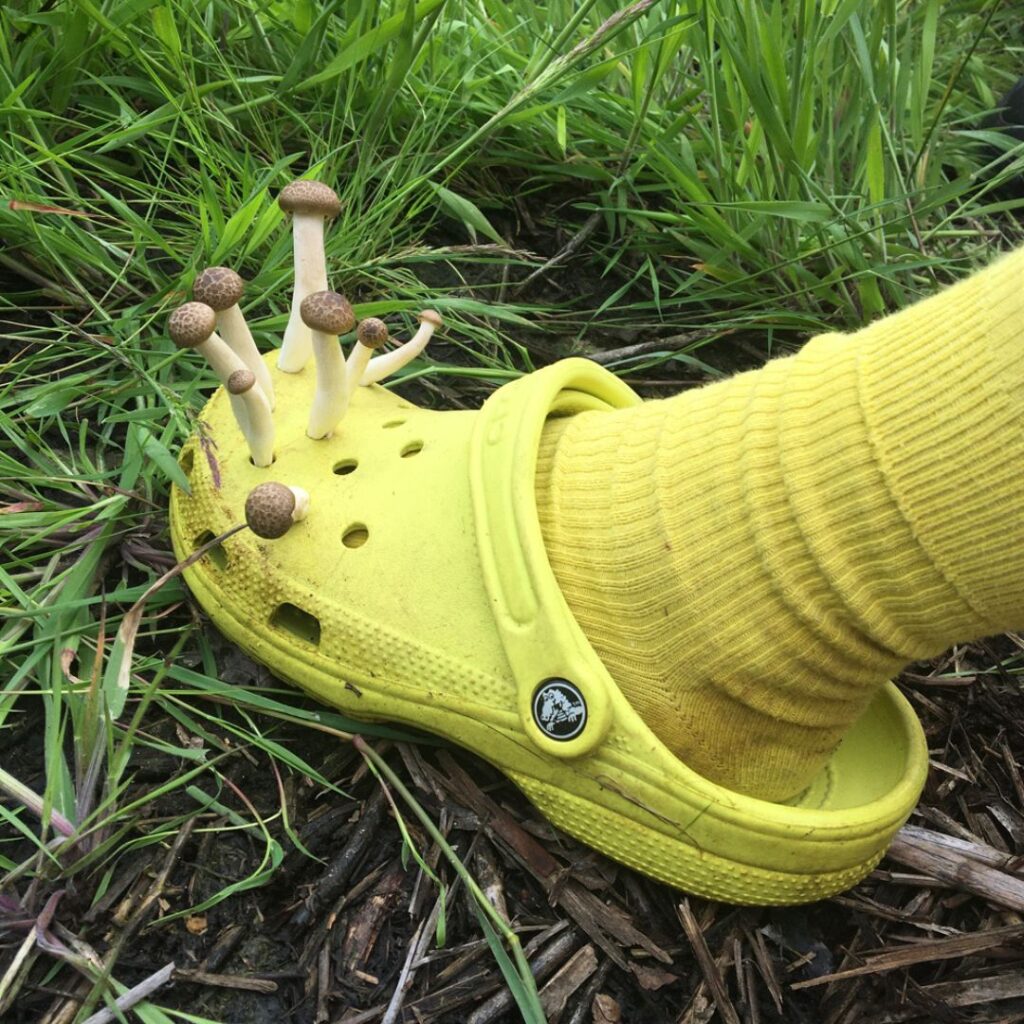
When I first started making Process of Elimination, I became really involved in a local community garden and fell in love with growing food and plants. There’s something beautiful about how community gardening creates a connection to nature, even in the most urban spaces. It makes you appreciate things like a plant growing through a crack in the pavement, and develop a reverence for nature that might be considered ugly or ephemeral.
My part-time job is working at a garden design studio. The longer I do it, the more I can feel myself adopting the mindset around what looks good and how to control it. I really don’t want to lose what led me to gardening in the first place, which was a love of weeds and plants that are often villainized.
What ideas are you interested in exploring next?
The album I’m working on now is taking me longer than anything I’ve made before. I haven’t really touched it at all this year. I’m interested in exploring the physicality of making music even further, relying less on electronics and instead doing more research into folk music, as well as oral traditions and histories. I also want to use my voice more as an instrument.
I’ve been thinking a lot about ancestry, both my blood lineage and my queer lineage. As a queer person, how do we build relationships with the land in this country? It can feel really difficult to imagine living rurally as a queer person without sacrificing your community, especially when these landscapes are often privately owned by very conservative people.
I’m thinking about that in relation to my family history and the diasporic stories within it. There are a lot of parallels with the experience of being queer. I’m interested in how these different lineages come together, and what they mean for our idea of home. How do you find a sense of home in a land where you might not necessarily feel a clear sense of belonging?