• Finding humor with Mitko Mitkov

    Finding humor with Mitko Mitkov

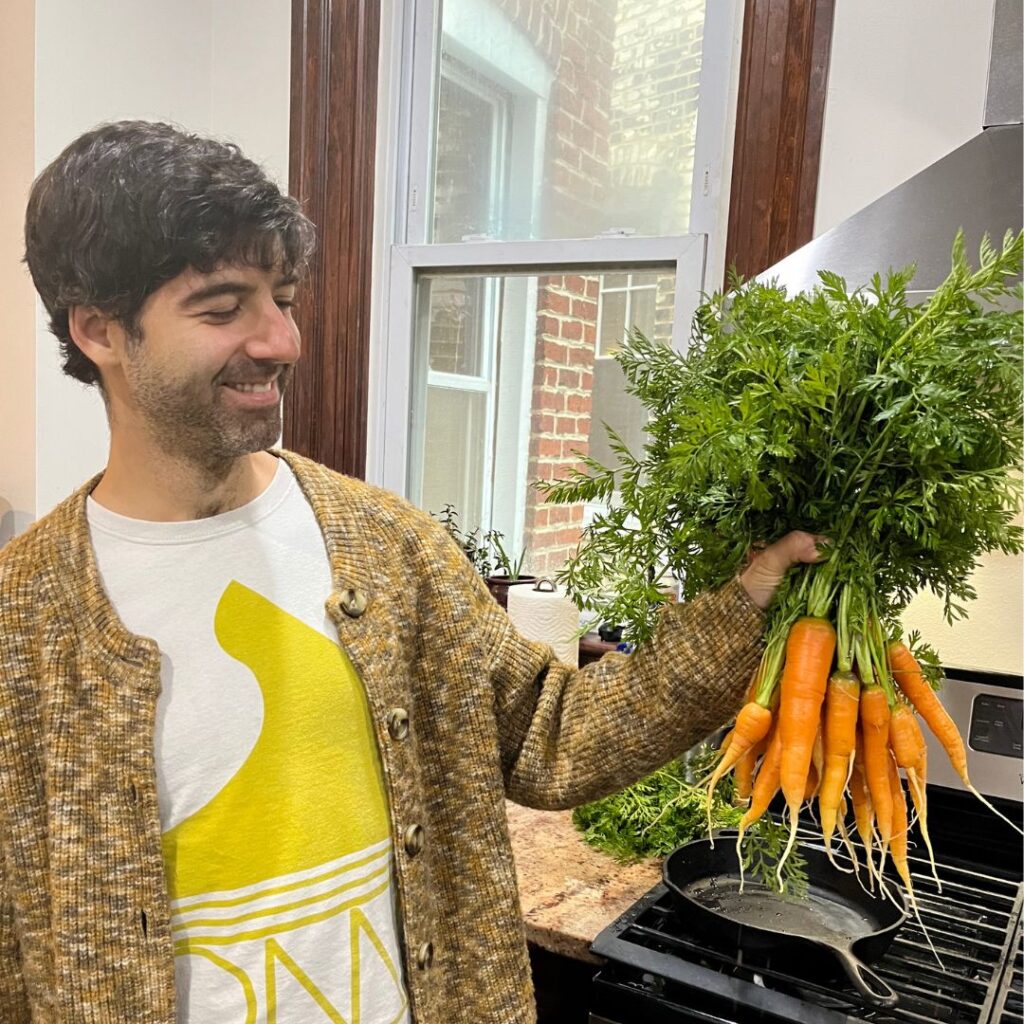
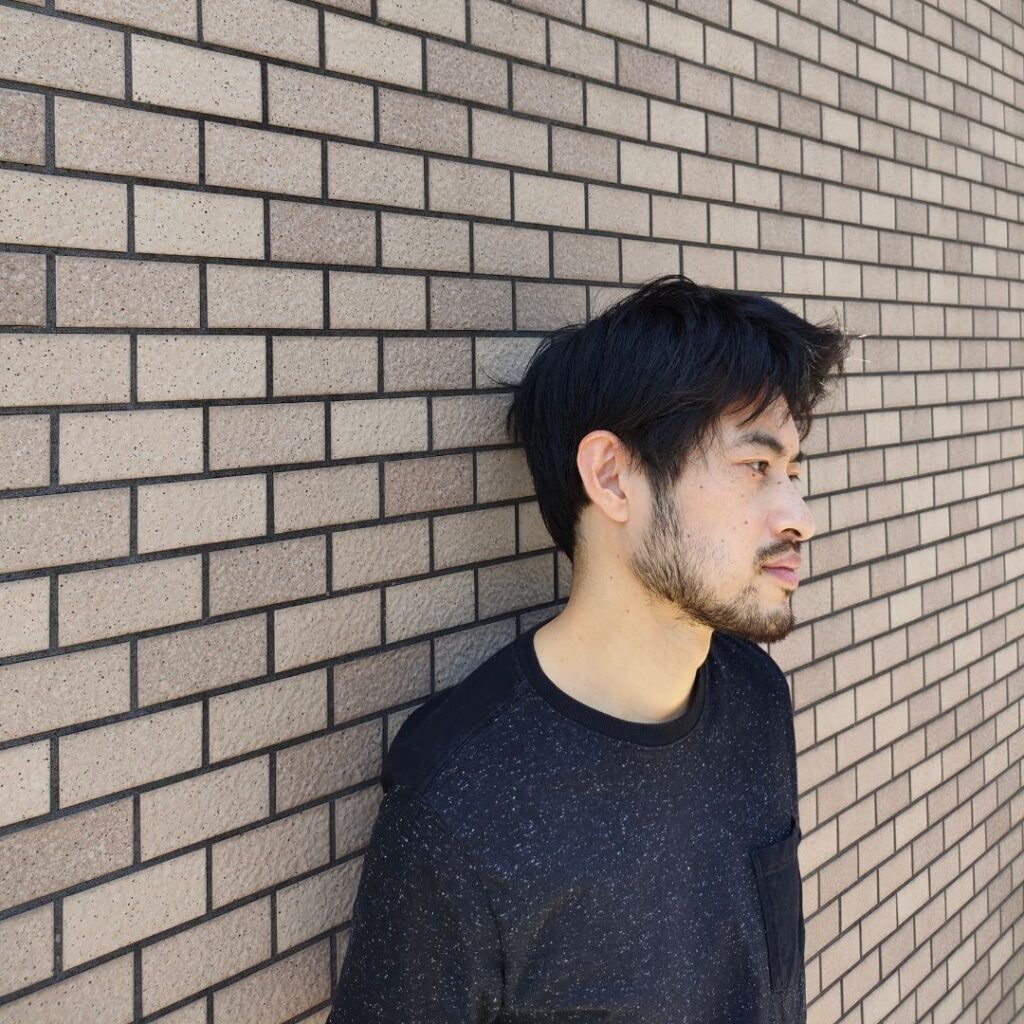
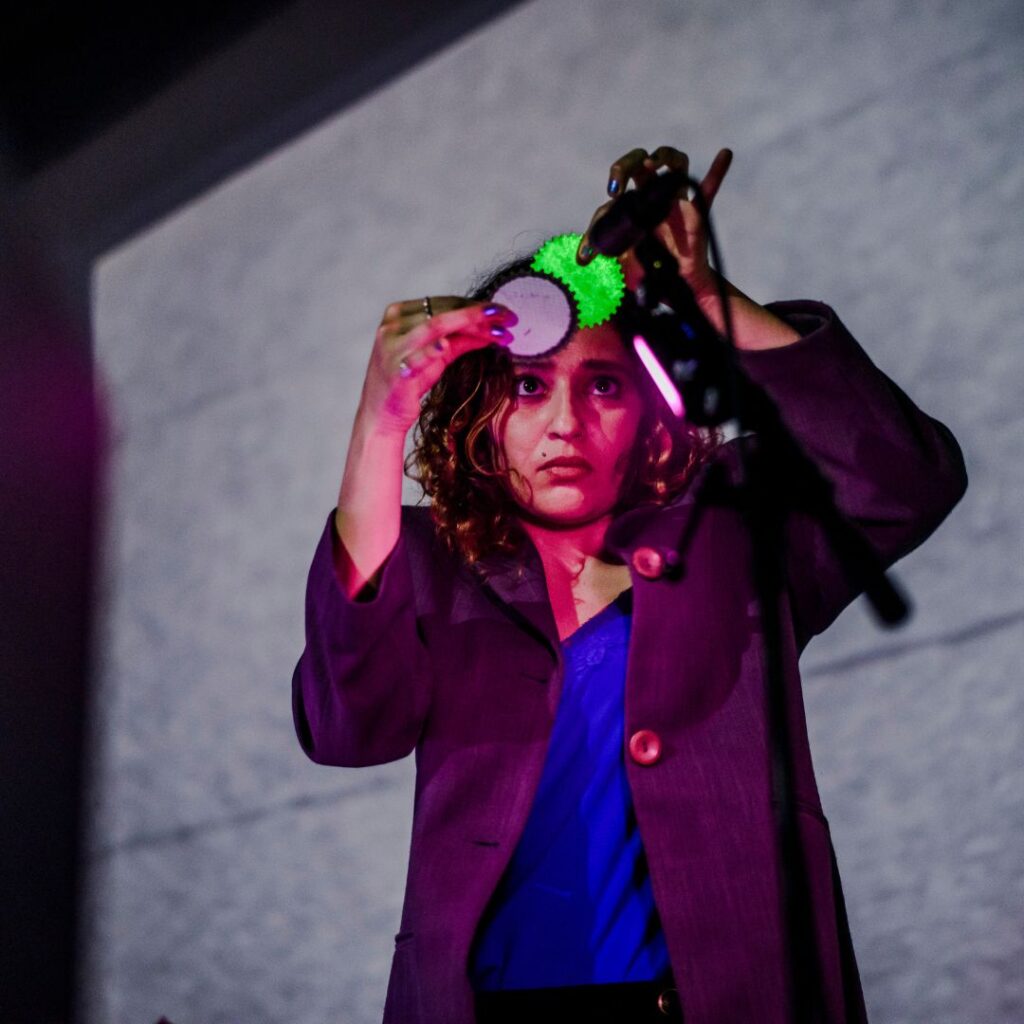
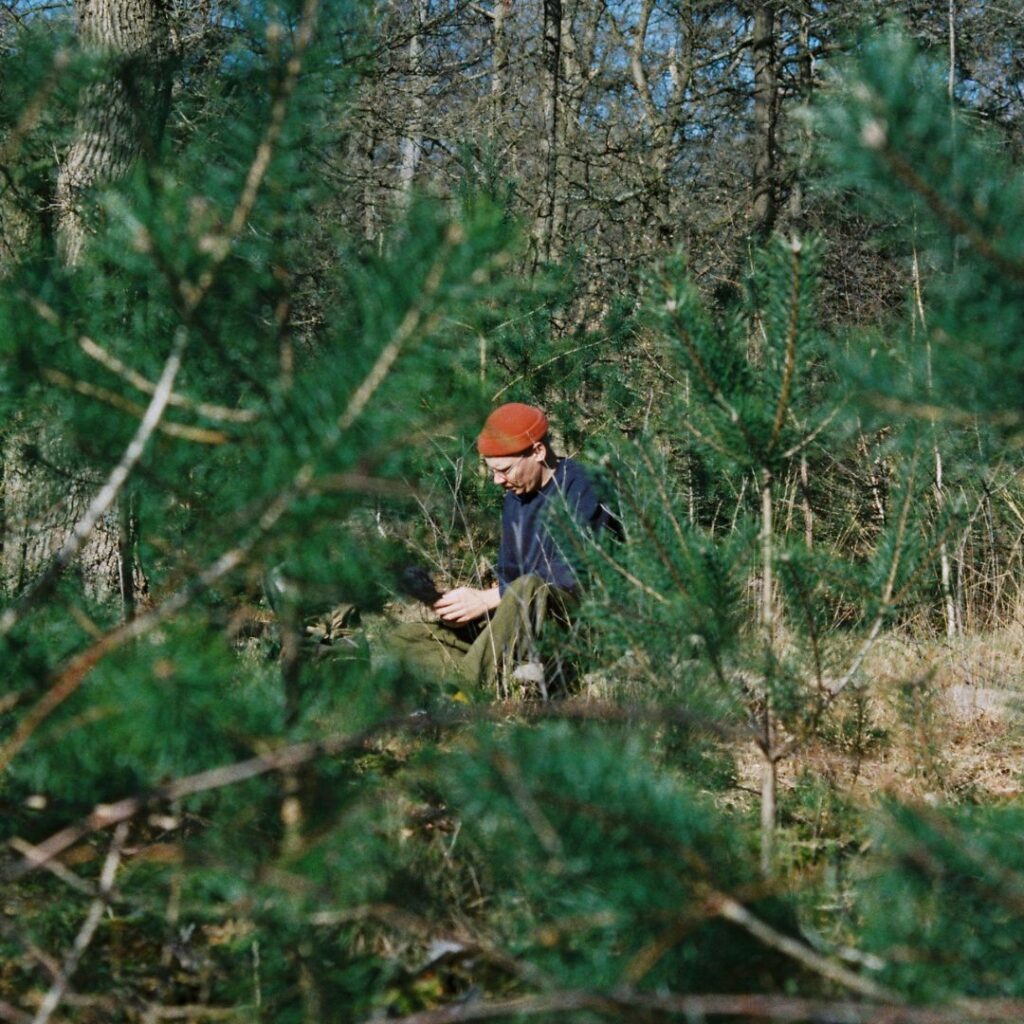
    Artist and Bad Boy Jesus Tape Club founder Mitko Mikov has made a home in between forms and disciplines.


    His practice is a collage of words, images, sound, and objects, bringing fragments of ideas together while challenging form and linguistic conventions. Humor runs through much of his work, as does a deep desire to keep things open and accessible.


    Talking with Mitko takes us in different directions, from translation and publishing to swimming pools and digital spaces. Across both his individual and collaborative practice, there is a sensitive, playful spirit and a tender attention to small moments of exchange and connection.

    How would you describe your practice to someone coming across your work for the first time?


    It’s a difficult question because I’ve sat on many different chairs. My background is in photography, and I’ve been self-publishing for the last 15 years. I had an artist book publishing project, and then started working with sound and objects.


    I mostly work with words, images, and concepts, and then try to translate them into whatever form feels right for what I want to say. So maybe “translator” is also a good way to describe what I do.

    What does translation mean within your practice?


    I speak Bulgarian, German, and English, and they definitely mix in my head. At a certain point, I think I lost the ability to speak fluently in any one of them, even though I read a lot and am constantly looking through dictionaries.


    I’m always trying to find a way of expressing something in one of those languages, and that’s become part of my artistic practice too.


    I try not to translate things literally, but to capture a certain notion or idea. Every language has its own idioms and expressions that can’t really be translated, but you can understand what they mean and find another way to say it.

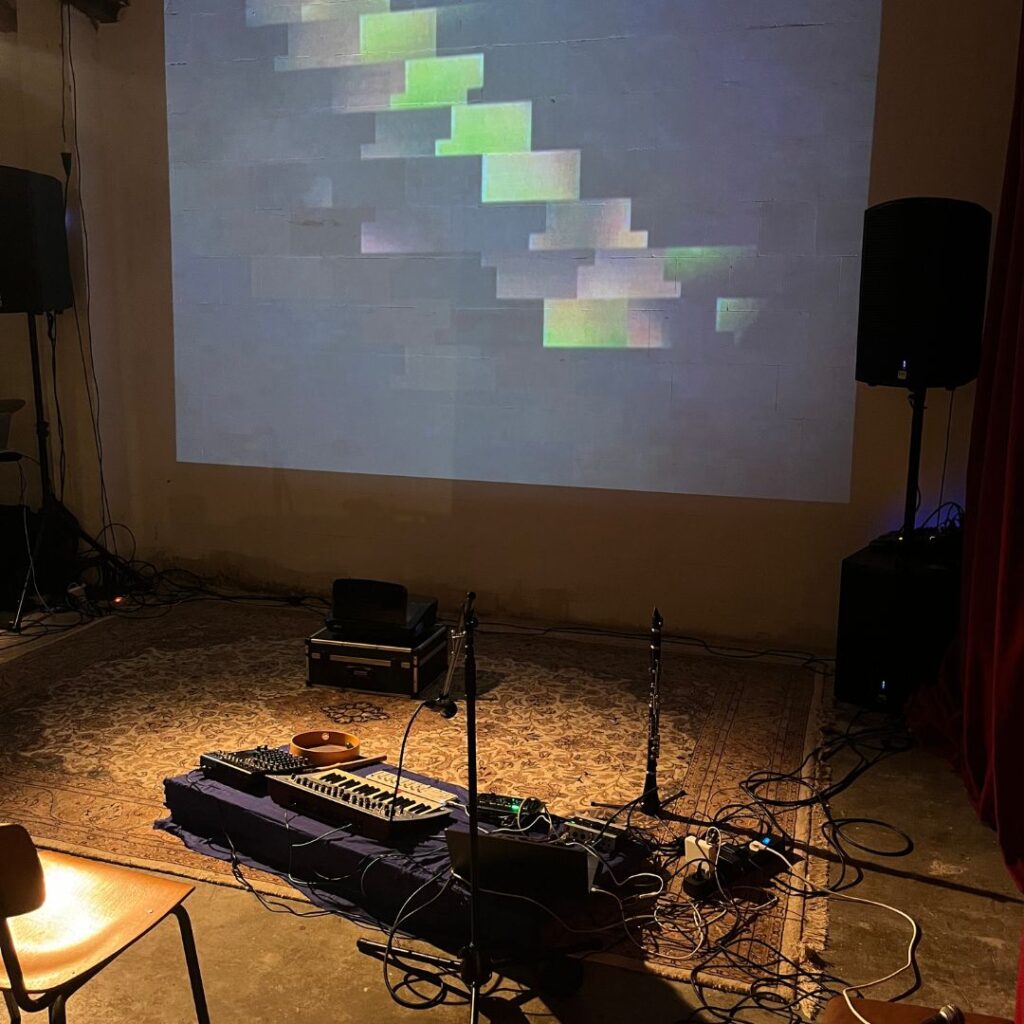
    Mood Talk - Mitko Mitkov - 1

    Do different languages give you access to different ways of thinking or expressing yourself? What draws you to working primarily in English?


    I think I’ve taken a certain quality from each language. Bulgarian is quite ironic and sarcastic, with a kind of dark humor that I really enjoy. In German, you can combine words endlessly, one after another, and something funny or unexpected can sprout out of it. And I like that English has a certain simplicity.


    I think all of that has found its way into how I work. I usually start with an expression before developing something longer from it, and then I reduce it. Usually, the finished draft is much shorter than what I began with. The relative straightforwardness of English works very well for me in that stage of the process.

    What does the process of reducing look like for you?


    It’s quite fluid. I try to find the right wording for what I want to say, and sometimes I break it down into a kind of poem, but not always.


    The texts are usually more like fragments than a real narrative. They’re often connected to a piece of sound or a video work, or I combine different things. Even when I make a book or a graphic work, I like to put in a sentence somewhere. It can be quite abstract, but it gives the work another layer.

    How do you know when a text feels right?


    Maybe when I laugh about it. When a text moves from being very personal to something recognizable, I’m hopeful that it’ll make someone else laugh too, or perhaps evoke some other kind of introspection.

    Do you experience limitations to language, or things that sound, images and performance can express more effectively?


    I think every form of expression has its own limitations. That’s why I like to combine things. You can get an extra layer of eeriness or weirdness with sound that you can’t necessarily express with words, and things can also take a different turn depending on the image or the context of the sound.


    I also try to let part of the work out of my hands. For example, when I make records, I work collaboratively because I’m not a musician myself and I don’t play instruments. I might have a loose idea of how something should sound, but then I let others figure it out themselves.


    Sometimes I’m surprised by what comes back because the color or feeling of the work is different from what I imagined. I think that’s really nice, because it’s all based on associations.

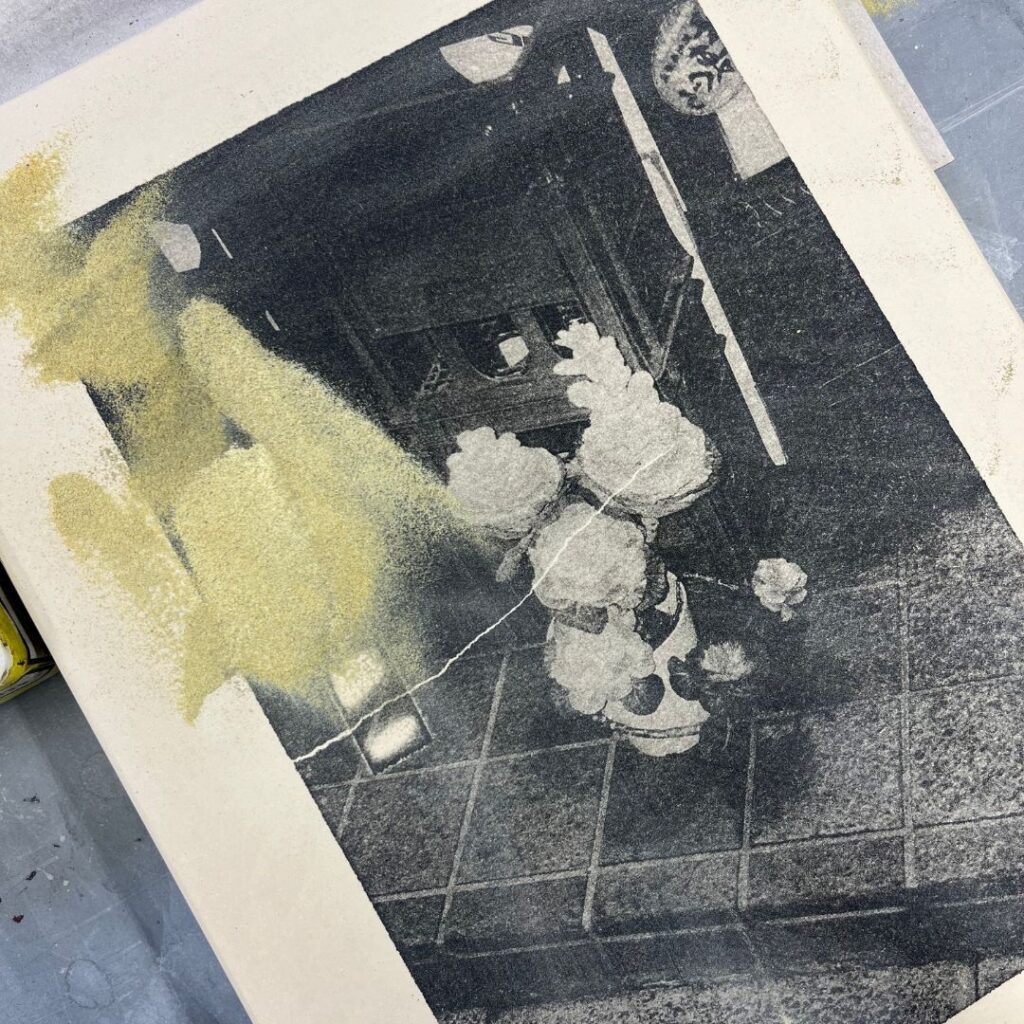
    Mood Talk - Mitko Mitkov - 4

    It’s interesting that you mention color. How does color relate to feeling for you?


    I think it’s a nice way of describing feelings because it’s very difficult to describe a color. Everyone also sees them differently. It can be about warmth or coldness, or a whole spectrum of emotions you associate with a certain color.


    I think it’s similar to language. If you only give a small fragment, you leave space for people to create the color around it.

    Several of your projects exist in digital spaces, from social media to dedicated websites. What interests you about the internet as a space for presenting work?


    I’m interested in creating inclusive and democratic spaces where anybody can participate. It’s important to me that they feel welcoming to outsiders, not only people who come from art or music worlds.


    I like the idea that I can just take out my phone and send someone a link. I don’t have to explain the work too much. They can experience it on the subway, at work, on holiday, wherever they happen to be. In some ways, that was also the initial promise of the internet, before things got bad.

    Your project Manual was built around “impossible instructions for dealing with a world falling apart.” Can you explain a bit more about that?


    Initially, the project was published on Telegram, with a new instruction sent every morning for one month. I’m often drawn to anachronistic pieces of the everyday, something that doesn’t quite fit, or small details that feel out of place. The instructions were often slightly off in the same way. Something like “savoring the aftertaste of aftertaste” is such a silly idea, but there’s also this never-ending search or longing for a taste that is already gone, or perhaps was never there in the first place. Something you can never quite get a grip on. Basically, this weird little craving that can ruin your life.


    The idea came from all these online communities where conspiracy theories circulate and people develop these alternative perspectives on everyday life. I wanted to work with that format, but also against it. 


    A lot of people told me they enjoyed receiving these messages with their morning coffee. It was this little piece of nonsense and laughter that interrupted the usual routine of waking up, having a coffee, reading the news, and becoming devastated about the world.

    It’s refreshing to think about the importance of humor in that way.


    Throughout all the disasters that happen and have always happened, people have used humor to deal with them.


    I’m reading Candide by Voltaire at the moment. It’s this story about a good-hearted person going out into the world and experiencing all these devastating things. But Voltaire writes about the darkness of the world in such a funny, upbeat way. And you realize that, in some ways, nothing really changes. These things have always been happening. Humor can be a coping mechanism, and it’s also a way of connecting with other people.

    Mood Talk - Mitko Mitkov - 3

    That idea of connecting with other people also seems to come through in Bad Boy Jesus Tape Club. How did the label begin?


    It’s a long story. I learned to swim quite late in life, and thought it would be funny to start a swimming club myself. It started initially as a joke, and was called The Bad Boy Jesus City Swimmers Club. I have a thing for silly names.


    It’s based around the idea of an inclusive but imaginary entity. You can become a member, but you don’t have to swim. You don’t have to be religious, and you don’t have to be a man. Everything in the name is basically against the policy of the club.


    There’s a membership where you can give me your email address and receive a newsletter. I started writing emails to the members, which were always a bit metaphorical and related to swimming, water, and so on.


    Bad Boy Jesus Tape Club is kind of a derivative of the swimming club. It also happened quite organically. Mona suggested doing a concert in Hamburg, and from there we made her first tape as Museum of No Art. Then, through working with institutions, friends, and other people, it gradually grew into various releases.


    My idea is to keep doing these things for as long as they make sense to me and as long as they’re fun. I try to keep them light. There’s no label structure behind the Tape Club. It’s really just for the joy of collaborating with people and hopefully creating nice things together.

    What does running a label give you that making your own artistic work doesn’t?


    I think the music world is a bit more democratic, in a sense. It’s easier to get feedback from people and for people to encounter and respond to the things you release. Making art can be a much lonelier process. It often exists within a more limited circle of people.


    Of course, both worlds have their limitations. Sometimes I think Bad Boy Jesus Tape Club is a bit too arty for the music world, while the sound work can feel like too much music for the art world. But as I said earlier, I always seem to end up somewhere in between. I guess that’s my destiny.

    Mood Talk - Mitko Mitkov - 2

    I think being in between can be an interesting position.


    I think so too. There’s a certain freedom to it. I enjoy doing things on a small scale, but being able to do them in the way I want. That feels like a luxury.


    Of course, it’s also nice to work with an institution, have good funding, and be able to make something more elaborate. I try to do both. I like being able to scale things up or down depending on the project.

    Looking back, how has your work evolved over the years? Is there a thread that has remained constant?


    Publishing has always been important to me, but, over time, I think my idea of what that means has expanded. I’ve realized that it’s not necessarily about having a publishing house or a label, but about bringing things into the world. It’s about spreading small amounts of something, an idea that can be replicated.


    And the other thing that has remained very important is collaboration. Every collaboration involves exchange, and I feel happy knowing there’s a pool of people I can always talk to and start different projects with.


    At the same time as collaborating with other people, I’ve recently started doing more things on my own. It took me many years to overcome the fear of putting myself out there and being vulnerable. There was always this invisible disguise, or like a roof I could stand under — a label, a name, a publishing project, whatever. I’m more at peace now with sharing my own work.

    Pictures by Christopher Zielske and Mitko Mitkov

    Listen to Bad Boy Jesus Tape Club

    continue reading

  • Bending the rules with memotone

    Bending the rules with memotone

    Since his teenage years, Will Yates has been making music as memotone, building a practice rooted in composition, improvisation, and experimentation.


    Across collaborations with a wide range of artists and labels, his work shifts between different sounds, methods, and ways of working instead of settling into a single approach. What connects it all is a trust in process, in learning, and in not always knowing where something might lead. There is an openness in the way he makes and shares music, always making room for uncertainty, change, surprise, and play.


    Throughout our conversation, Will spoke about the importance of knowing a system well enough to challenge it from within. That way of thinking runs through his music, which continually changes direction while remaining grounded in the same curious and exploratory impulse.

    You’ve been releasing music as memotone for over 10 years now. When you look back, how has the way you make music changed?


    In a way, it’s very similar. I’ve always learned through playing, and that’s still how I work.


    The sound has definitely changed, though. It’s actually closer now to what I wanted it to be when I first started making music as memotone. I just didn’t have the gear or experience back then.


    The name has existed since I was 16. Somehow, even then, I knew it was the right name for this project. I just knew what memotone was supposed to be.

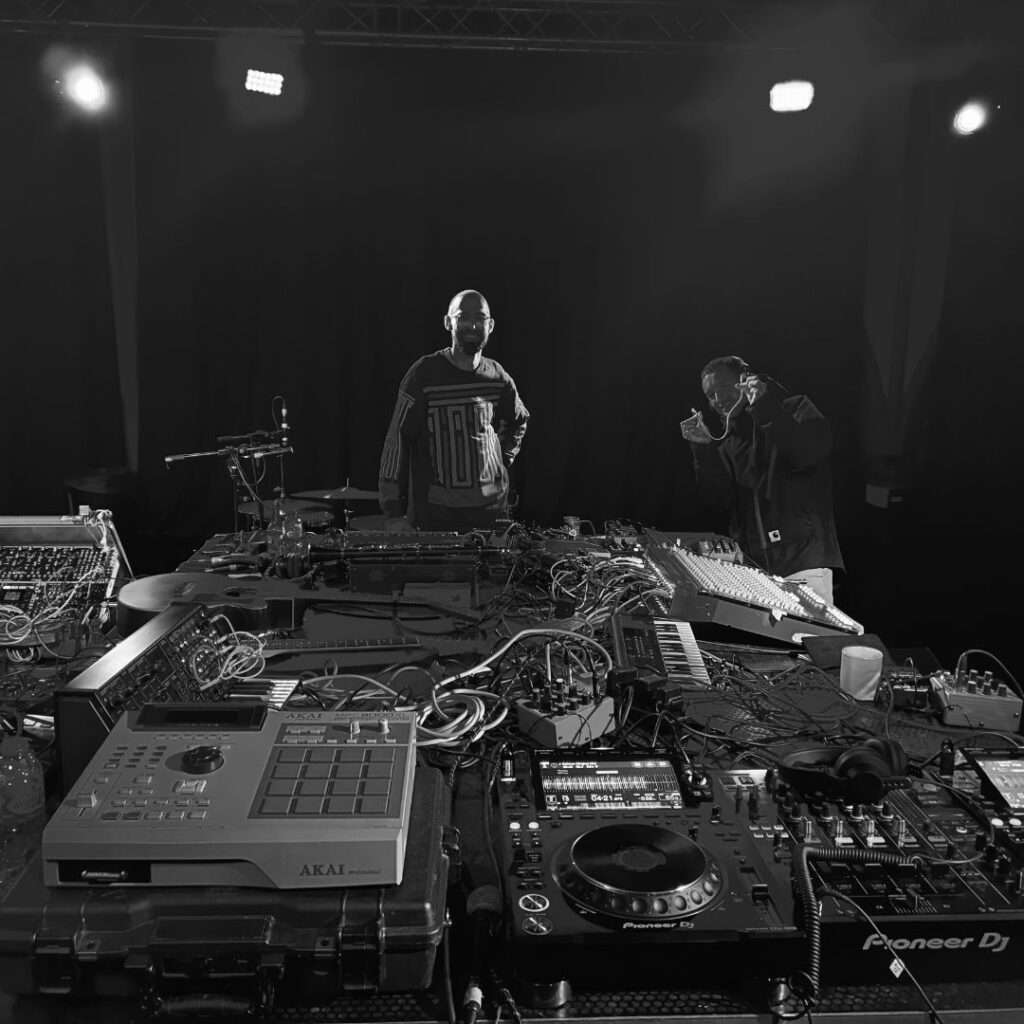
    Mood Talk - memotone - 1

    Where do you think that came from?


    I was listening to a lot of strange stuff when I was a kid, mostly through my dad or on the radio. I’ve been listening to Late Junction since I was 11. It’s got some pretty weird and wonderful stuff on there.

    How important is concept or narrative to your work?


    It’s not always part of my workflow, but sometimes it’s there.


    With O.G. Jigg, for example, it was entirely concept-driven from the start. When I first had the idea during lockdown, it was like I went mad. I completely lost myself in this character and the world I was building around it. In a total flurry, I wrote nearly two albums in about two weeks.

    Can you share more about who O.G. Jigg is?


    O.G. Jigg is based around this troubadour character, one of those medieval multi-instrumentalist poets who would travel around performing for kings and peasants alike.


    Where I grew up, on the Dorset-Wiltshire border, there’s still a strong connection to pagan heritage. Folk festivals and strange rituals were always happening around me, and they definitely seeped into my brain. Eventually, I wanted to do something with that and ended up making weird neo-medieval music.

    What does O.G. Jigg allow you to explore that memotone doesn’t? 


    It’s very different from my memotone stuff, but it’s also a deeply entrenched part of my psyche. It’s nice to have this little valve you can open to let out a completely different energy.

    Mood Talk - memotone - 2

    Are there non-musical practices, rituals, or habits that feed into your creative process?


    Most of my inspiration actually comes from outside music. I read a lot, watch a lot of films, read poetry, and talk to interesting people. I have a word-based brain and a constant inner narrative. It’s mad to me that some people don’t have that. 

    That’s interesting, considering voice has started appearing more in your recent albums. Was that something you consciously wanted to explore?


    I think so. For the last few years, I’ve been building the memotone project towards a point where I could do whatever I wanted with it. That was always the goal. I feel like people understand what it is now, so I can start pushing it a bit more.

    It’s almost like learning the rules in order to break them. Do you set certain limitations for yourself when making music?


    When I first started, I didn’t even have a computer, so it was more of a live project than a studio one. At that point, I was very strict about the live aspect. No samples, no borrowed sounds. Everything had to be created in the moment. I was almost purist about it.


    I’ve relaxed a lot since then, but I think that original mindset is still there. Even if the project seems to move in lots of different directions, I still try to impose certain limitations or conditions. It helps me realize the idea. Otherwise, it could become anything.

    What do those limitations usually look like in practice?


    This is always changing, depending on the music. Sometimes it’s just a limit on the number of instruments or even tracks, say a maximum of five channels for a piece. It can be fun and make you work in a different way.


    Other times, it’s more to do with the approach. Maybe a piece has no edits, for example, so each part is a complete “play-through” in the traditional sense, with no cut-up sections or loops.


    There’s no limit to the scope of limitation, haha.

    Mood Talk - memotone - 3

    Collaboration seems to be an important part of your practice, and you’ve worked with a wide range of artists and labels. Has that always been part of your approach?


    I’ve always valued collaboration because it exposes you to completely different ways of thinking and working. Sometimes it reinforces your instincts, and other times it completely changes how you understand something.


    I’ve probably played with more people who haven’t had formal musical training than people who have. What’s interesting about that is it forces you to communicate music differently. If someone isn’t working through theory or technique, you have to find a more direct or intuitive way of making things together, and I think that can lead somewhere really pure.

    Being open to different ways of thinking or listening seems deeply connected to your process.


    Yeah, I think so. I had quite strange parents and was exposed to a lot of unusual music and ideas when I was young. Those early experiences really shaped how I think about the world.


    I feel some responsibility towards younger generations in that sense. I’d like to create situations where kids can stumble into something unexpected in the same way I did.


    That’s partly why I’m trying to organize this village hall tour. The idea is that we play early evening shows in smaller rural places where families and younger people can come. In cities, you can accidentally encounter strange and inspiring things all the time, but in rural places that’s much rarer.


    It’s not that everyone has to love weird experimental jazz music. It’s more about knowing that this kind of thing exists. Maybe a seed gets planted for someone, and that can open up all sorts of other paths, not even necessarily musical ones.

    Looking ahead, what kinds of projects would you like to explore more?


    I’d really love to write for a full orchestra. The variation of textures and dynamics you can get from an orchestra feels almost limitless. What interests me isn’t necessarily traditional classical composition, but the possibility of taking that very rigid form people think they already understand and then completely pulling it apart.

    If you weren’t doing music, what do you think you’d be doing?


    Ecology, definitely. Music is my creative obsession, but my deeper love is probably the environment. I would have worked in conservation or focused on native species in some way.

    Mood Talk - memotone - 4

    How does that interest show up in your work or life?


    I walk in the forest close to where I live every day. It’s there that I report sightings of rare reptiles or birds of prey to people doing surveys and conservation work. One of the nice things about ecology and environmental science is that you can contribute meaningfully as a citizen scientist. You can go as deep into the knowledge as you want.


    I’m especially interested in birds and reptiles. If there’s a bird singing nearby, I can usually tell you what it is.


    In general, I believe the truest form of knowledge is not knowing. There’s this idea that once you name something, you lose the ability to really know it. I understand that instinct, but I also think that if you want to understand how things connect within a broader ecosystem, you need language and naming. 


    That deeper knowledge can actually intensify your feeling towards something. And from that comes care, which is something we need more of.

    Pictures by Anina Yates and Will Yates

    Listen to his music

    continue reading

  • Keeping things open with Museum Of No Art

    Keeping things open with Museum Of No Art

    There’s something in the way Mona Steinwidder works that remains deliberately open.

    Working as Museum Of No Art, she moves between sound, installation, sculpture, and performance in a practice that sits somewhere in between: between solitude and exchange, impulse and reflection. For her, making is less about arriving at a fixed form than responding to an open-ended question. Meaning is never entirely stable in her work. It shifts with space, context, and attention, leaving room for interpretation, ambiguity, and association. 


    As she reflects on her process and practice, she touches on its fragmented quality, on atmosphere and gesture, and on the liberating potential of music to help us let go of the tangible.

    Where does the name Museum of No Art come from?


    The name “Museum of No Art” emerged in correspondence with a friend, when we started creating acronyms from our names in the signatures of our letters.


    I appreciate both the personal origin and the ambivalence it carries. The negation prevents a fixed categorization, while opening a space for experimentation, new perspectives, and playing with expectations. 


    For me, “No Art” doesn’t mean “no art”. It is more about constantly questioning what art can be.

    Do you see Museum of No Art as a character, a methodology, or simply a container for your work?


    Museum of No Art is less a fixed thing than a flexible concept. It is simultaneously a kind of character, embodying a certain attitude or mood, and a methodological approach that allows experimentation, improvisation, and crossing boundaries. At the same time, it serves as a container for my diverse works—music, sound installations, visual experiments—without forcing them into a single category. It’s a mix of character, method, and container all at once.

    How do your sound and visual practices intersect, and where do they remain separate?


    I see myself as a very visually oriented person. Music gives me the chance to let go of all things tangible, which I find liberating, so it often stands fully on its own. At the same time, I love letting it communicate with other forms: painting, performance, light, space, or text. It is about exchange and creating connections, which can open entirely new perspectives. For example, an album cover feels like a portrait, or a translation of the music into a visual form.

    Museum Of No Art - Mood Talk - Objects and Sounds - 1

    Your music seems to draw out the poetry and beauty in everyday details, while also moving into a more fantastical realm. Would you describe your outlook as optimistic, escapist, or something else entirely?


    That’s a difficult question. I need music to be able to exist in this world. It is both a refuge and a way to reconnect with it. It is my best friend when I want to be alone. At the same time, it opens up space for imagination and connection. Music is both a retreat and a bridge. It carries me, while also bringing me back into the world.

    Is there a particular feeling, mood, or state of mind you’re drawn to when making music?


    I’m drawn to confronting myself: Where am I right now? Who am I? How do I feel today? Often, while playing and developing my pieces, I fall into a kind of trance that can be very meditative. At the same time, I’m attracted to playing with sounds, exploring what I hear, shaping it into a personal form, surprising myself, and enjoying the interplay between sound, space, and time.

    You often work with language across your visual and sonic practice. Do you see your music as a form of storytelling, or as something more open-ended?


    Right now, I’m more interested in the voice itself than in language. I increasingly use language as an ingredient, as a fragment, and I don’t want it to be at the center of my music. I think of it more as a trace of thought or a clue.


    I see my music less as linear storytelling and more as atmosphere, gesture, and emotional resonance. Narrative elements can appear, but they remain fragmentary, open to interpretation, and flow into the soundscape, leaving space for the listener’s own experience.

    Museum Of No Art - Mood Talk - Objects and Sounds

    Staying with voice for a moment, it often feels central to your work alongside the clarinet. How have they each found their place in your work?


    In the past three years, the clarinet has almost replaced my own voice in my solo project. It has given me the freedom to create a more open, abstract space with the same gestures a voice can give. 


    At the same time, the voice has become an object of research for me. In project-based work, I dedicate myself to it fully, exploring, in particular, how to work with other voices to reflect on identity, collectivity, and connection, and to experiment together as a choir. I translate this research into performance, sound installation, or workshop formats.

    How much of your process is intuitive, and how much is deliberate or planned?


    My process usually starts very intuitively. I follow a sound, a feeling, or an inner impulse without knowing exactly where it will lead. Only afterwards does a more conscious structure begin to emerge, like a kind of condensation or ordering of what has appeared. Planning is less a starting point for me than a way of taking the intuitive seriously and giving it form.

    You often shift between working alone and working with others. What changes for you between those two modes?


    When I make music alone, I feel a great sense of freedom. I can follow impulses and make decisions directly, without negotiation. It allows me to pursue an idea with focus and consistency, and at my own pace.


    Collaborations give me access to perspectives and ways of thinking outside my own system. They bring friction, surprise, and sometimes resistance, and that often generates something entirely new. You have to listen, respond, and make space, which inevitably changes your own approach.


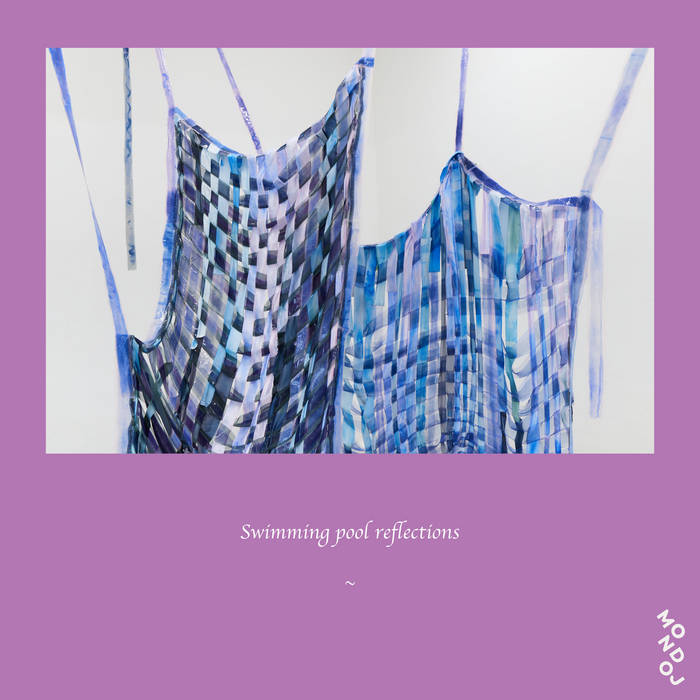
    My most recent release, Swimming Pool Reflections, was a collaboration with Mitko Mitkov. We’ve known each other since art school and have been working together on and off for years. He writes texts that I really admire, and I find it very natural to connect to them musically. In this case, it almost felt like a simultaneous translation into sound, running parallel to the texts as they unfold.

    Museum Of No Art - Mood Talk - Objects and Sounds

    You’ve performed in a range of unconventional spaces. Are there particular environments that feel especially suited to your music, acoustically or conceptually?


    Spaces change the way we listen. Acoustics always play a role, in how a room carries, dampens, or reflects sound, but the conceptual context is equally important.


    A particularly fulfilling experience was my Wake Up concept at the Minimal Music Festival in Amsterdam, where I performed for a sleeping audience. It was unusual and delicate, and playing for people in such a vulnerable state profoundly shifted my sense of attention, intimacy, and responsibility.

    Do you feel your music changes meaning depending on where it’s heard?


    Yes, constantly. Everyone hears something different, often in very irrational ways. Spaces, audiences, and contexts act like additional band members, and they have a significant influence on a live performance. In general, I feel my music finds a natural home in visual art contexts, where it can exist as part of a larger space rather than having to assert itself as a concert piece.

    Is there a space or setting you haven’t worked in yet that you’d love to explore?


    In a cave, near a rushing forest stream, or in a swimming hall for floating people. The last one would definitely be together with Mitko Mitkov.

    Listen to her music

    continue reading

  • Nurturing community with Cosima Pitz

    Nurturing community with Cosima Pitz

    Some projects start with a plan. Cosima Pitz grew out of an ongoing conversation. A small press in the back room gradually expanded beyond paper and became a label where sound and image meet and respond to each other.


    For Maximilian Rossner, the feeling leads. He talks about music hitting the stomach, about work that bypasses thought. This sensitivity guides how the label is run, in how artists are paired, and how decisions are made. There isn’t a strict blueprint behind it.


    As he speaks about working this way, the conversation turns toward transcendence, collectivity, and freedom. Toward giving work space. Toward keeping things open. Toward resisting the pressure to turn everything into a business.

    How did Cosima Pitz start?


    I was part of a group of friends who were all artists, and after a group exhibition in Munich, the idea of starting a printing press came up to publish work by people in the collective.


    At first, I worked with a professional printer, but since that meant paying out of my own pocket, I eventually started printing everything myself in the back room, even making the covers by hand. It’s always been a very DIY process, and we’ve made around 50 publications now.

    And how did sound become part of it?


    I ran the printing press for about four years, but I was always into music, and most of the artists I worked with were too. I discovered Bandcamp and the independent, self-made spirit of producing cassettes, and the format felt like a great way to “publish” music, similar to the zines I’d been making.

    Where does the name come from?


    We felt it was important to give the whole project a personal name, like galleries that carry the name of the person who runs them. A close friend, Sebastian Dacey, came up with “Cosima Pitz.” It’s a name you see once and remember.


    She became, in a way, our “good ghost”: a figure caring for the artists, supporting exhibitions, and helping make publications. Unlike many galleries, which don’t always support their artists consistently, Cosima Pitz represented constant care. Being an artist can be tough, and she symbolized someone different, someone who was always there for us.

    Cosima Pitz - Mood Talk - Objects and Sounds

    Do you see yourself as a curator, a gallerist, or as an artist?


    It’s hard to define because I’m quite polymorphic and do so many different things. In a way, I feel like I am Cosima, with a utopian aim of bringing everything together: art, music, the label, and the gallery. I’m also DJing, and I’d love to make music myself one day. Honestly, it’s a bit much. I’m juggling a lot and still figuring out exactly where I fit.


    The curation is based on my personal taste, vision, and emotions, and I see myself more as an artist curating other artists rather than someone running a label as a business.

    What does a collaboration tend to look like?


    After almost ten years of running the printing press, there’s a group of about ten people I work with regularly, the “program” of the gallery, so to speak. I know them well. They’re friends.


    When it’s time to release a new album, I think about which visual artist’s work or style fits the music. One important aspect of Cosima Pitz is this pairing, one person from the art side and one from the music side. Most of the time, there’s a strong match, visually and sonically.


    If a musician wants to bring in an illustration or photograph from outside our core group, I’ll consider it, but it rarely feels right. I see everything as part of one cosmos, a single, cohesive group. If someone joins and integrates into that universe, they usually stay.

    Has running the label changed the way you experience sound or art in daily life?


    I went to record stores from a young age, digging through vinyl or CDs and picking things based only on the cover. That was before the internet. Running a label now, I’ve come to deeply appreciate the work of labels as cultural filters that collect and curate with care. When you discover a label you trust, you know there’s a sensibility behind it, a set of choices that creates a kind of musical home.


    I think that role is becoming more important again, with real people shaping taste rather than relying on playlists and algorithms. It feels empowering, almost political. Power to the people!


    With art, my perception has shifted more toward aesthetics. The impact of visual work doesn’t go straight through my body in the same way as music. Listening feels much more direct. Music hits the stomach or the heart, while visual art is often filtered through aesthetics. Both can move you, but in different ways.

    Cosima Pitz - Mood Talk - Objects and Sounds

    Is there a certain resonance you look for when deciding to release someone’s work?


    It’s very subjective, but I’ve always just followed my feelings. A lot of art today is made in the head. It’s very conceptual and can feel a bit cold. I’m always looking for something warm, something that comes from the heart. I’m a thinker myself, but I’m drawn to art and music that bypass thought and go straight to the body. I look for work that comes from something real inside the artist.

    A lot of your releases feel like they’re hovering between worlds, not fully here and not fully elsewhere. Is there a texture or sensation you’re drawn to?

    I think that feeling comes from moments when the music or art becomes transcendent and allows you to go somewhere else. It gives you space to find yourself, get lost, or simply stop thinking about what you’re hearing or seeing.


    I’m more strict now when it comes to deciding what that is. Over time, my sense of these “worlds” has become clearer. Even extreme releases, like a record built on just three electric guitar chords and drums with a hard rock energy, can correspond to something very soft from another artist. Both are searching for a state of transcendence in their own way. In that sense, it’s an energetic experience, and that energy can be found in any style or genre.

    Do you think of your releases as connected by a thread, or more like fragments scattered in the same landscape?


    I see them as part of the same kaleidoscope, just expanding over time. I don’t think that will change much anymore. All the musicians I know, ama s, Ferdi, Minze, and others, are constantly working on new records. My role is simply to release the next album when it’s ready.


    I feel that a group of about twelve core collaborators is enough. It’s more about a sense of community and continuity than expansion. That idea of a collective was part of the original vision when we started the printing press.


    I’m proud that I’ve stayed with Cosima Pitz for so long. In the end, it’s mostly a question of energy and money. Energy is easier, because the work itself gives me energy. Time and money are the real challenges, especially with three kids.

    What about your own artistic practice? Do you still find time for it?


    Maybe at some point I’ll reach a place where it feels right to return to my own practice. But for now, my focus is on connecting artists and holding space for their practice. They’re all trying to survive too, working jobs and making music when they can. The romantic idea of the artist living a carefree bohemian life isn’t real. It always includes the hustle.


    That’s also why I think it’s important that Cosima doesn’t become a “business” in the strict sense. If it did, it might not feel right anymore. When I work with a musician and a track doesn’t feel quite right, we can take three months to sit with it and try new things. I always tell the artists that we have all the time we want. That freedom is essential to the process.

    Cosima Pitz - Mood Talk - Objects and Sounds - 1

    Collaboration and collectivity seem central to how you work. What kind of future do you imagine for that way of working?


    For me, the collective aspect is emotional, maybe even psychological. I sometimes think of it in terms of consciousness. You have your individual consciousness, your subconscious, and then there’s a collective consciousness. It explains things like two people thinking of each other at the same moment.


    With Cosima Pitz, I hope something like that continues to grow between the artists and musicians, that the work resonates on a subconscious level, not just as a collection of records. I hope the connections deepen over time and that people feel part of something shared rather than separate.


    In the past, art collectives were common. Artists inspired and challenged one another, shared resources, and shaped a vision together. That feels more rare today. But the more collective something becomes, the more awareness shifts outward. You stop feeling only for yourself and begin feeling with and for others. When that happens, you’re no longer carrying the weight alone. You’re sharing it.

    Listen to Cosima Pitz

    continue reading

  • Through the years with 12k

    Through the years with 12k

    Founded in 1997 by Taylor Deupree, the label has built a catalog grounded in patience. Sound is treated as material rather than message, with attention to small shifts, slow movement, and silence. Music that doesn’t ask for immediacy, but for time.


    Over the years, 12k has remained consistent without becoming fixed. Its releases focus on space and texture, on how sounds sit alongside one another, and on what becomes audible when very little changes.


    “Selecting a handful of releases from the 12k catalog is not an easy task,” Taylor shares. “There are many personal stories, connections, and friendships behind each release, and these came to mind because each contributes an important aspect of what 12k is about.”

    12k X Objects and Sounds - Mood List
    Marcus Fischer – Monocoastal (10th Anniversary Edition)

    Marcus needs little introduction for 12k listeners. His debut for the label, Monocoastal, receives a beautiful vinyl edition with artwork by Gregory Euclide. Marcus is here because 12k is all about family and community. I consider him one of my dearest friends, and the label would not be the same without his presence.

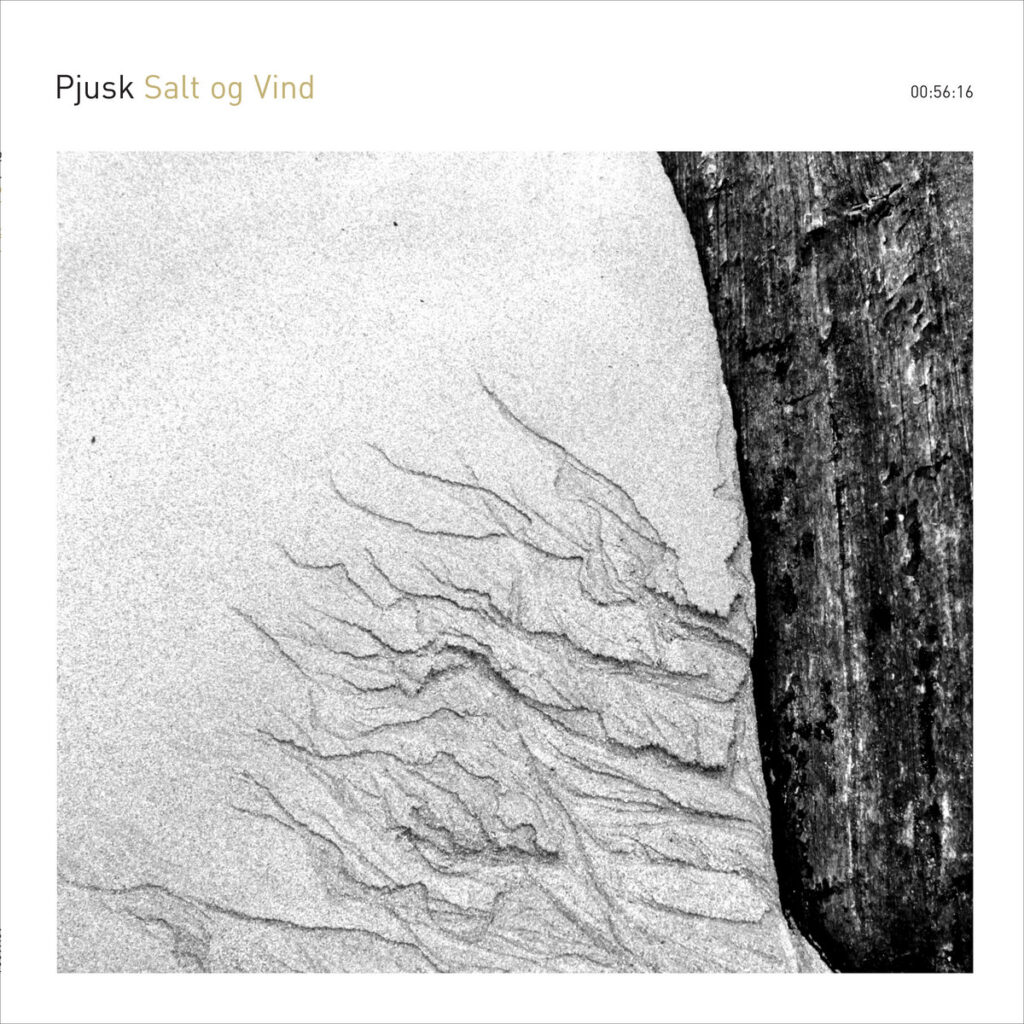
    Pjusk – Salt og Vind

    Nature and environment, one of 12k’s most essential aesthetics, are reflected here through Pjusk, who channel the landscape of Norway in all of their music. While I’ve never been, Pjusk’s music feels like the perfect soundtrack to its landscape. Simultaneously icy and warm. Sprawling, open, glacial.

    Giuseppe Ielasi – Five Wooden Frames

    Giuseppe is perhaps the most underrated solo guitar manipulator in our extended musical space. His music, marked by reduction and simplicity, makes you stop what you’re doing and listen, whether he’s playing the guitar more traditionally or unearthing new sounds and textures. 12k has been releasing his music for many years, and hopefully for many more to come.

    Gareth Dickson – Orwell Court

    Gareth is a bit of an outlier on 12k, the only fairly straightforward singer-songwriter centered on vocals and lyrics, something quite different for the label. Yet when you listen to his music, it makes perfect sense. One of 12k’s core principles is “Evolve constantly, but slowly,” and I don’t think any artist represents this evolution better than Gareth Dickson. There’s a fragility and a sense of space that are key components of the 12k sound, and Gareth’s entire catalog blows me away. It’s a total honor to have him as part of the label.

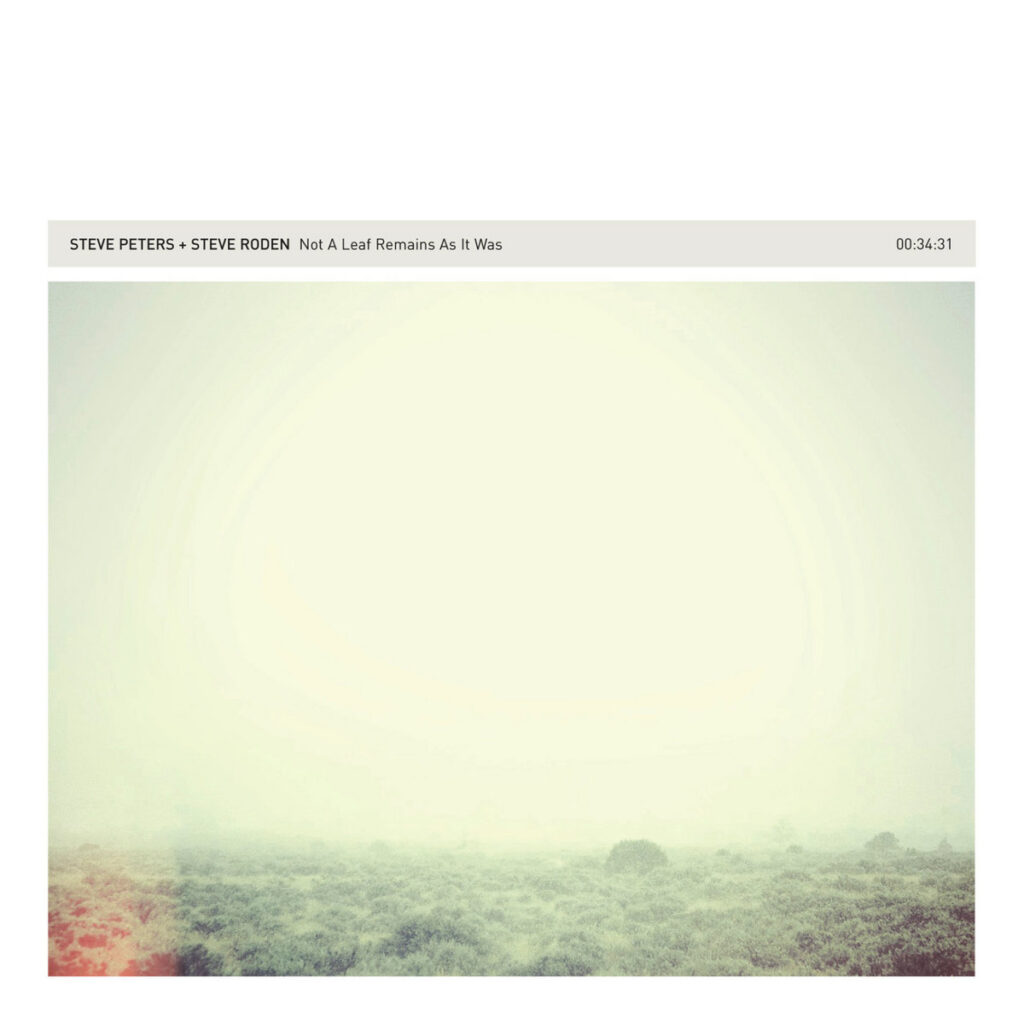
    Steve Peters & Steve Roden – Not A Leaf Remains As It Was

    Steve Roden left us far too soon, yet he left behind a huge catalog of music and art. Collaborating here with his friend, “the other Steve,” we get what is perhaps my very favorite music amongst Roden’s numerous releases. He was known to occasionally use his voice in his work, and it always sounded reserved, gentle, and perhaps a little broken or shy. When it shows up on this album, it immediately makes it sound like the Steves are in a small room, creating only for the listener.

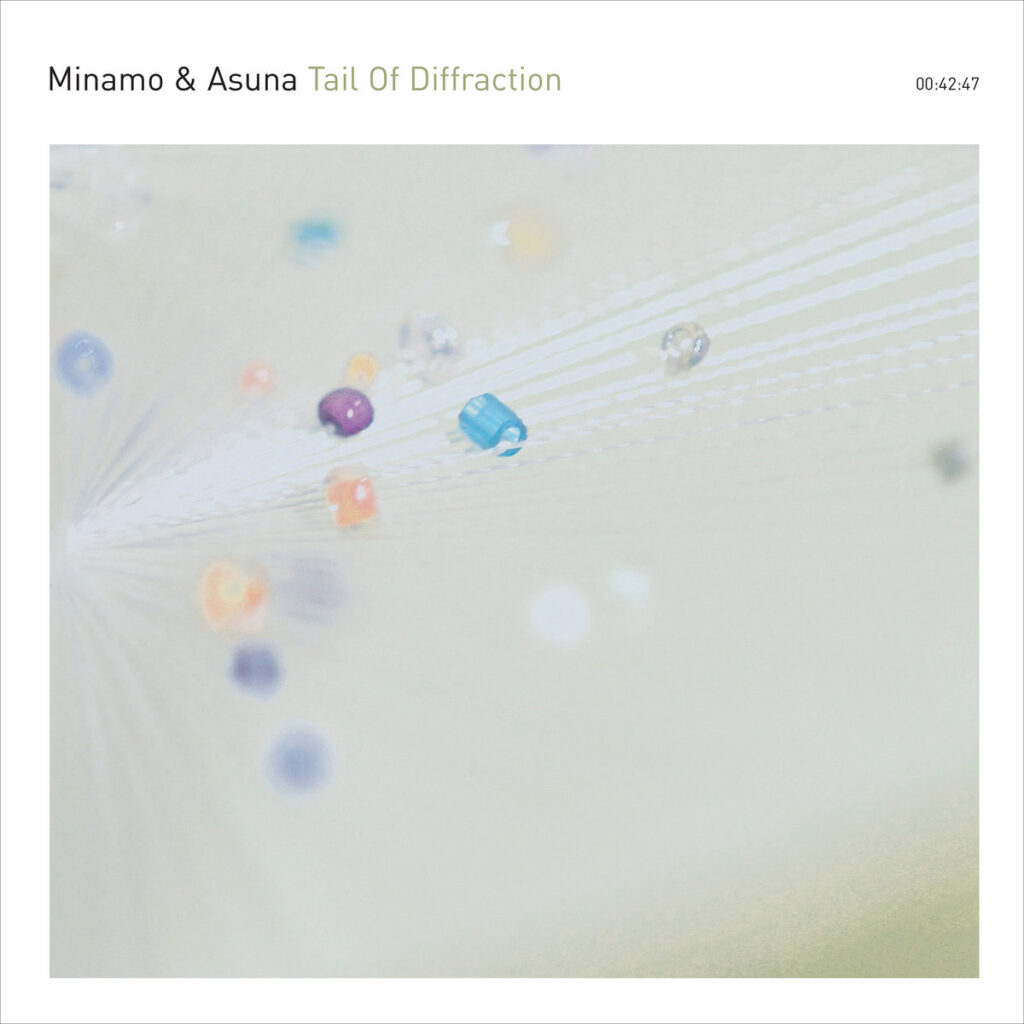
    Minamo & Asuna – Tail of Diffraction

    Minamo has been part of 12k for a long time, helping to define the label in its early years. Teaming up here with Asuna, who is well known for his amazing “100 Keyboards” piece, was a way to bring two of my favorite artists together in a single release. Heavily rooted in acoustic instruments yet textural, like no one else can do.

    listen to 12k’s releases

    continue reading

  • Tique’s picks for a world in flux

    Tique’s picks for a world in flux

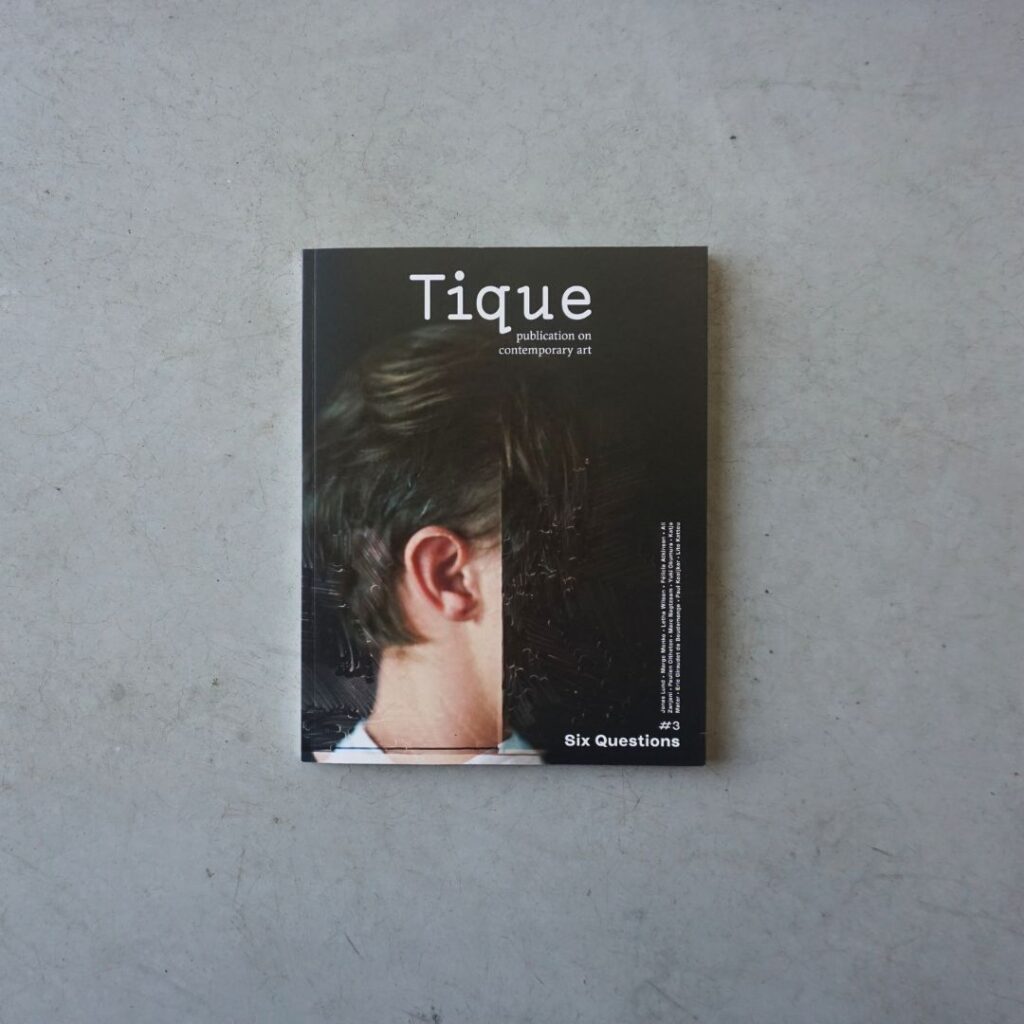
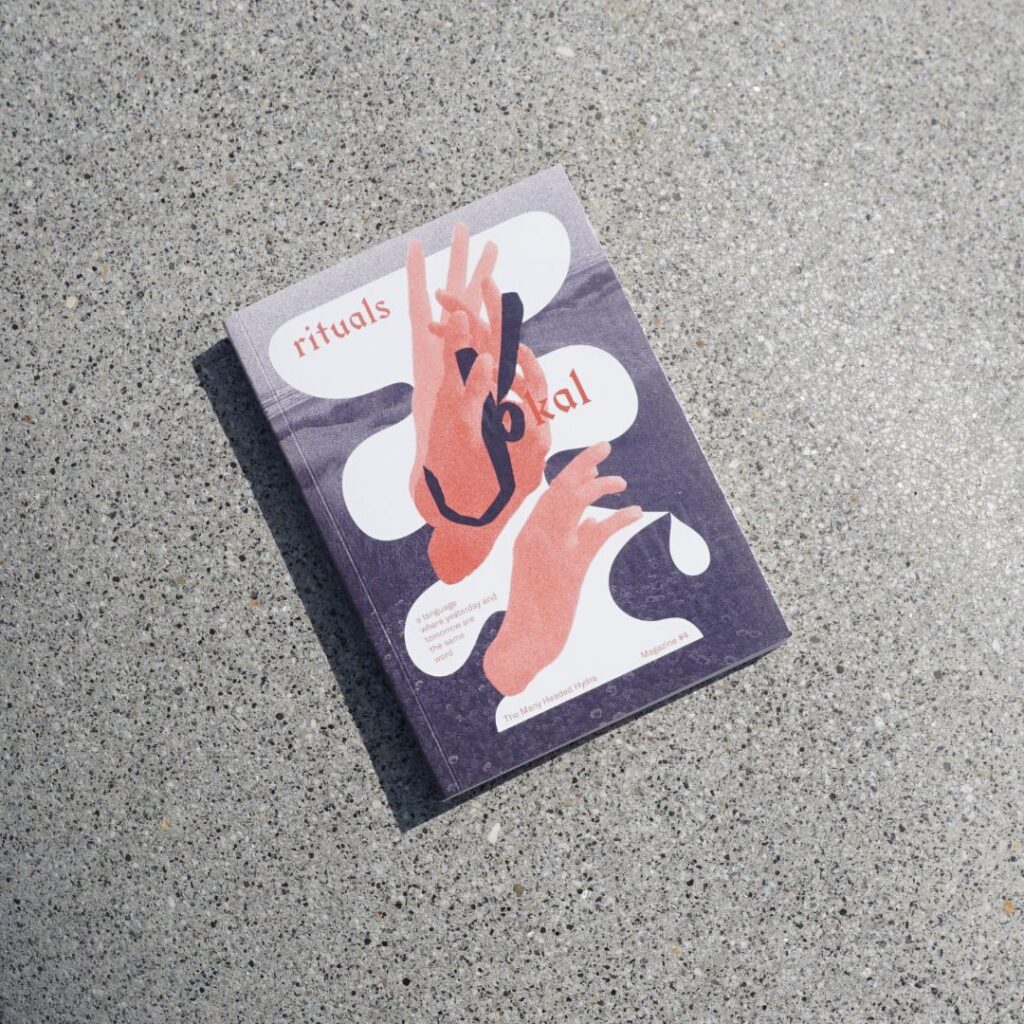
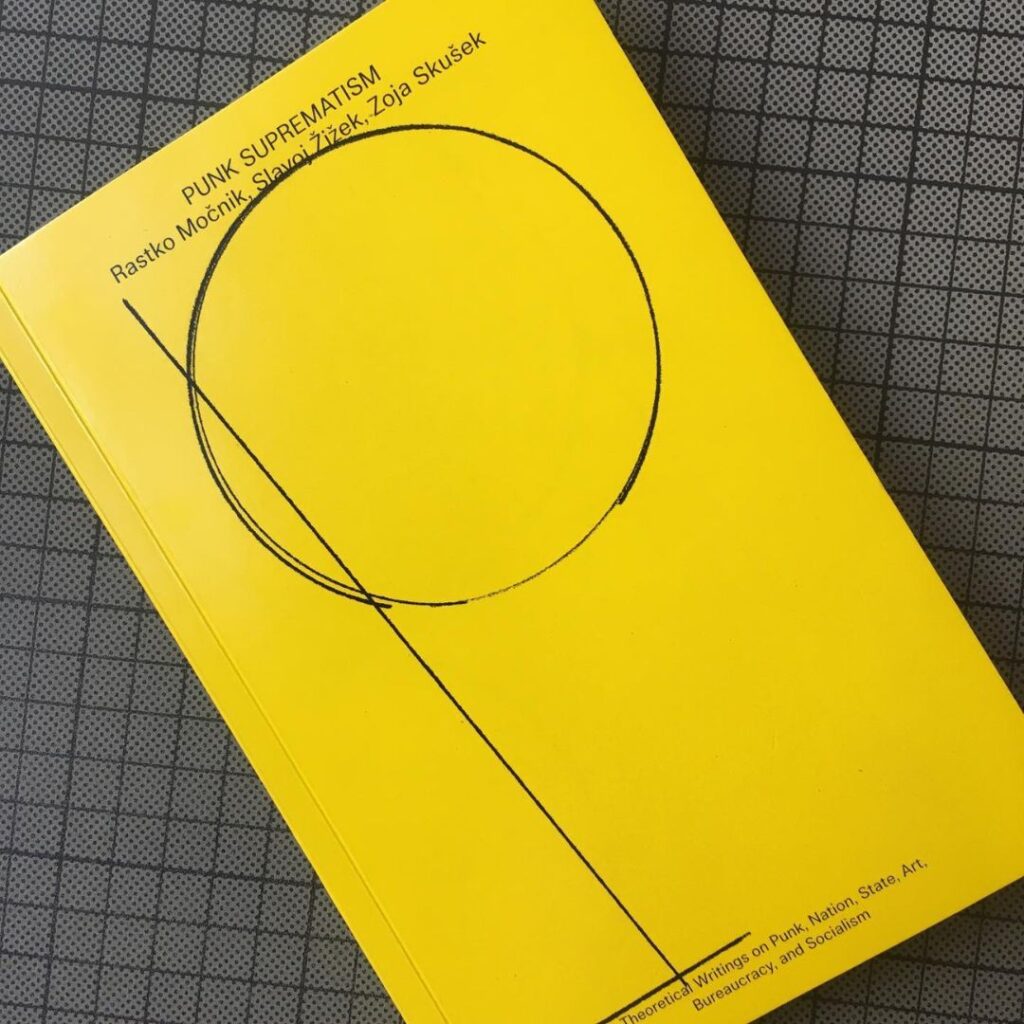
    As part of our ongoing exchange with Tique, we asked them to share a few books that sit close to their way of thinking. A belief in art as something that can guide both personal and collective transformation runs through their selection, moving between who we are, where we find ourselves, and how we move forward.

    Tique x Objects and Sounds - Mood List
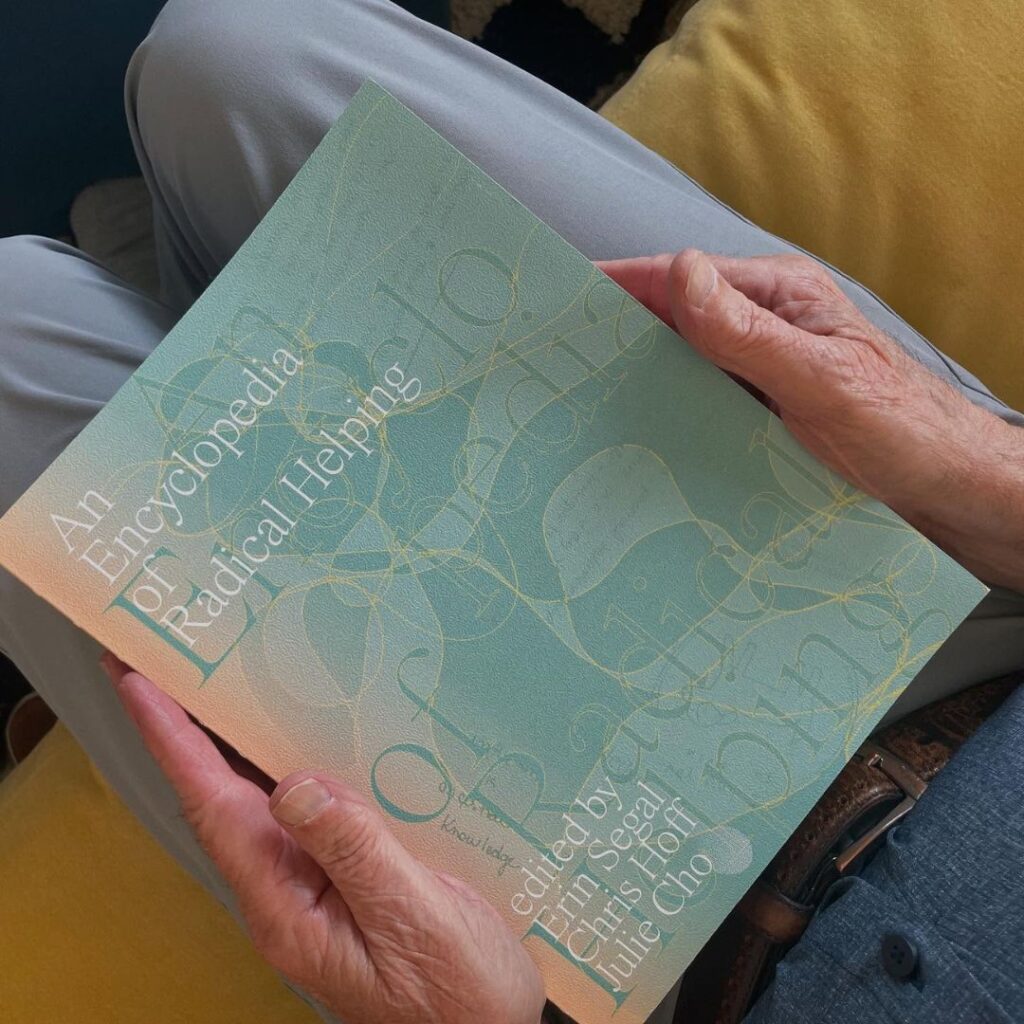
    An Encyclopedia of Radical Helping – Erin Segal, Chris Hoff, Julie Cho (eds)

    A collection of interconnected entries on helping and healing, featuring contributions from over 200 practitioners across social work, family therapy, art and design, bodywork, organizing, and beyond.

    An Encyclopedia of Radical Helping
    Efemmera Reissue #5: A Witch Recipe for Grievers – Selma Miriam

    Originally published in 1984 as the final recipe in the Bloodroot Collective feminist vegetarian cookbook, this essay has been reimagined as a ritual object to be given to a friend in mourning.

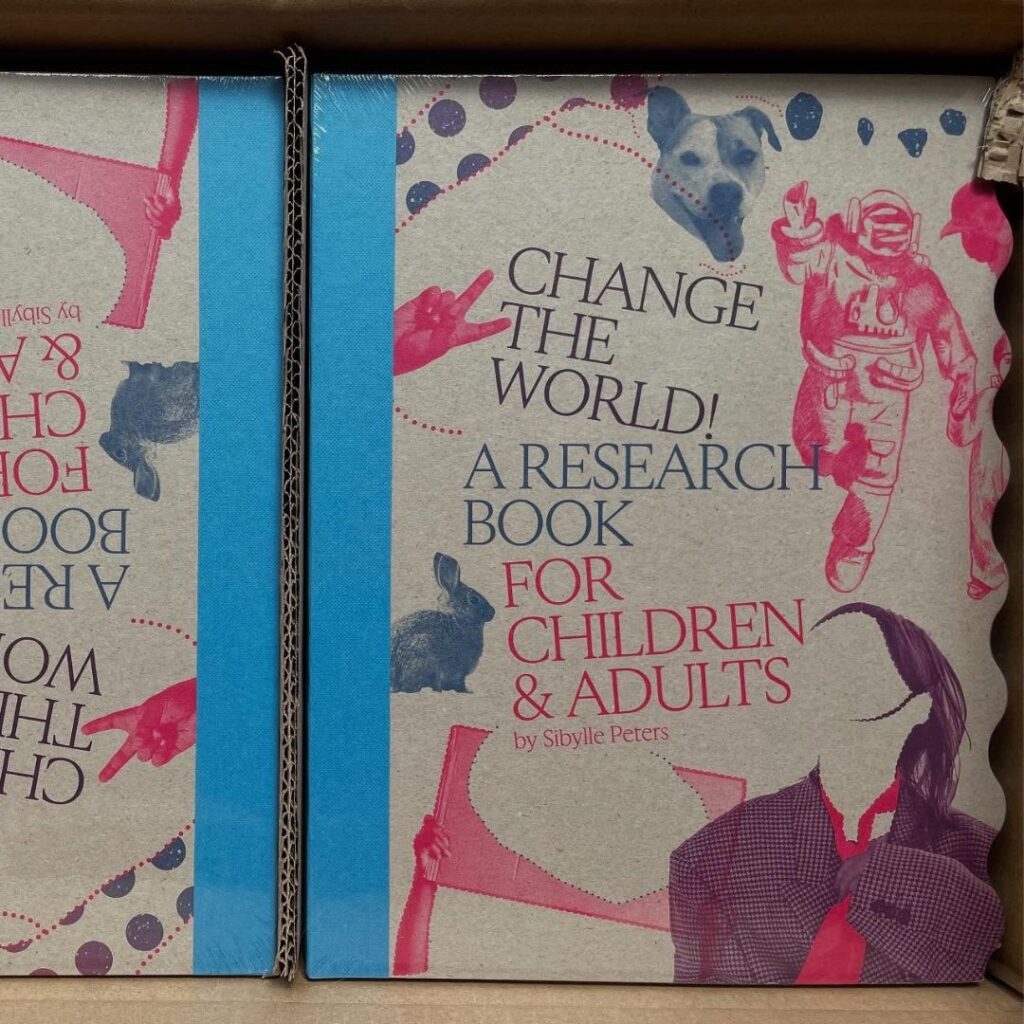
    Change the World! A Research Book for Children & Adults – Sibylle Peters

    Drawing on 20 years of performance-based research and guided by children’s wishes and concerns, this book offers at-home experiments that explore how play can change reality.

    Change the World! A Research Book for Children & Adults
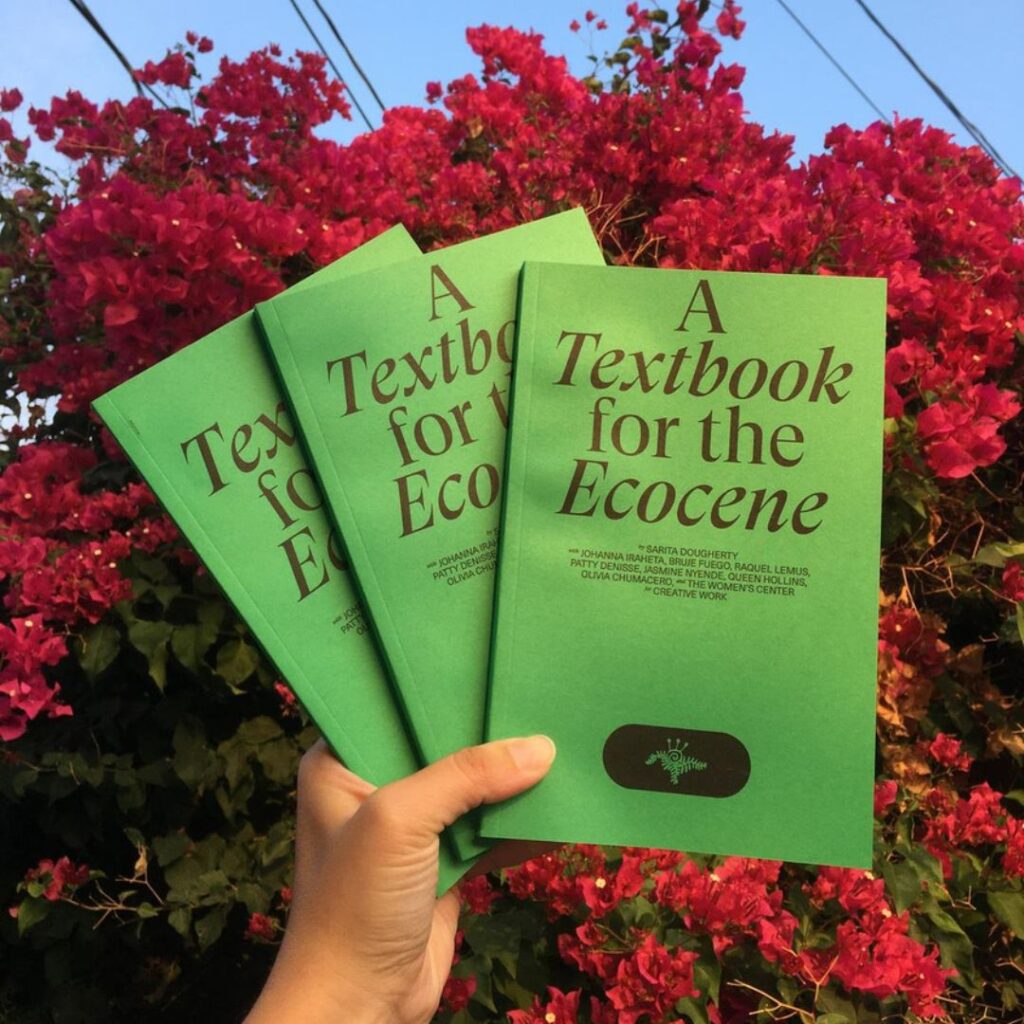
    A Textbook for the Ecocene – Sarita Dougherty

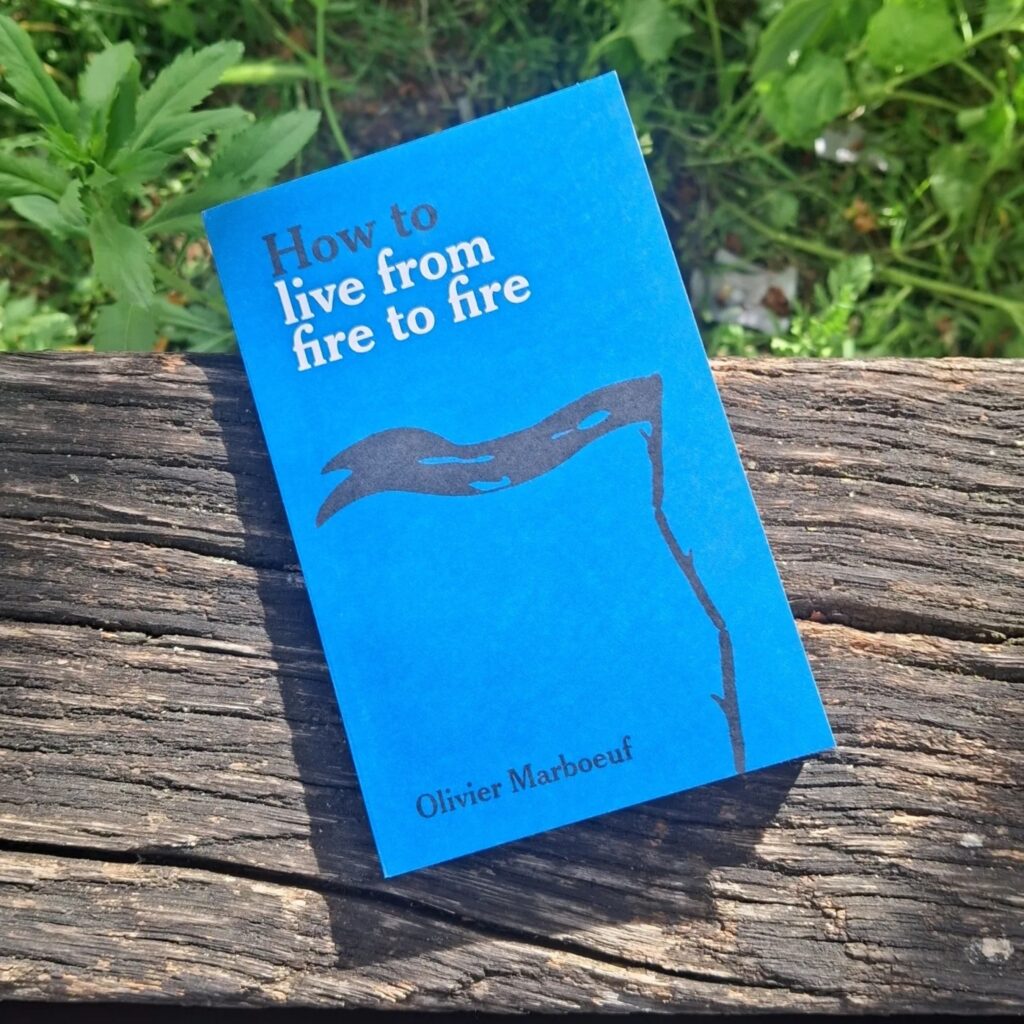
    A Textbook for the Ecocene is a how-to guide for connecting to self, community, and planet. Each chapter offers practical at-home exercises, Earth-centered theory and spirituality, and interviews with Black and Indigenous Earth warriors—cultural workers generating planetary liberation in their everyday lives.
     
    A Textbook for the Ecocene
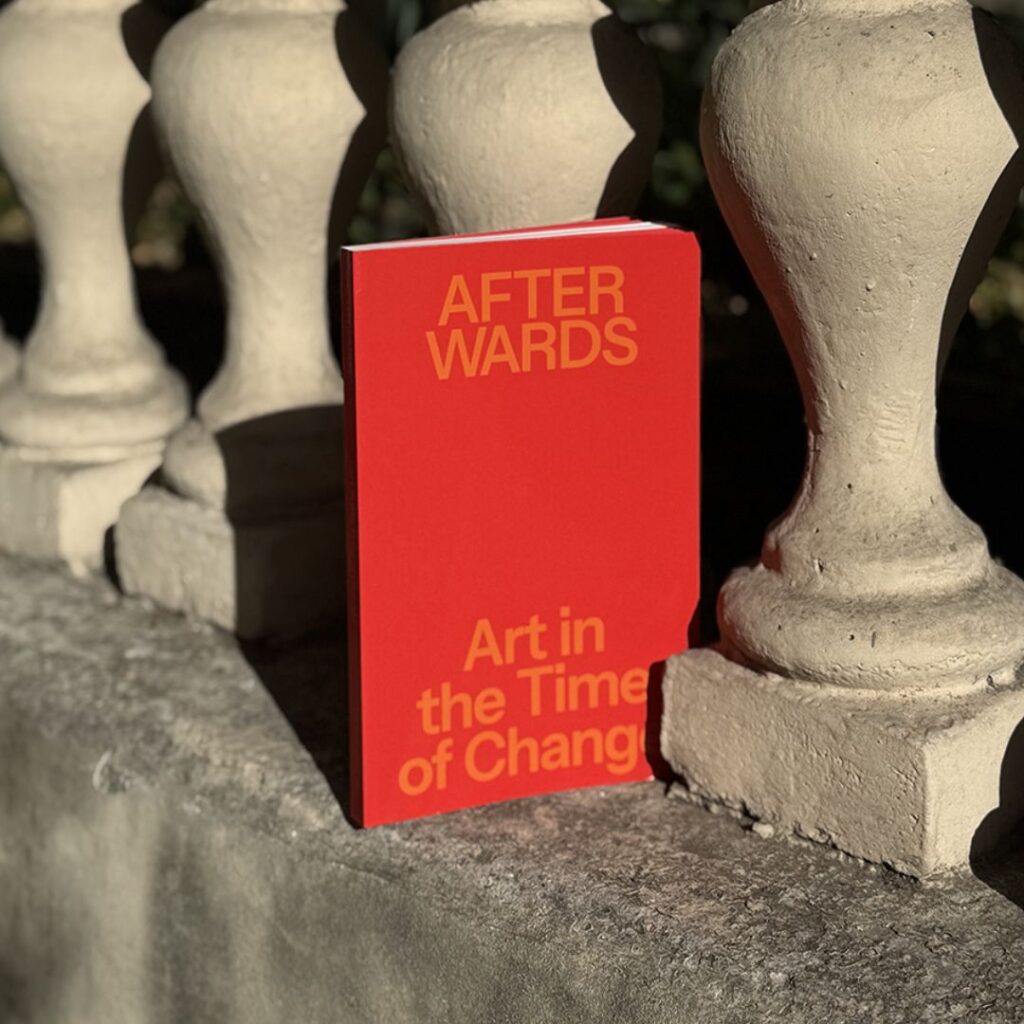
    Afterwards – Art in the Time of Change – Valentino Catricalà (ed)

    What is the role of the artist in shaping the future, and how do artistic practices evolve in response to technological acceleration and societal transformation? This book explores these central questions through a collection of essays and interviews that reflect on the future through the lens of artistic thought and action.

    Afterwards – Art in the Time of Change
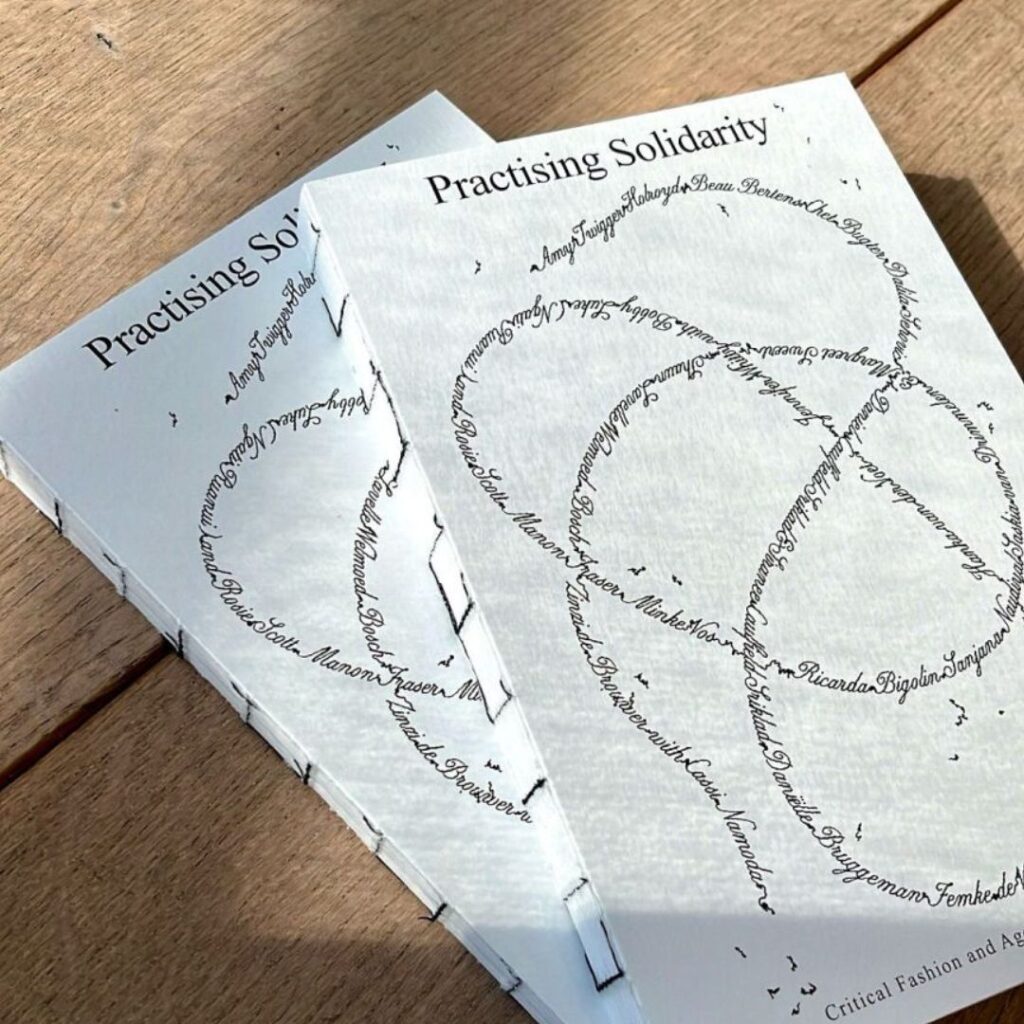
    Practising Solidarity. Critical Fashion and Agency that Matters – Daniëlle Bruggeman, Chet Bugter, Hanka van der Voet (eds)

    This book asks how we might cultivate radical visions and reimagine fashion systems grounded in solidarity.

    Practising Solidarity. Critical Fashion and Agency that Matters
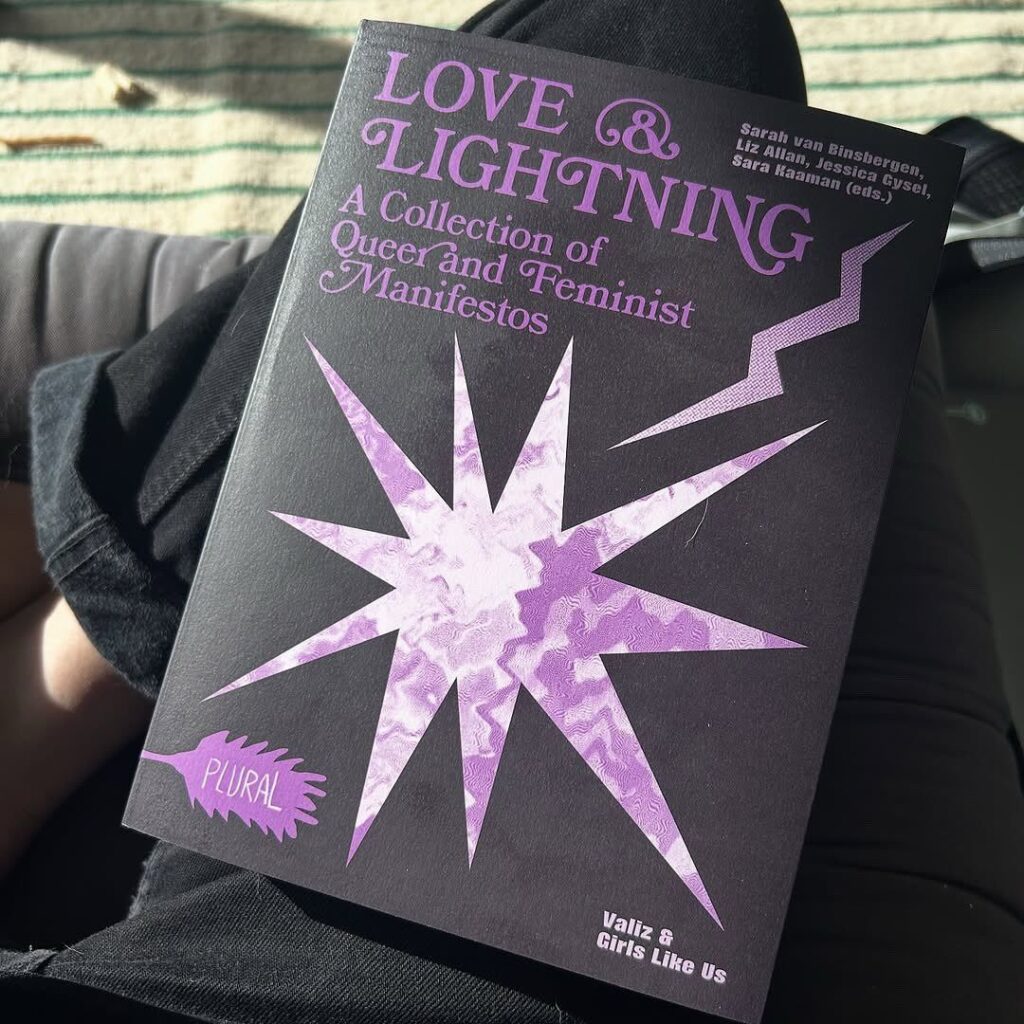
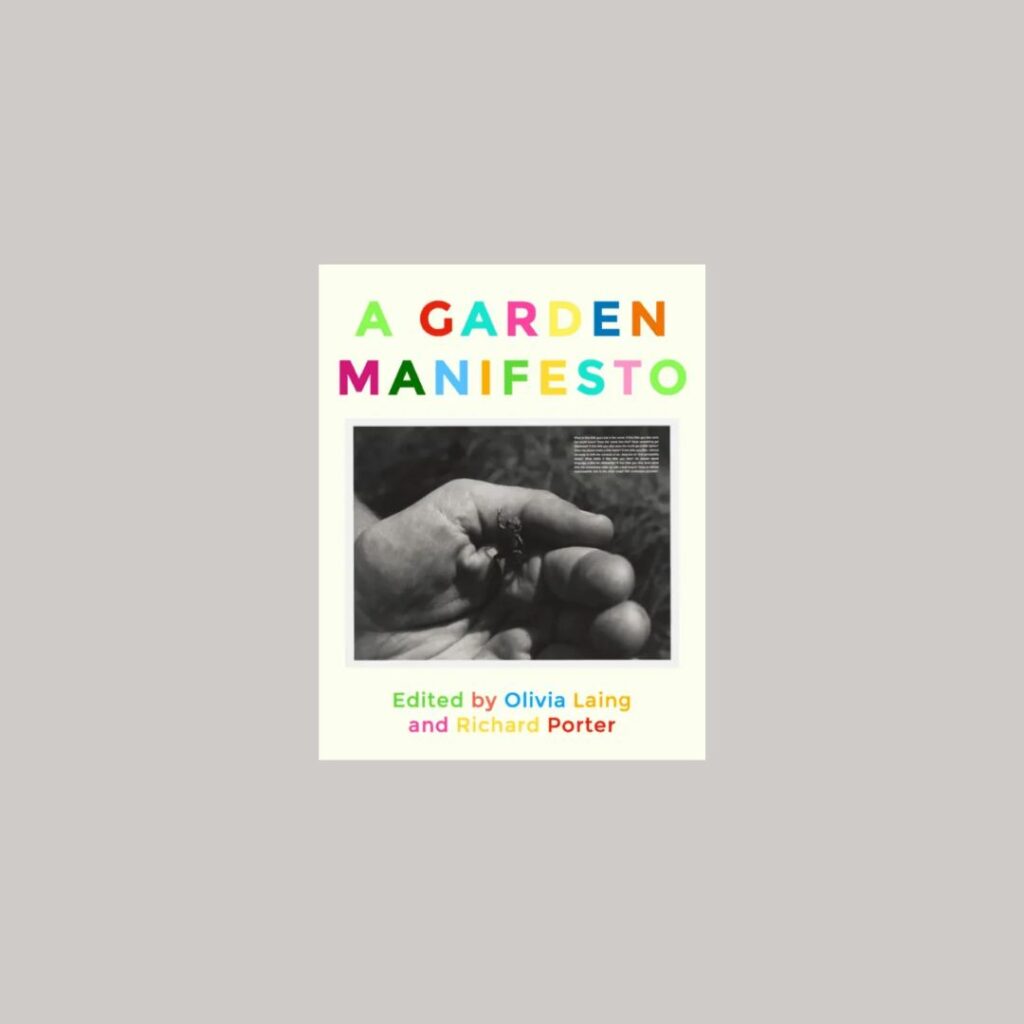
    Love & Lightning. A Collection of Queer and Feminist Manifestos – Sarah van Binsbergen, Liz Allan, Jessica Gysel, Sara Kaaman (eds)

    A thematically organized, open-ended collection of queer, feminist, and queer-feminist manifestos, showcasing the diverse forms a manifesto can take—from classical activist formats to poetic, associative texts. This publication not only offers fresh insight into the manifesto as a form, but also invites readers to imagine and propose their own revolutions, whether big or small.

    Love & Lightning. A Collection of Queer and Feminist Manifestos

    books selected by tique

    continue reading

  • Mary Hurrell’s selections for the tender and tangled

    Mary Hurrell’s selections for the tender and tangled

    Some feelings arrive all at once: joy with grief, tenderness with tension. The works Mary Hurrell has gathered move within this overlap. They don’t resolve so much as stay open, circling the edges of something familiar but hard to name.


    The ability to hold contrast in the same breath runs through all of Mary Hurrell’s work. An artist, composer, and vocalist based in Bristol, she moves fluidly between music, performance, sculpture, and writing. Her soundscapes—built from voice, electronic textures, rhythmic pulses, and warped field recordings—explore the meeting points of physical and psychological experience, often moving between sensation and emotion, form and feeling.


    She shares: “This selection embraces the bittersweet, the experience of feeling love and sorrow at the same time. It draws from artists and pieces that inspire me with their depth of feeling, rawness, honesty, and beauty. It also reflects my ongoing artistic preoccupations with inbetweeness and intimacy, and how, in these troubled times, keeping love and mourning close can feel like a way forward.”

    O&S_Mary_Hurrell_Mood_List
    SOPHIE – L.O.V.E.

    Love at first listen. This was the first song I heard by Sophie, and it hooked me immediately. Sophie’s music is tender, brutal, playful, elastic, expansive. She left us too soon.

    Roni Horn – Pink Tons (2009)

    I have long been a fan and felt a strong connection to the work of Roni Horn. Her practice engages with the bodily and the sensory, playing with notions of identity and mutability, ‘presence’ and the invisible. I’m very interested in ideas of precision and fluidity, lightness and weight. When I experienced Horn’s Pink Tons in the flesh at Tate Modern in 2009, it made a big impact. The sculpture felt like music to me: physical and emotional, beyond the visible.

    Mica Levi – Love (Under the Skin Original Motion Picture Soundtrack)

    I’ve always loved film soundtracks, and Mica Levi’s are some of my favorites, particularly Under the Skin and Jackie. For me, Mica has the ability to speak through music and express the internal world of the character they’re writing for, creating a kind of emotional fluid that runs deep beneath the image.

    Rei Kawakubo / COMME DES GARCON – Spring/Summer 2025 Collection

    Comme des Garçons fashion designer Rei Kawakubo is known for her avant-garde designs and her ability to challenge conventional notions of beauty, gender, good taste, and fashionability. To me, the Comme des Garçons collections are moving, breathing artworks—body sculptures and environments that transform the body, often presented with strikingly contrasting soundtracks. I love the way Kawakubo explores in-betweenness, the space between boundaries and disciplines, and reconfigures notions of the body’s internal and external landscapes.
    Björk / Nan Goldin – Prayer Of The Heart

    Two of my long-time heroes, Björk and Nan Goldin, collaborated on the multimedia installation Heartbeat in 2001. I remember seeing it at the Barbican in London and being moved to tears by the combination of Goldin’s images and Björk’s voice. The work explored themes of intimacy, love, transience, relationships, and vulnerability. It consisted of 245 projected slides by Goldin and a soundtrack by Björk, Prayer of the Heart, composed by John Tavener for Björk and performed with the Brodsky Quartet.

    Ikebana

    Ikebana is the Japanese art of flower arranging—a centuries-old practice that involves the careful placement of flowers, leaves, and branches to convey a feeling or emotion. I think about composing music, performances, and artworks in a similar way: how to express a feeling through the arrangement of elements, textures, and forms, and how to create balance and harmony through asymmetry.

    listen to mary’s music

    continue reading

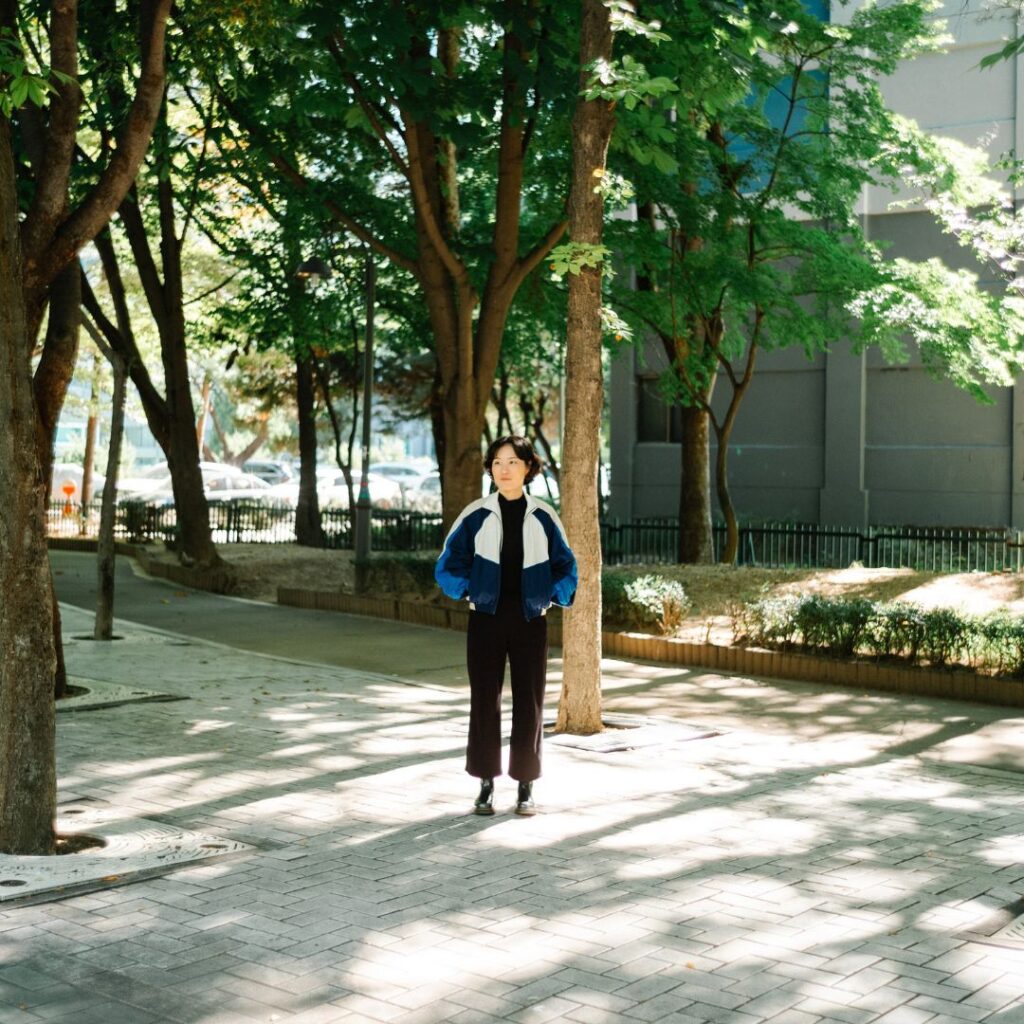
  • Dreaming of new worlds with soo:k

    Dreaming of new worlds with soo:k

    soo:k’s journey into music carries the weight of lived experience. Having previously worked in the humanitarian field, her encounters have shaped her understanding of resilience and fragility, and of the dualities we carry through life. 


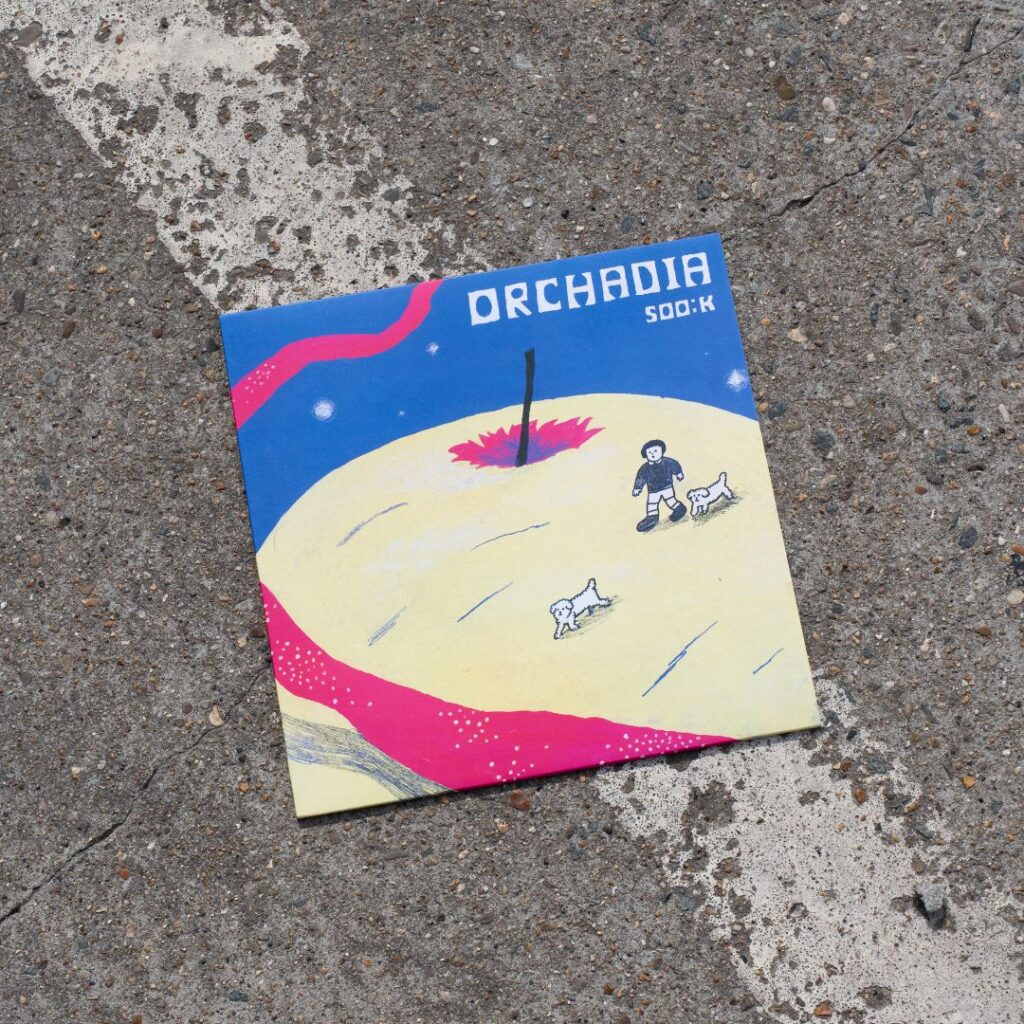
    This interplay comes through in her electroacoustic debut Orchadia which glitters with utopian light while carrying something darker just beneath the surface. It reflects Soo’s way of seeing the world, and how she thinks about music. She sees it as both a refuge and a collective force, a space that can heal, resist, and hold hope all at once.


    As we spoke, she reflected on dreaming beyond reality and why living boldly and fully is essential to her creative process. Talking with Soo reminds us of the many ways art can shape how we imagine and inhabit the world.
    How did your debut, Orchadia, come into being? Was there a moment or feeling that set it in motion?


    It was actually based on a dream. I had this vivid vision of a garden, similar to an orchard, where a variety of creatures lived, and each fruit seemed to have a life of its own. The next day, I started creating a series of tracks, and it quickly developed from there. I had a strong feeling that I needed to share the music I was making. I’ve always produced and made music, but I never had this kind of feeling before.

    soo:k Mood Talk O&S

    Where did the album name come from? 


    I first called the album Lost in the Fruit Garden, but as I thought more about the world in my dream, I felt there was something I wanted to express beyond that.


    The name Orchadia is a word I made up. It’s a blend of ‘orchard’ and ‘Arcadia,’ the Greek concept of an idyllic, pastoral place. I dream almost every day, but this one stayed with me.

    When you dream, do you hear sounds or see images?


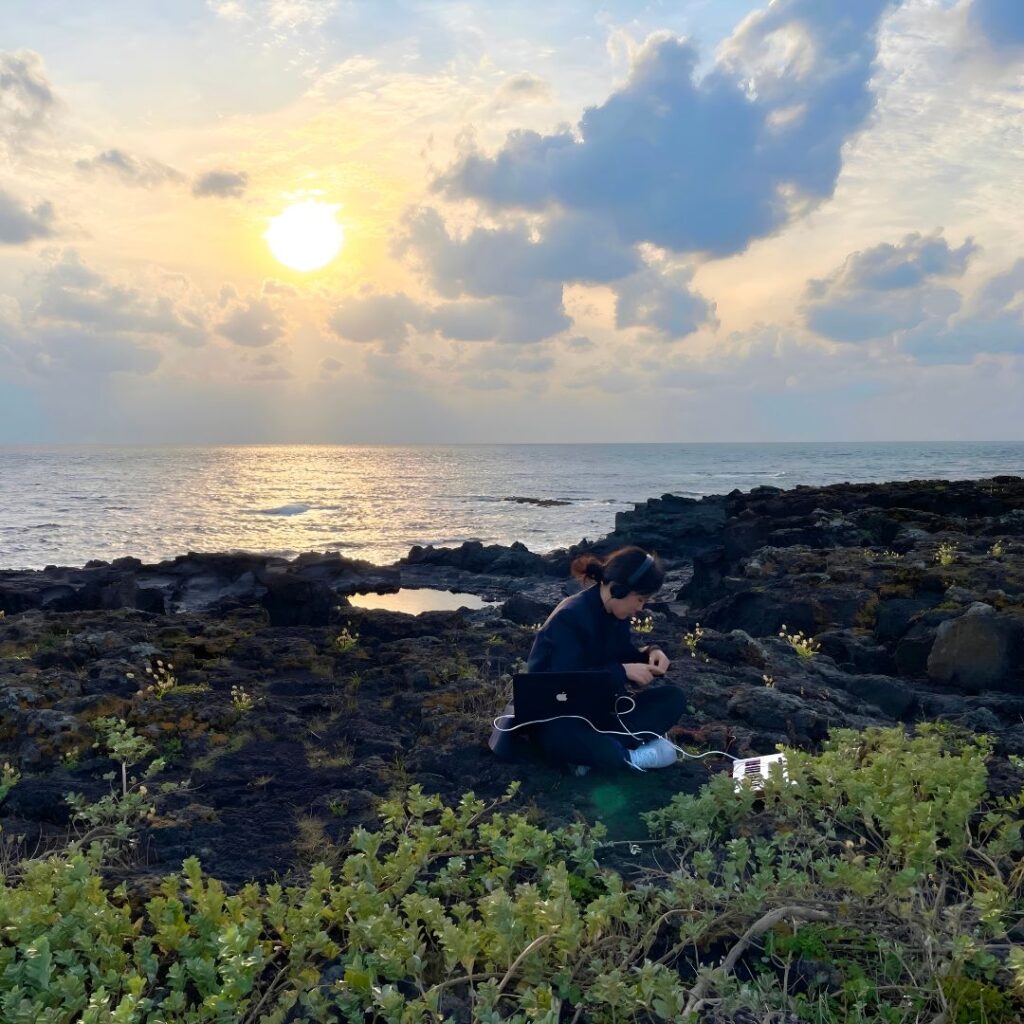
    It’s more images than sound, but when I wake up I can quickly translate them into music. My imagination runs wild, and my obsession with sound design always excites me to create something new.


    Back when I worked in the humanitarian field, I also dreamed a lot, but those dreams were often about destruction, which left me feeling sad and angry.


    When I started making music, I began to dream of more positive worlds, though, still, there’s always something darker beneath the surface. That’s also part of Orchadia: it’s about the purity I hope for, but also an awareness of the problems in the world.

    That reminds me of a phrase you’ve used when speaking about the album, ‘everything that breathes eventually bruises.’ 


    It’s a phrase that means a lot to me. I think bruises are just part of living, a reminder that life isn’t perfect or painless. Bruises show where we are vulnerable, and that pain and softness can exist together.


    In the album, I wanted to hold both the hard and gentle parts of life without pretending that one cancels out the other. It’s about accepting that duality and not letting it stop us from breathing, growing, or finding moments of love along the way.

    soo:k_Mood_Talk_O&S_2

    What did you want this album to hold, beyond the dream that inspired it? 


    I wanted the album to hold a sense of comfort. If my music can make someone feel something, even if it’s small, that really matters to me. Music and art won’t save the world, but they can heal and make things better.


    When I feel lost or disconnected, music pulls me back, helps me feel, and gives me the courage to continue. It gives me faith in love.


    In Orchadia, I wanted to capture beauty and sorrow coexisting, and invite people to slow down and feel without needing to label it or make sense of it.

    That’s beautifully put. Do you see music more as a response to the outside world, or as a way to process your inner world?


    Both! Sound is a way for me to hold onto memories and dream new worlds. Orchadia is somewhere that can exist outside of reality, a space between memory and possibility. For me, sound acts as a bridge between where I’ve come from and where I want to go.

    It seems like your influences range from classical and folk to new age and ambient. How do you bring all of that into your music?


    I studied classical music as a child, and later discovered experimental music in Germany. I didn’t go out looking for it, but somehow it found me, and I feel like it saved me. 


    I also have a lot of respect for the philosophy of Korean folk singers, who bring a wide variety of sounds and stories into their music.


    I think of myself as a sound weaver. I work with textures, genre doesn’t matter much to me. When I listen to music, it’s not just about sound but also the mentality and meaning behind it. I’m interested in who the person is that’s making the music.

    Are you working on anything new at the moment?


    I’m currently in the middle of several projects: remixing, composing, and collaborating with other artists. There’s always something. I’d also like to bring my interest in humanitarian work together with sound someday. By recording voices, stories, and environments, I hope to create small sonic works that acknowledge lives and places that might otherwise be overlooked.

    When all is said and done, what does music mean to you?


    Music is a way to experience and reflect on the world on a deeper, more personal level. It allows me to explore different emotions, stories, and rhythms. I create from a strong conviction that sincerity ultimately resonates. Even the smallest gestures can carry care and empathy.
    Pictures by Dongil Kim, Lars Duchateau, and Neung Wi Kim

    listen to soo:k’s music

    continue reading

  • Catching the feeling with Damian Dalla Torre

    Catching the feeling with Damian Dalla Torre

    It’s easy to slip into the pull of Damian Dalla Torre’s music. As a multi-instrumentalist, composer, and producer, he shapes soundscapes that carry a sense of the familiar while pushing into unexplored territory. He draws from a wide palette of sounds and influences, always in tune with whatever moves him in the moment.


    Talking with Damian, you get the sense that music is his way of staying close to himself. For him, real music begins with intuition and presence, and with trusting what resonates. It’s how he connects, how he stays grounded, and how he moves through the world with a certain openness.
    What’s your first memory of connecting with music?


    I remember being in the kitchen with my parents as a child. They put on a CD with a saxophone solo, and we all sang along. I don’t recall the artist, but that moment really stayed with me.


    My family aren’t musicians, but they’ve always had a deep love for music. My father was a DJ in the ’80s, playing in Italian discotheques when he met my mother. I definitely picked up my excitement for music from them.

    You’ve lived in Italy, Austria and Germany, and you also tour a lot. Has traveling or relocating changed the way you approach making music?


    Yeah, definitely. My surroundings and the people I’ve spent time with have shaped a lot of what I do, especially other musicians. When I first moved to Leipzig, I quickly became part of the music scene because everyone was so open. People collaborate across backgrounds and genres, and that made me feel immediately at home.


    Personal connections and a sense of community are the most important parts of being in a place.

    Mood Talk - Damian Dalla Torre - Objects & Sounds

    What other influences have shaped the way you think about sound?


    Reading opens up new ways of thinking, seeing art helps you understand different forms, and engaging with politics can shift your perspective. All of these things feed into the music in some way, even if it’s indirect.

    Is there a certain rhythm or routine you follow when making an album?


    I always know it’s time to make an album when I feel this growing need to immerse myself in a particular feeling and dive deep into it. When I start losing myself in the process, that’s when I know I’m getting close to the music. But it’s not something that happens quickly. It takes time and space to really get into the material and capture the feeling.

    How do you know when you’ve captured the feeling?


    When I truly enjoy the sound, it’s because I’ve managed to catch the mood. I can feel when the music is real to me. That’s part of the process—getting close to my emotions and spending time figuring out what I’m actually feeling. Some people are naturally very in tune with their emotions, but in a world overloaded with information, work, and the pressures of a capitalist system, it’s easy to feel detached. Music is a way for me to process what’s happening, and to reconnect with myself.

    When you’re making music, do you think about how others might connect to it?


    I think it’s less about making people feel exactly what I feel and more about creating a space for them to connect with themselves in their own way. I’m not sure if my music can directly translate an emotion—like you’d listen and instantly know how I feel—but I think it can create an opening for others to tap into their own emotions.

    Your music folds together so many layers, from field recordings to flutes, brass, and synths. You also collaborate a lot. What draws you to this way of creating music?


    I think I just really like layers. I enjoy music where you can keep discovering new things each time you listen. That’s what keeps it interesting. It’s the same with other art forms too. You might notice one thing in a painting one day, and something completely different another day. Or a passage in a book might resonate with you in one moment, and later, a different part speaks to you in a whole new way.


    Music is such an abstract thing. Of course, you can explain it scientifically—how synapses react, how memories and emotions are triggered. But it still has this indescribable quality. I really love it when music has a hidden message.

    Damian Dalla Torre - Mood Talk - Objects & Sounds

    Do you imagine these layers before you start, or do they emerge through the creation process?


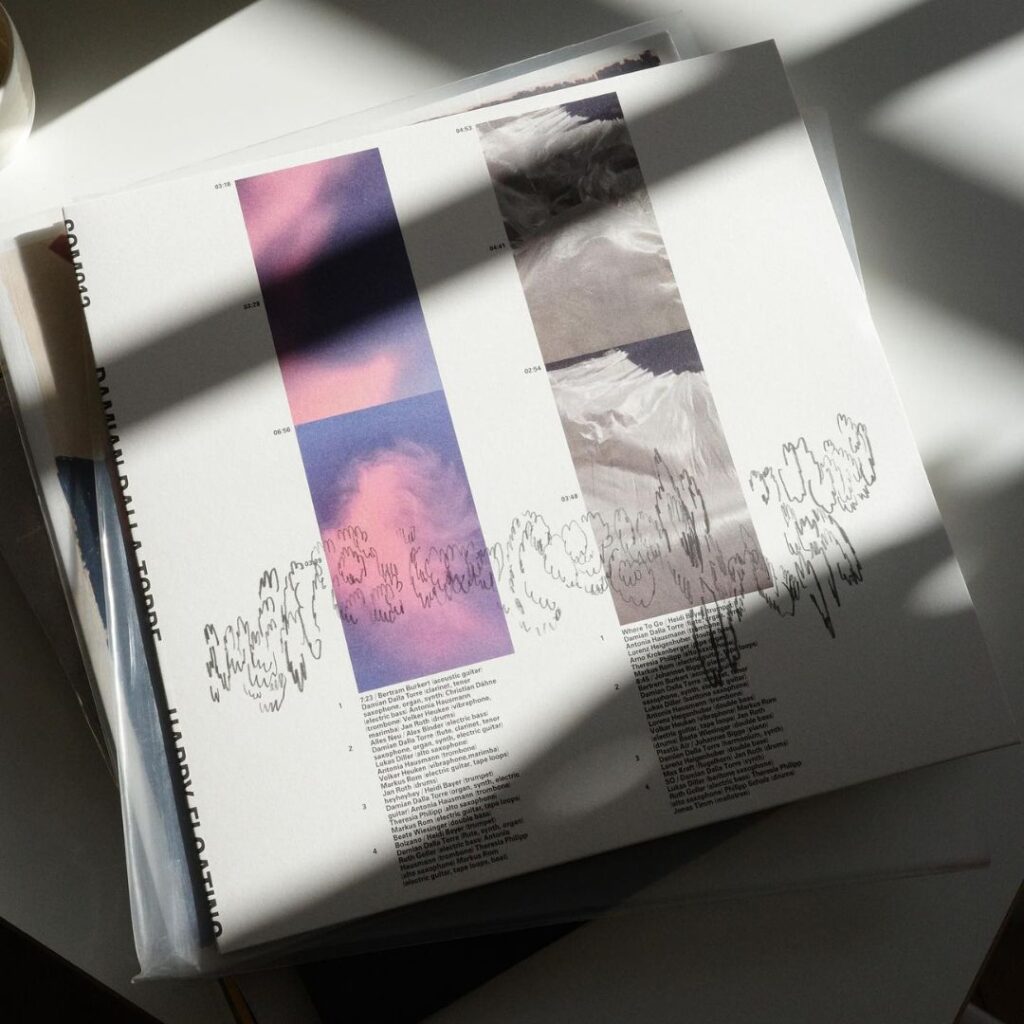
    Layers emerge through the process. On my first record, Happy Floating, there were so many contributors who took the music in new directions, which in turn shifted my own perspective. Each new layer gave the whole thing a different feeling, even for me. I’m interested in opening up that process, getting input from others and letting it reshape my own ideas.


    I love seeing how communities create and collaborate. On the East Coast in the U.S., you can feel that spirit around musicians and labels like International Anthem or RVNG Intl. The musicians themselves become layers that add to the music.

    When you think about all the layers you bring together, what feels most defining about your sound?


    I’m interested in combining analog and digital—using field recordings or instruments like flutes, and blending them with digital sounds. I often sketch ideas with just a synthesizer, but it always feels like something is missing. I need that human component, that analog warmth. That’s why I like working with other musicians. They bring their own living touch to the music. Mixing something cold and artificial with something organic and human is an approach that works well for me. The opposites create something really special.

    Damian Dalla Torre - Mood Talk - Objects & Sounds

    Are there other layers or directions you feel drawn to exploring further?


    I think I’m always exploring, but more than anything, it’s about exploring myself, my feelings, and finding something that feels true to me. To create real music, you have to make something you genuinely connect with. If it feels real to you, others can connect with it too. By the time I finished both albums, I just knew. There was this sense that something had fallen into place, that it felt right.

    Where is your music heading these days? 


    My music evolves with my experiences, the people I meet, and the influences they bring into my life. When I was making Happy Floating, I was listening to a lot of indie rock and indie pop, and you can hear that in the album. I was also touring with Efterklang at the time, and the energy of what we were doing had a big influence on that record.


    With I Can Feel My Dreams, I was drawn more into ambient music, and that naturally shaped the album.


    Now I’m working on my third album, and I can already tell it’s influenced by techno. I didn’t go to raves much in my twenties, but recently, stepping into that world, I fell in love with the sounds, the atmosphere, the whole feeling of it. I started digging deeper, discovering new artists. I’m always curious to hear what people are producing across different genres.

    listen to Damian’s music

    continue reading

  • Tuning into the everyday with Zander Raymond

    Tuning into the everyday with Zander Raymond

    Zander Raymond sees the world as an archive—where objects, sounds, and memories gradually gather meaning through time and context.


    In both his sound and visual work, Zander Raymond collects overlooked materials and fragments from his surroundings, layering and reworking them through a process that’s both intuitive and deliberate. Material, sound, and autobiography fold into one another, often blurring where one ends and another begins.⁠


    A year after releasing courage left in a tree, Zander reflects on how his practices overlap, how he works with sound, and what continues to draw him to the everyday.


    There’s something open in his approach that makes space for serendipity and uncertainty, leaving room for things to unfold without a fixed direction. It’s a way of paying attention that moves from passing details to bigger questions—and can shift how you look at things too.

    You move between sound and image—between sculpture, collage, and music. How do those practices relate or influence one another?


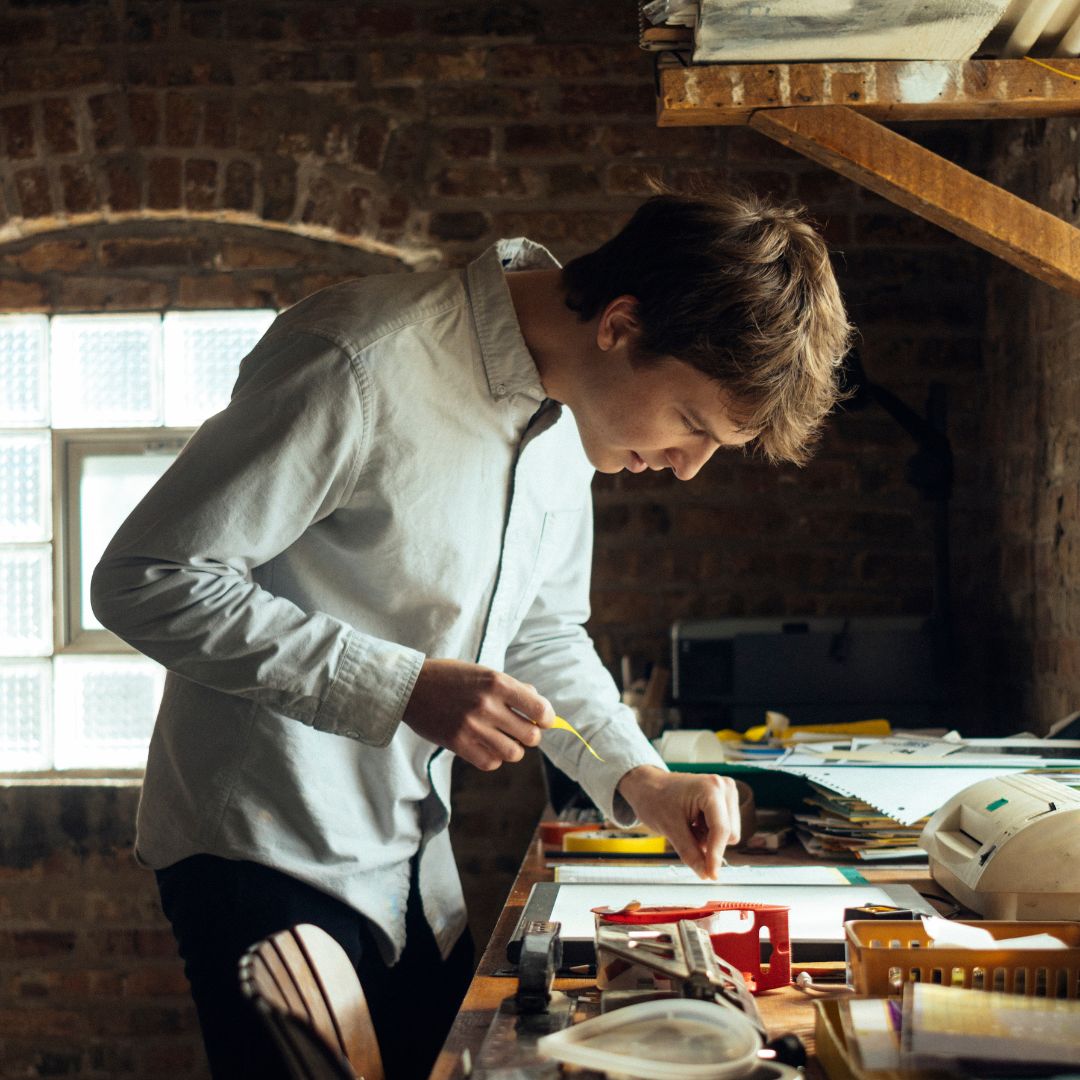
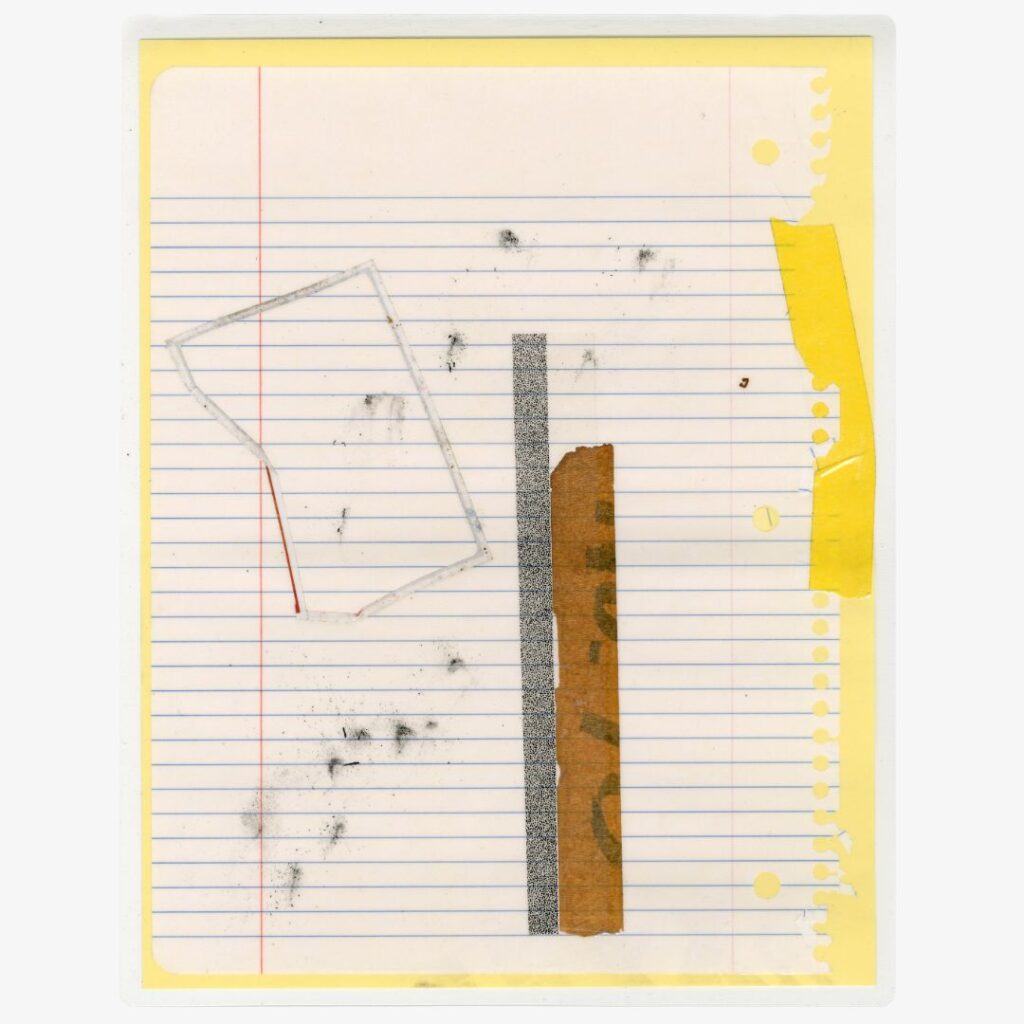
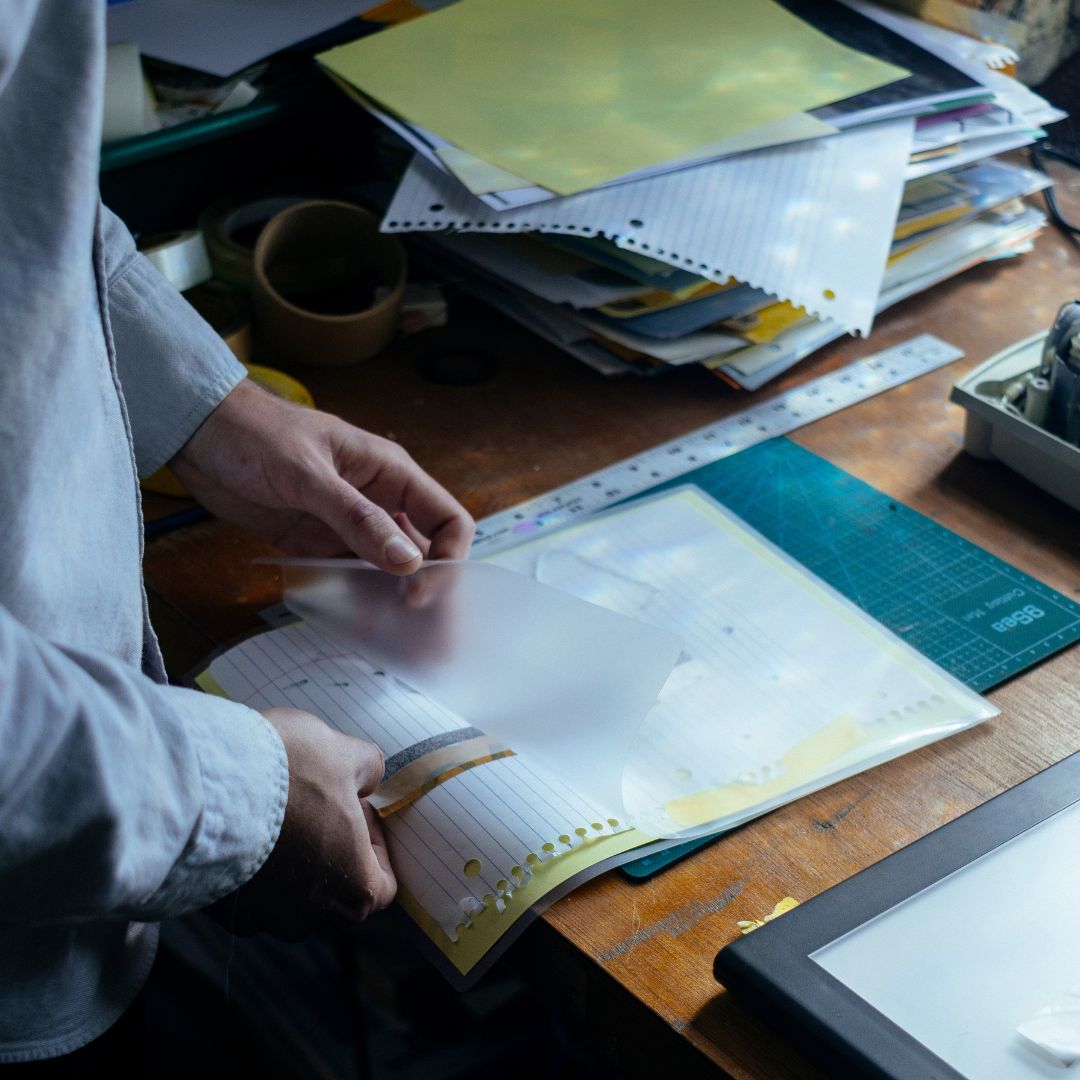
    I think the output exists in different ways, but many of the same compositional techniques in my collage work also appear in my music-making. I’m interested in texture and layering, and I think that’s evident in both areas of my practice. Sometimes it feels like the lines between the two are blurred, but in my studio, there’s actually a wall that separates where I make collages from where I make music. Even with that separation, there’s always a “door” between them. They share the same air.

    Mood Talk - Zander Raymond

    Do you have a certain routine when you head to the studio?


    I go there every day for at least half an hour. It’s around the corner from my house, so it’s very easy to get to, and it’s had a big impact on my work. It’s on the second floor, with insulation above and below me. In the summer, I open all the windows, and it feels like I’m in this strange treehouse in the middle of the city. 


    Sometimes I go back and forth between making music and making collages. Sometimes I stick with one thing—it always changes.

    There’s a huge archive of your collages on your website. Do you consider archiving to be part of your practice?


    I’ve been archiving my entire life. I have binders full of childhood drawings, all numbered and sleeved. I’ve been scanning and documenting every drawing and collage for as long as I can remember.


    In the same way I use old field recordings, I also incorporate old collages and drawings into new work. I’m constantly referencing my own archive. Everything is just layers. It all feels sedimentary, like things settling again and again on the same plane. My favorite part of making—whether it’s music or collages—is when that sediment gets disrupted and resurfaced. That’s where the making really happens.

    Objects & Sounds - Mood Talk - Zander Raymond

    It sounds like your process is less about starting from scratch, and more about responding to what’s already there. Can you tell me more about your approach?


    I think that embedded in every material is a question. Every single object around me holds millions of questions. And that question is always: What’s possible? That’s where the thing begins. I’m listening, looking, reacting, and responding to the pre-existing qualities of that object, or sound, or whatever it is. 


    I never scrap anything, and I only ever do one take. If I don’t like it, I won’t redo it—I’ll just make a new one. Or maybe I’ll set it aside and come back to it later. I think failure and mistakes are the work.

    What inspires you at the moment?


    I’m obsessed with saunas and steam rooms. There’s something inspiring about the strange silence, the buzzing, the condensation. Sonically, steam rooms and saunas are so weird—that feels kind of exciting.


    I’m also intrigued by how I can integrate new forms of storytelling. The autobiographical aspect of my work is already there, but I’m curious about exploring new narrative forms, like experimental opera and the use of repetitive or non-repetitive language. I’m interested in obtuse storytelling.

    Is there something you’re trying to capture in your work?


    I think a common thread running through my work is an interest in weaving in mundane things—like a field recording of me biking home from work, or a scrap of paper I found on the street. These little elements find their way in, and the work becomes a record of time, like an autobiography.


    I use a really small conference recorder to make field recordings, and I never take the files off it. There are no file names, only numbers, and it’s become this ongoing, random archive. I’ll skip through these while performing live or recording and end up making music with a version of myself from two years ago. A sound from the past becomes part of the present.

    It’s almost like you’re in conversation with your former self.  Do you consciously make recordings with that in mind?


    Yeah, I think that’s definitely part of it, but my impulse to make recordings is also rooted in a discomfort with certain sounds in the world.


    I recently worked next to a loading dock where trucks would back in and unload. There was constant booming, creaking, garage doors opening and closing, people talking—all these overwhelming, loud sounds. A lot of my field recordings over the past six months have captured that—all these abrasive noises. By recording, I can shift my mental perception of those uncomfortable sounds. Suddenly, they become music in that moment, just through the act of recording. I like the idea that everything is music.

    Mood Talk - Zander Raymond

    Do you see a distinction between sound and music?


    I’d like to believe they’re the same. Chaz Prymek and Matt Sage made this bumper sticker that says, “Keep honking! I’m listening to aleatoric music, and it’s your turn to take a solo.” I love the thought that everything is music—or at least that music is always happening, ever-present.


    Like right now, I’m sitting here talking to you, but I’m also listening to a pot bubbling quietly behind me. And in a way, that’s the music—I’m too much of an active listener for sound to ever just be in the background.

    Do you try to make space for that kind of listening in your work, too?


    Over the past few years, I’ve been experimenting with what I can slip into music that will encourage listeners to lean in. I’ve also been thinking about the moments before a show as part of the performance. I recently made a recording of myself brushing my teeth and taking a shower before leaving, and then played that recording back during the set. I love moments like that—when I can fold in something personal, something so ordinary that everyone in the audience has experienced it too, and then notice when people recognize it.


    That’s really the thread that runs through both my music and my art—pointing to overlooked things. I love pushing that as far as I can.

    Mood Talk - Zander Raymond

    You seem to work really intuitively and spontaneously. How long do you usually sit with a project before you know it’s finished?


    I tend to make collages quickly, but I just wrapped up a new album, and it actually took a very long time. I kept leaving it, coming back, tweaking one thing, thinking it was done, and then returning. My life also felt much slower—especially in contrast to the period when I was making courage left in a tree—and it’s the first time I really gave myself that much space to work on something.


    Sometimes I feel like I’m improvising my way through. I don’t have it figured out yet, but I think intuition is always there. I’m eager to know what my music will sound like 10 years from now.

    You talked about how different life felt when you were making courage left in a tree. What do you remember about that time, and how do you feel about the album now?


    Listening to it brings me back to a very specific time. I had just finished school and was working four different jobs on opposite sides of Chicago. It’s a huge, sprawling city, and one night, while cycling home late, I put my field recorder in my sock so it was close to the spokes of my bike and the mechanism that makes a clicking sound. That’s what you hear in the opening track of the record.


    It was a very disorienting, confusing time, and I continue to feel connected to those emotions and to the experience of moving through a place. I’m still just as confused now—but more at ease than I was back then. I think being confused can be a good thing. It’s more like a state of being.

    listen to zander’s music

    continue reading